By Oko Immanuel, M.Eng
Founder, Offshore Pipeline Insight
March 25, 2026
The global exploration landscape is shifting decisively in 2026. Majors and independents are focusing on the Equatorial Margin the conjugate Atlantic margins stretching from West Africa (especially Namibia) to northern South America (Brazil, Suriname, and Guyana). This trend is fueled by geological similarities to proven giants, massive prospective resources, and the need for new high-impact discoveries as traditional basins mature.
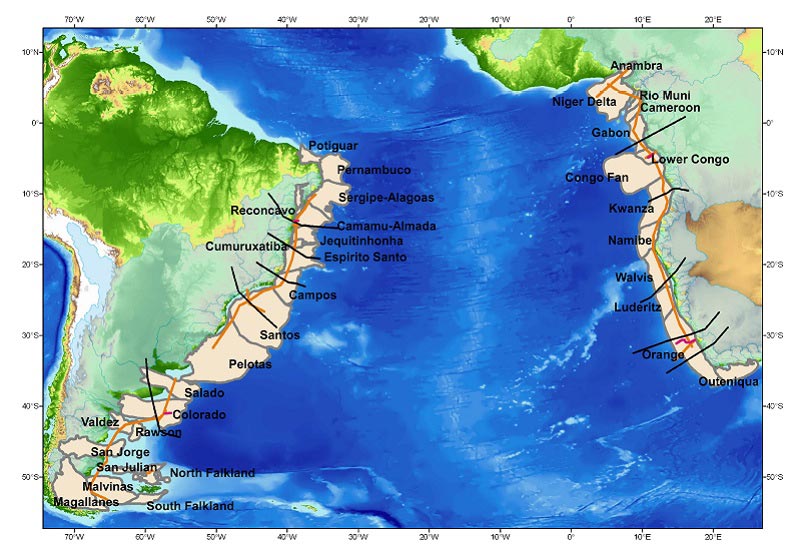
Overview of the Equatorial Margin and conjugate Atlantic basins, showing the geological link between the South American and African margins (from Brazil pre-salt to Namibia Orange Basin and beyond).
Why the Equatorial Margin Is Gaining Momentum
- Strong geological analogy to successful Cretaceous and Tertiary plays in Guyana-Suriname and Brazil pre-salt.
- High-impact wildcat potential: The Atlantic Margin accounts for a significant share of global prospective resources targeted in 2026.
- Transition from pure exploration to appraisal and early development in key areas.
- Pipeline & subsea implications: Future fields will require extensive SURF systems, long tiebacks, subsea boosting/compression, HPHT flowlines, and advanced flow assurance.
Namibia – Orange Basin: Africa’s New Exploration HotspotNamibia has delivered multiple billion-barrel-scale discoveries since 2022, with estimated recoverable resources approaching 6+ billion boe. Activity is concentrated in the Orange Basin.
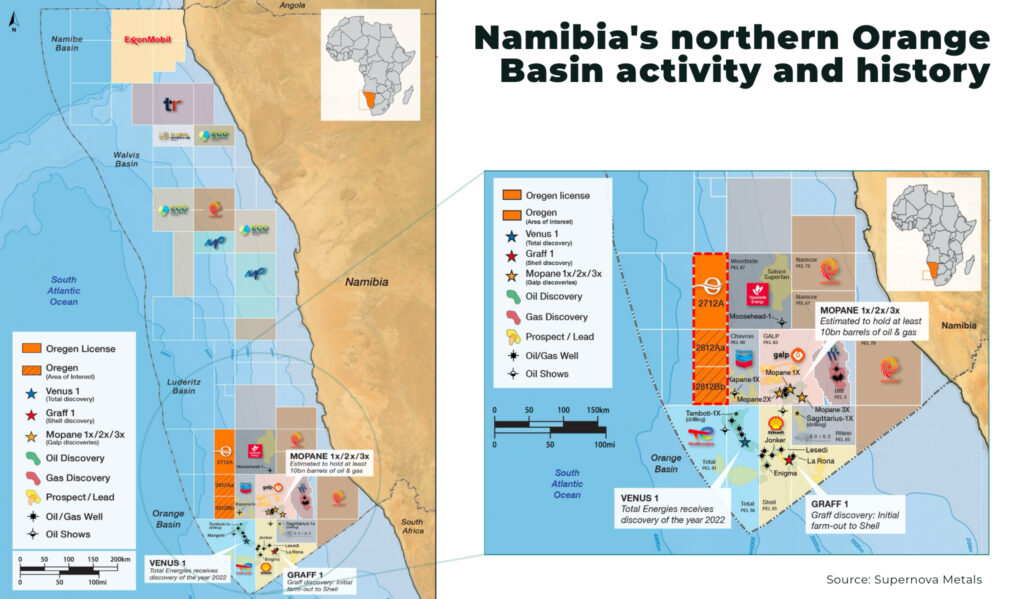
Namibia’s northern Orange Basin activity map (2026 update), highlighting major discoveries including Venus (TotalEnergies), Mopane (Total/Galp), Graff (Shell), and recent finds by Rhino Resources, Azule, and Eni.
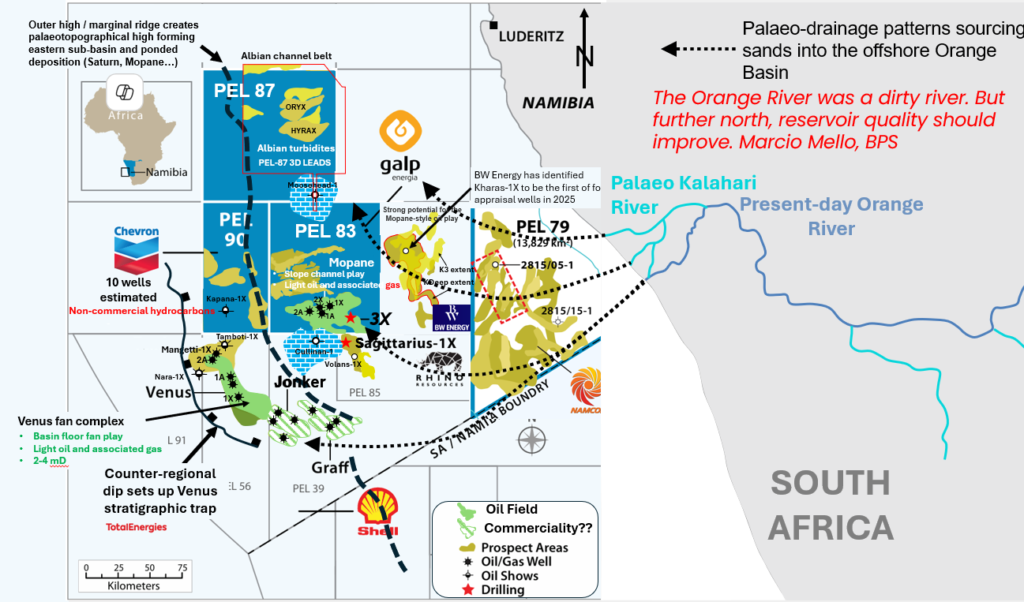
Detailed Orange Basin prospect and discovery map, showing PEL blocks, key wells (Venus, Mopane, Graff, Sagittarius, Capricornus), and paleo-drainage patterns that feed reservoir sands.
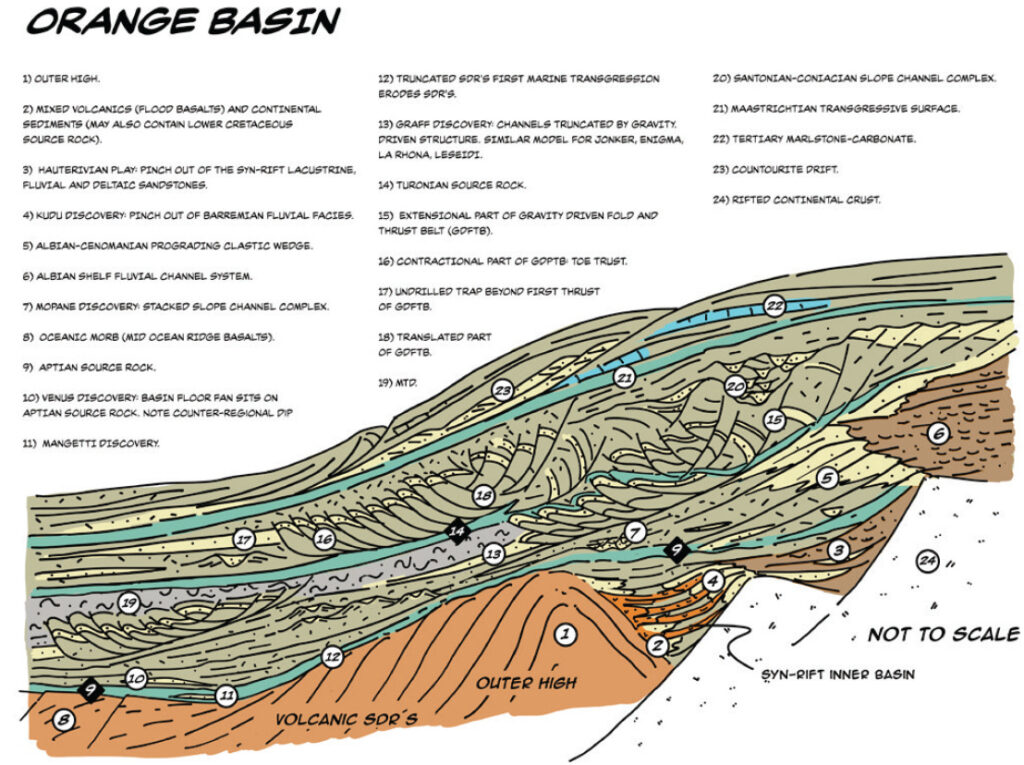
Geological cross-section of the Orange Basin, illustrating key plays from Aptian source rocks through Albian-Cenomanian channels, slope fans, and structural traps (Venus and Mopane-style plays highlighted).
Key 2026 developments: TotalEnergies advancing Mopane appraisal, Shell returning to PEL 39, and multiple operators planning further wells. These ultra-deepwater finds (often 1,200–3,000 m) will demand robust subsea infrastructure and long export pipelines.
Suriname – Guyana-Suriname Basin: Moving from Discovery to Development
Suriname shares the same prolific Cretaceous petroleum system as Guyana’s Stabroek Block. Block 58’s GranMorguproject (TotalEnergies/APA) is the flagship, targeting first oil in 2028 with a large FPSO.
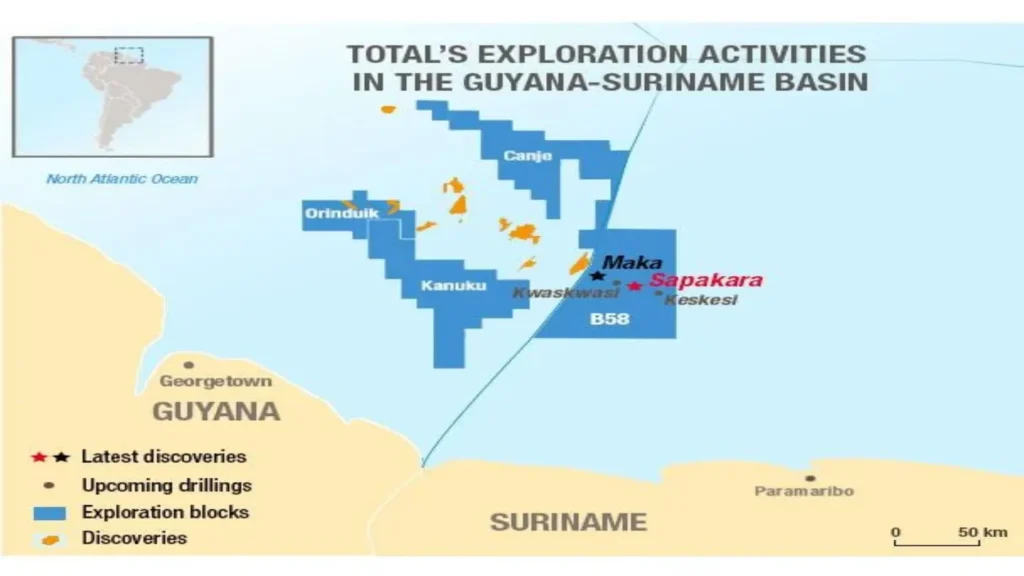
Guyana-Suriname Basin exploration map, showing Block 58 (GranMorgu – Sapakara/Krabdagu), recent discoveries, and cross-border potential with Guyana.
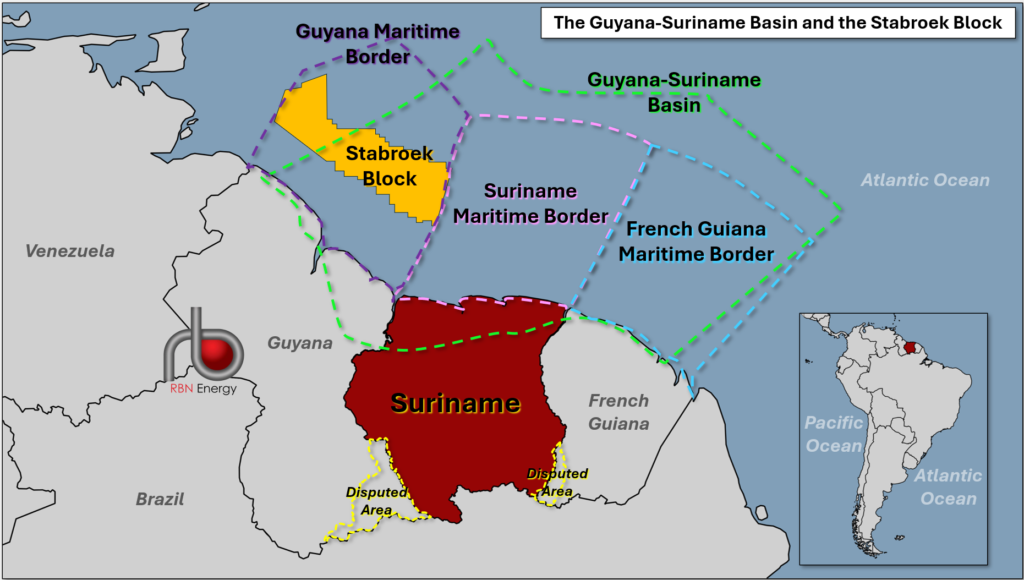
Regional overview of the Guyana-Suriname Basin and Stabroek Block, highlighting the conjugate margin relationship and key structural elements.Suriname’s 2026 focus includes development drilling in Block 58 and additional exploration, creating strong demand for subsea tiebacks and flow assurance solutions.
Brazil – Equatorial Margin: The Next Frontier ProvinceBrazil is aggressively pushing its Equatorial Margin (Foz do Amazonas, Pará-Maranhão, Barreirinhas, Ceará, Potiguar) with significant budget allocation and new licensing rounds.
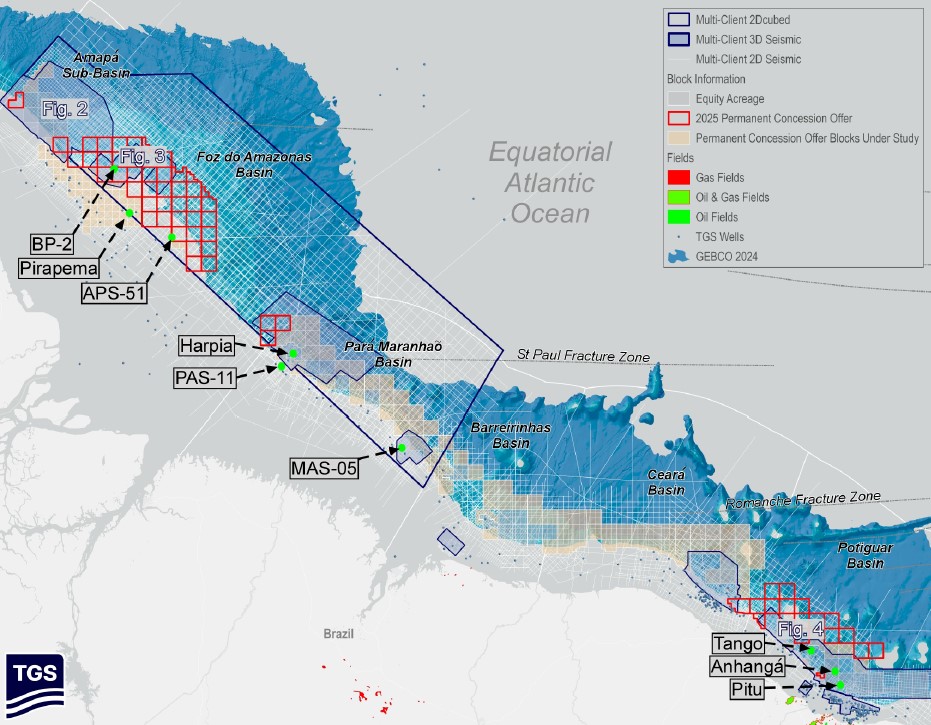
Brazil Equatorial Margin seismic coverage and block map, showing Foz do Amazon as, Pará-Maranhão, Barreirinhas, Ceará, and Potiguar basins with recent acreage on offer.
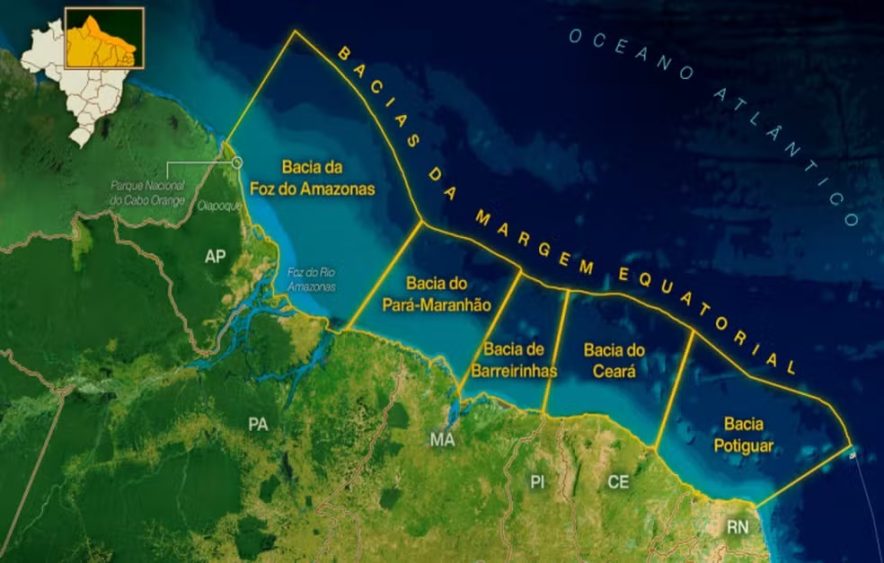
Geographic overview of Brazil’s Equatorial Margin basins, stretching from the Amazon mouth southward, with key exploration blocks highlighted.Petrobras and partners are resuming drilling (e.g., Morpho well in Foz do Amazon as at ~2,887 m water depth) after regulatory clearances. A major commercial success here could open an entirely new hydrocarbon province.
Geological Context – Conjugate Margin Play Fairways
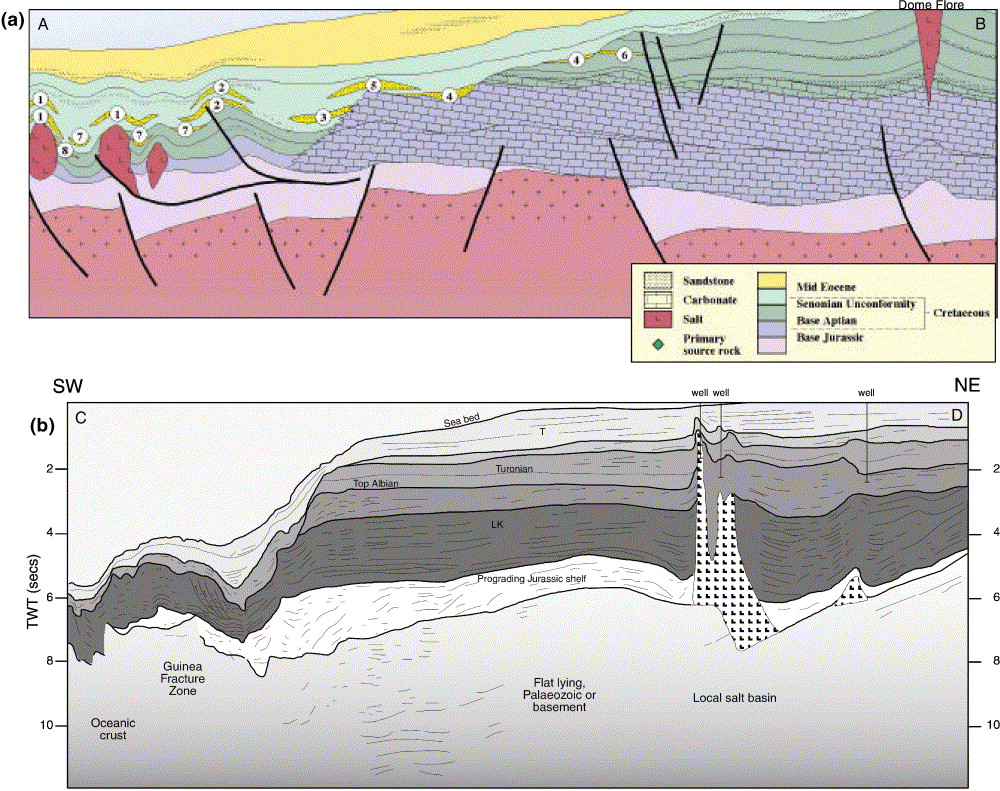
Central Atlantic margin geological cross-section, illustrating typical conjugate structures, source rocks, reservoirs, and traps shared between the African and South American Equatorial Margins.
Implications for Offshore Pipelines & Subsea Infrastructure
The Equatorial Margin Trend will drive demand for:
- Long-step-out tiebacks and subsea compression/boosting
- HPHT pipelines and manifolds in deep/ultra-deep water
- Advanced flow assurance and leak detection systems
- Modular, phased subsea developments aligned with ESG goals
As these basins progress from exploration to production, practical pipeline engineering and subsea technology will be the critical enablers.
The Equatorial Margin represents a structural shift toward high-potential, conjugate-margin plays in equatorial latitudes. For the offshore energy sector, 2026 is the year to prepare for the next wave of Atlantic Margin success.
Stay tuned to Offshore Pipeline Insight for more on emerging basins, subsea technologies, and the infrastructure needed to develop these resources.
Oko Immanuel, M.Eng
Founder & Lead Analyst
Offshore Pipeline Insight
https://offshorepipelineinsight.com