By Oko Immanuel, M.Eng – Founder, Offshore Pipeline Insight
March 20, 2026
In 2026, methane abatement has moved from a voluntary sustainability goal to a regulatory and financial imperative. New U.S. methane fees (expanded under the Inflation Reduction Act), EU methane regulations, and tightening North Sea emissions intensity targets are forcing operators to act fast. Routine flaring — once common on offshore platforms is now under intense scrutiny, with many companies announcing phase-out programs by 2027–2030.
Search volume for “methane intensity curves”, “satellite-verified super-emitters”, “methane flaring regulations 2026”, and “methane abatement offshore” has spiked dramatically. Companies are under pressure to prove credible, verifiable reductions and satellite data is becoming the gold standard for transparency.
1. What Are Methane Intensity Curves?
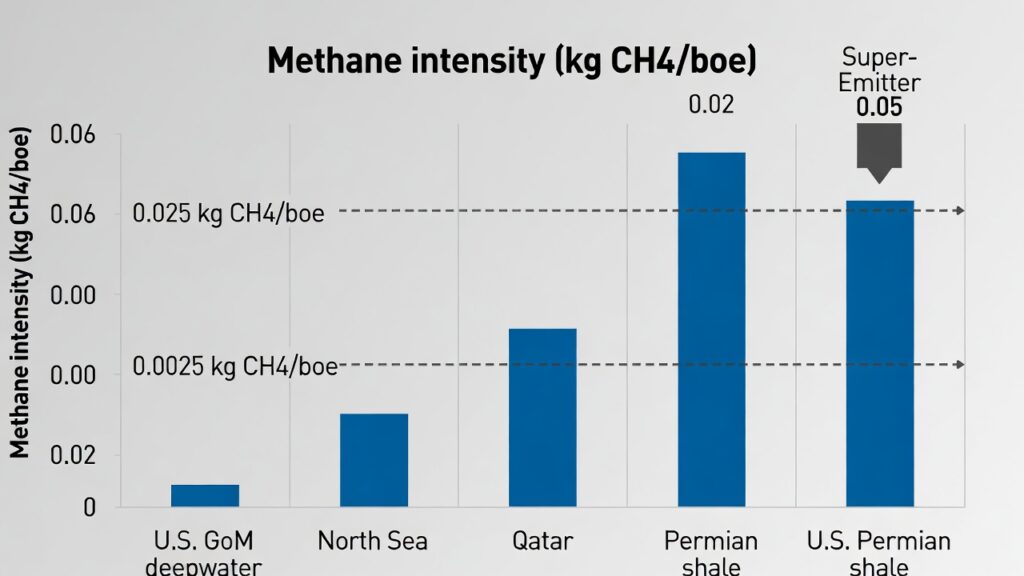
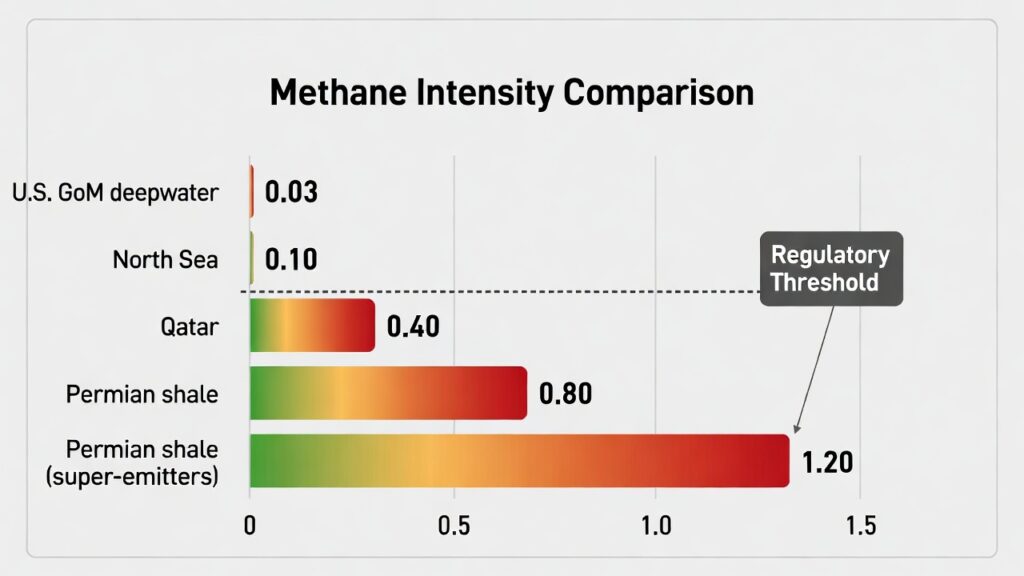
A methane intensity curve is a plot showing methane emissions intensity (kg CH₄ per barrel of oil equivalent produced, or kg CH₄ per MMcf gas) across different operators, basins, or production types.
- Why it matters in 2026:
- Regulators and investors now benchmark companies against intensity targets (e.g., <0.2% methane intensity for “near-zero” certification).
- High-intensity operators face higher fees, restricted access to capital, or buyer penalties for LNG cargoes.
- Curves help visualize gaps e.g., U.S. shale vs. offshore GoM vs. Middle East associated gas.
Figure 1: Methane Intensity Curves – Offshore vs. Onshore (2026 Benchmark)
(image: Line/bar chart comparing methane intensity (kg CH₄/boe) across major basins: U.S. GoM deepwater, North Sea, Qatar, Permian shale, with regulatory thresholds marked and super-emitter outliers highlighted.)
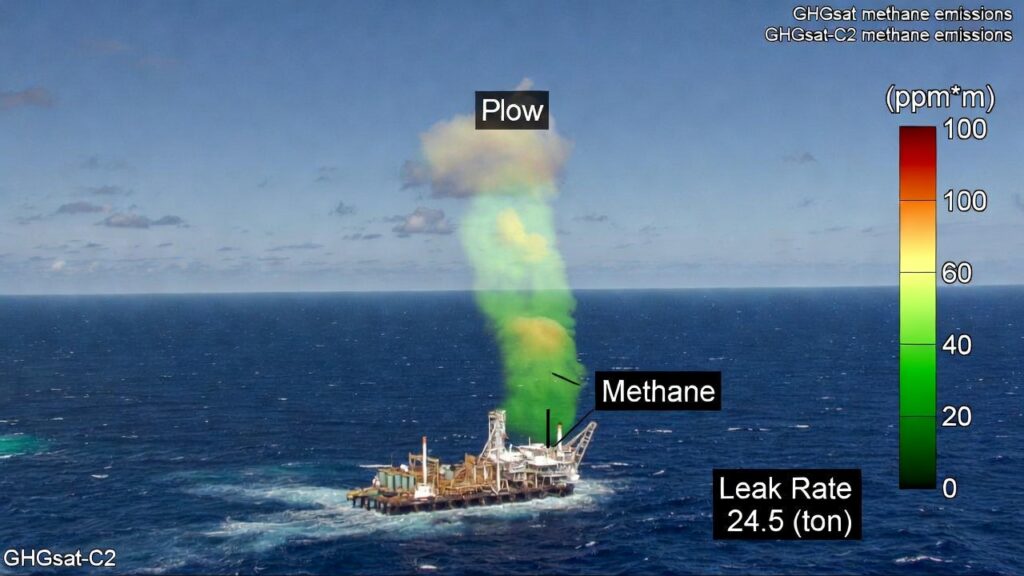
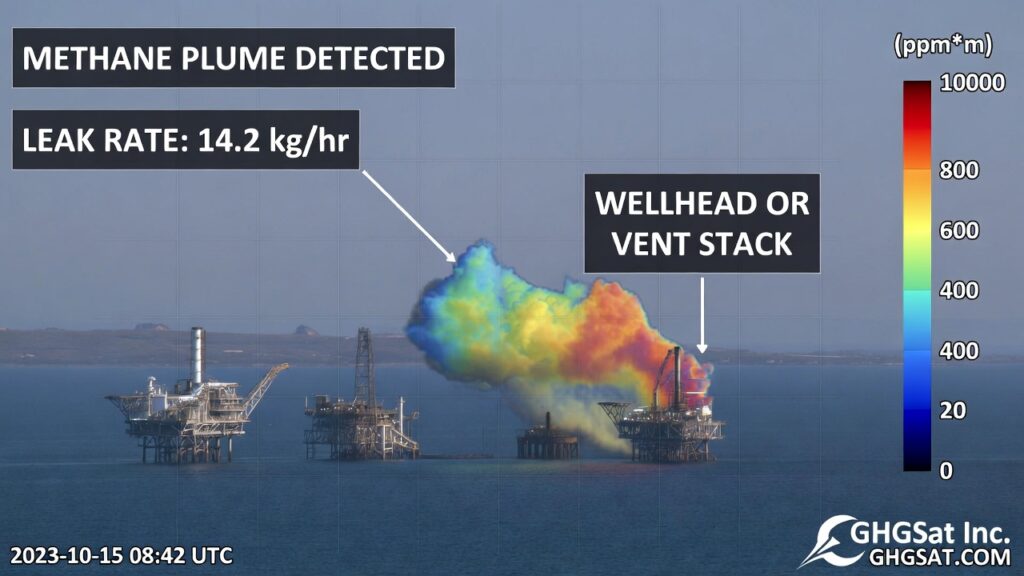
2. Satellite-Verified Super-Emitters: The New WatchdogSuper-emitters are infrequent but massive methane release events (e.g., >100 kg/h) from venting, incomplete flaring, or equipment failure. They can account for 50–80% of total methane emissions from a field despite being rare.Satellite monitoring (e.g., GHGSat, MethaneSAT, Kayrros, Kayrros, Planet Labs) now provides near-real-time detection and quantification:
- High-resolution methane plume imaging.
- Attribution to specific facilities (well pads, platforms, pipelines).
- Verification of routine flaring vs. emergency releases.
In 2026, regulators and NGOs are using satellite data to:
- Impose penalties on persistent super-emitters.
- Require operators to install continuous monitoring or repair within days.
- Certify “methane-neutral” production for premium markets.
Figure 2: Satellite-Detected Super-Emitter Plume Example
( image: Annotated satellite image showing a methane plume over an offshore platform, with concentration scale, detected leak rate, and attribution to a specific wellhead or vent stack.)
3. The Push to Retire Routine Flaring
Routine flaring (burning associated gas instead of using or re-injecting it) is being phased out rapidly:
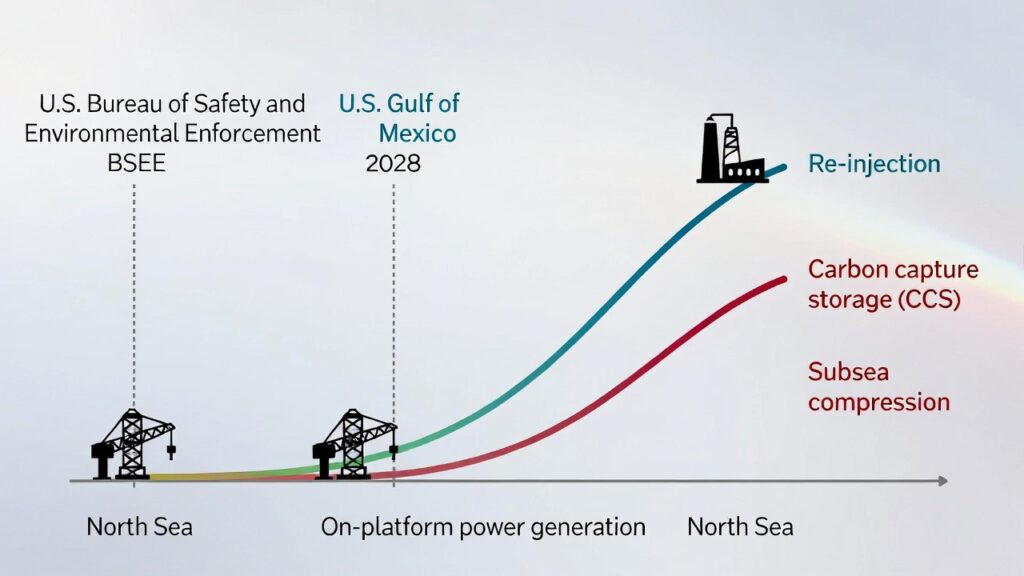
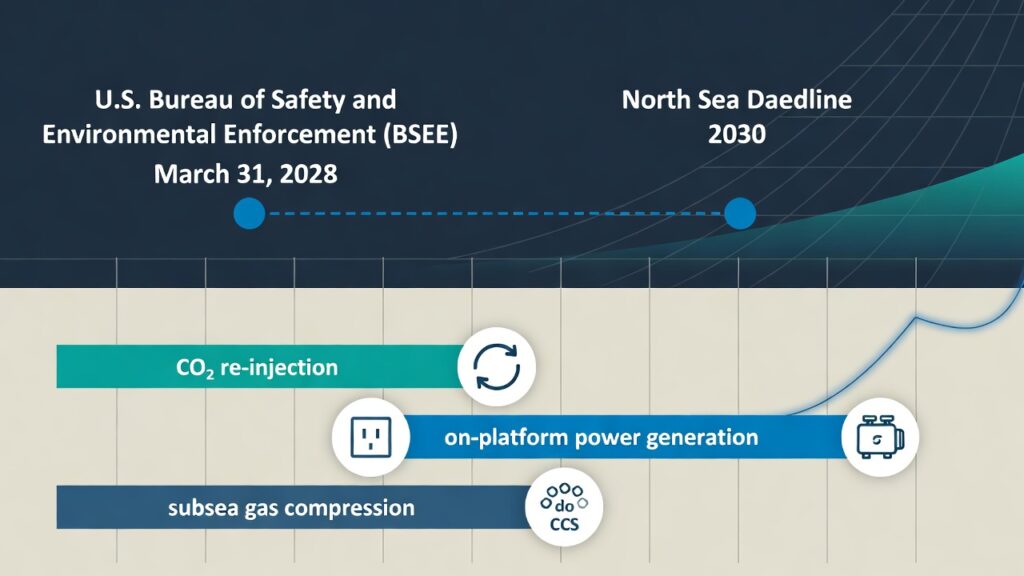
- U.S. GoM : BSEE regulations now mandate zero routine flaring by 2028 for new developments; existing platforms face escalating fees.
- North Sea : UK/Norway targets <0.1% flaring intensity by 2030.
- Qatar NFE : Full gas utilization (no routine flaring) to meet low-carbon LNG buyer demands.
- Alternatives : Gas re-injection for pressure maintenance, power generation on platforms, or subsea compression to export gas instead of flare.
Figure 3: Routine Flaring Phase-Out Timeline & Alternatives
( image: Timeline infographic showing regulatory deadlines (U.S. BSEE 2028, North Sea 2030) and alternatives (re-injection, on-platform power, CCS, subsea compression) with icons and adoption curves.)
4. Subsea Technology’s Role in Methane Abatement
Subsea systems are key to reducing methane leaks:
- Subsea compression : Eliminates flaring by boosting gas for export instead of burning.
- Leak detection : Fiber-optic DAS/DTS along subsea flow lines for early methane leak identification.
- Digital twins : Real-time modeling of annulus pressure and seal integrity to prevent venting.
- Zero-emission completions — HPHT-rated equipment with reduced fugitive emissions.
These technologies turn methane abatement from a cost into a competitive advantage.
The Bottom Line
Methane abatement is now a survival metric in 2026. Searches for methane intensity curves and satellite-verified super-emitters are trending because companies must prove verifiable reductions or face fees, restricted markets, and investor backlash. Routine flaring is retiring fast, and subsea tech is at the forefront of making it happen.Engineers:
What methane abatement tech are you seeing deployed offshore satellite monitoring, subsea compression, or digital twins? Share in the comments or on LinkedIn.
Methane is the new emissions battleground.
Oko Immanuel
Subsea Engineering Specialist | Offshore Pipeline Insight