Oko Immanuel
Petroleum / Subsea Engineer
Founder, Offshore Pipeline Insight
Texas A&M Alumnus.
March 05, 2026
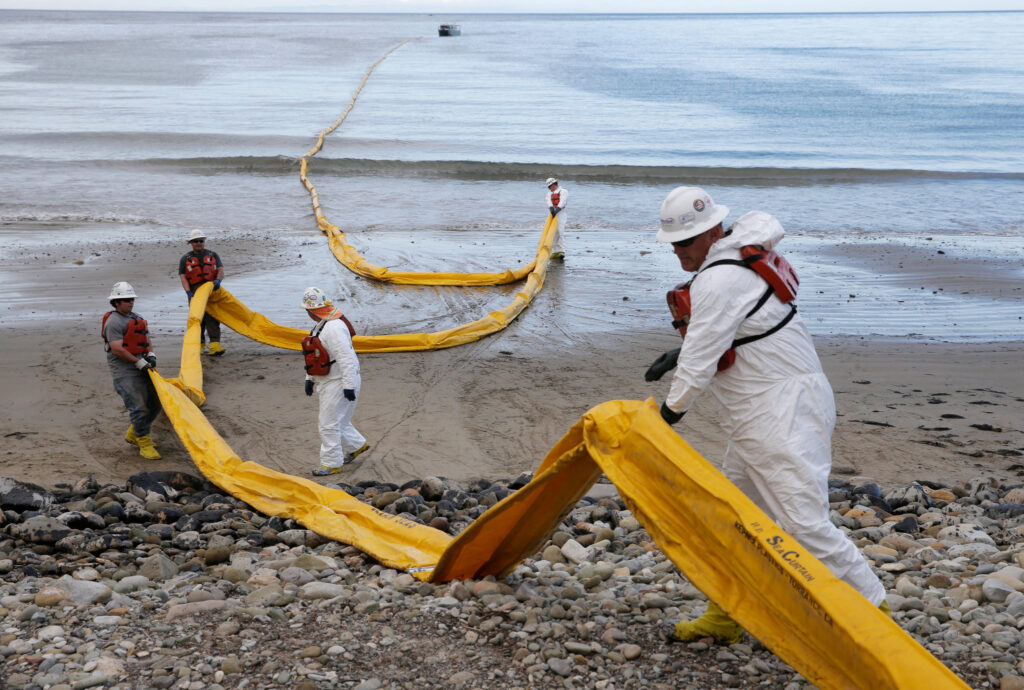
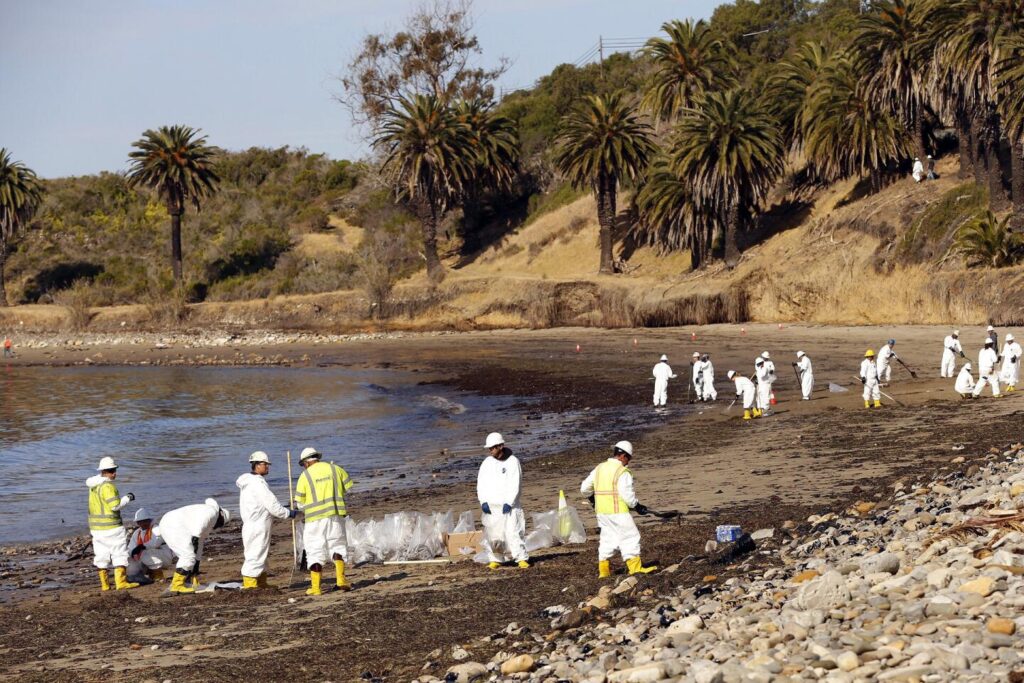
The saga surrounding Sable Offshore Corp.’s efforts to restart the Las Flores Pipeline System (Lines CA-324 and CA-325) tied to the Santa Ynez Unit (SYU) offshore Santa Barbara, California, has become one of the most high-profile pipeline integrity and regulatory battles in recent years. Shut down since the 2015 Refugio oil spill (which released over 140,000 gallons of crude into the Pacific), the system has been at the center of intense state-federal clashes, environmental lawsuits, and integrity concerns. As of early March 2026, the latest developments underscore persistent challenges in aging offshore/onshore pipeline assets: corrosion management, regulatory preemption attempts, and the tension between energy security and environmental safeguards.This post breaks down the technical and regulatory landscape, key lessons for the industry, and implications for integrity management in similar aging systems.
Background: The 2015 Spill and Path to Restart
The Las Flores Pipeline System onshore lines connecting offshore platforms in the Santa Ynez Unit to processing facilities and onward transport ruptured in May 2015 due to severe external corrosion, leading to a major spill. The incident highlighted vulnerabilities in aging infrastructure: inadequate cathodic protection, coating degradation, and insufficient inline inspection (ILI) frequency.Sable Offshore acquired the assets from ExxonMobil in early 2024 and aggressively pursued restart:
- Resumed limited offshore production in May 2025, storing oil onshore at Las Flores Canyon.
- Faced state blocks from the California Office of the State Fire Marshal (OSFM), Coastal Commission (record $18M fine for unpermitted repairs), and local authorities.
- In late 2025, Sable petitioned the federal Pipeline and Hazardous Materials Safety Administration (PHMSA) to reclassify the lines as “interstate” under the Pipeline Safety Act (despite staying within California), citing Trump’s national energy emergency declaration.
PHMSA approved restart plans and issued emergency permits in December 2025, bypassing some state oversight. This triggered lawsuits from California AG Rob Bonta, environmental groups (Center for Biological Diversity, Wishtoyo Foundation), and others, arguing violations of the Administrative Procedure Act, NEPA, and state authority.
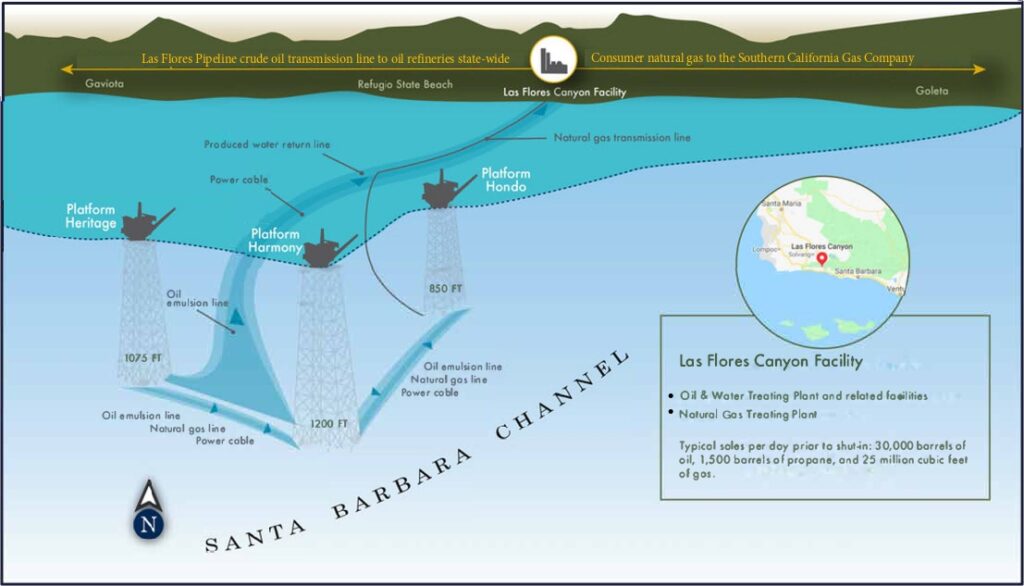
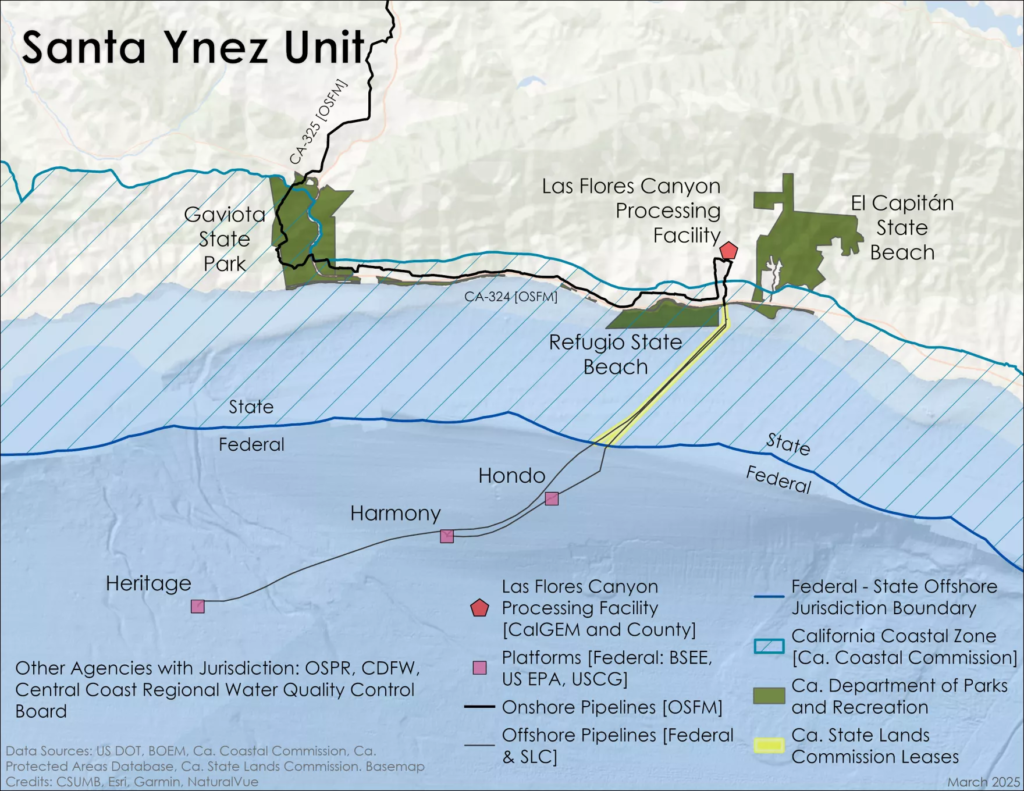
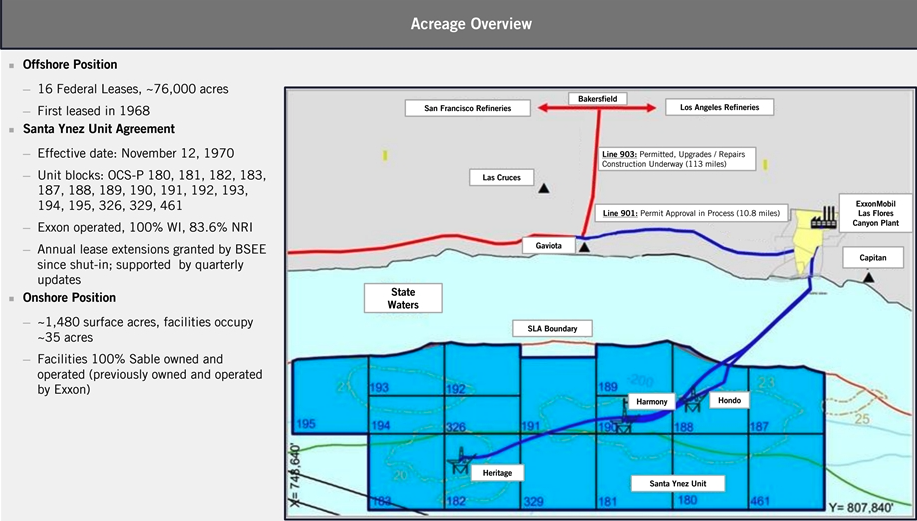
(“Schematic of the Santa Ynez Unit facilities, including offshore platforms (Harmony, Hondo, Heritage), subsea pipelines, and onshore Las Flores Canyon processing—source of the Las Flores Pipeline System (CA-324 and CA-325).”offshore platforms in the Santa Ynez Unit to processing facilities.”)
Key 2026 Developments: Court Rulings and Stalemate
- February 27, 2026 Ruling: Santa Barbara Superior Court Judge Donna D. Geck upheld (and made final) a preliminary injunction from July 2025. It bars restart without full state approvals, including OSFM waiver. The judge ruled federal intervention (PHMSA reclassification and emergency permits) does not override state requirements under the existing consent decree.
- Ongoing Strategy Shift: Sable has pivoted to an “Offshore Storage and Treating” (OS&T) approach—acquiring a vessel for offshore storage/export to bypass onshore lines. Expected vessel delivery Q3 2026, with production continuing but no commercial sales yet (oil stored onshore).
- Federal vs. State Clash: California sued PHMSA in January 2026 (Ninth Circuit), claiming illegal preemption. Public comments on emergency permits remain open, but state authority holds for now.
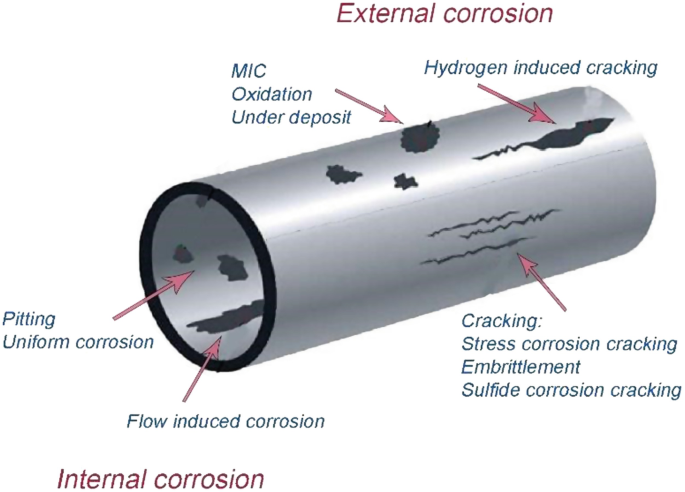
This leaves the onshore restart blocked, with integrity concerns (corrosion history) central to opposition.Corrosion and Failure Mechanisms Diagram A clear illustration of external and internal corrosion types (pitting, cracking, coating issues) that contributed to the 2015 spill and ongoing integrity concerns.
Technical Lessons: Integrity Challenges in Aging Lines
The case exemplifies broader issues in US offshore/nearshore pipelines (many >30-50 years old):
- Corrosion and Material Degradation: External corrosion led to the 2015 failure; post-repair inspections revealed ongoing risks (e.g., coating disbondment, inadequate CP). Aging ERW seams (common in pre-1970s lines) prone to hook cracks/selective corrosion.
- Inspection and Monitoring Gaps: Need for frequent ILI (magnetic flux leakage, ultrasonic), direct assessment, and hydrostatic testing. PHMSA mandates risk-based integrity management, but state-level enforcement varies.
- Regulatory Overlap Risks: Federal preemption attempts under energy emergencies highlight jurisdictional tensions—interstate classification can fast-track but invites legal challenges if not truly interstate.
- Asset Life Extension Strategies: Repurposing/repairs require rigorous documentation; unauthorized work led to fines/charges (Sable faced 21 criminal counts for pollutant discharge during repairs).
Broader 2026 context: US pipeline incidents (e.g., early-year explosions in aging lines) underscore urgency for proactive integrity programs—AI predictive analytics, fiber-optic sensing, and AUV inspections are gaining traction.This diagram illustrates typical corrosion mechanisms in aging subsea/onshore pipelines, including external pitting and coating failure—directly relevant to the Las Flores issues.
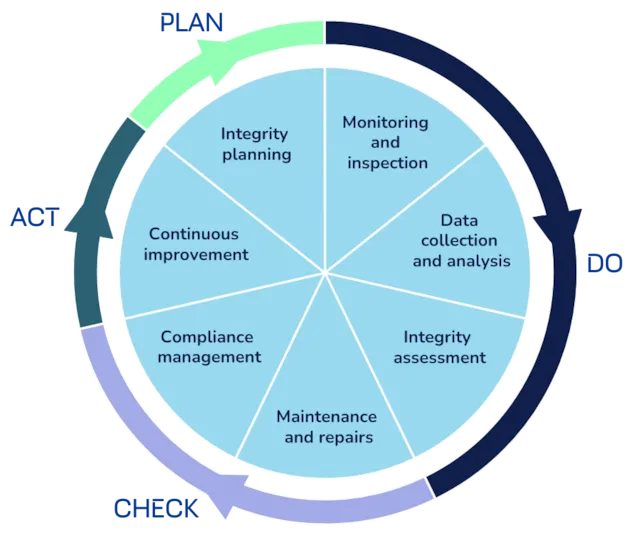
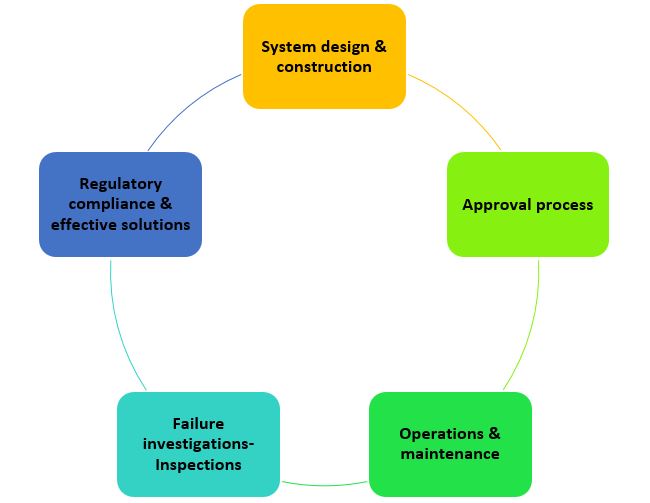
A schematic of pipeline integrity management workflow (risk assessment → inspection → mitigation), highlighting where gaps contributed to past failures
Forward Implications for Offshore Pipeline Professionals
- Risk Mitigation: Prioritize multi-method inspections (ILI + external surveys) and digital twins for predictive modeling in HPHT/aging assets.
- Regulatory Navigation: Expect more federal-state friction under current admin; document compliance rigorously to withstand challenges.
- Alternatives: OS&T concepts (floating storage) offer workarounds for blocked onshore routes—synergies with floating wind/H2 hubs.
- Industry-Wide: With 113 new offshore lines slated for 2026 starts, lessons from Sable emphasize building integrity from day one.
The Santa Barbara saga is a cautionary tale: technical excellence in integrity must align with robust regulatory engagement. As subsea engineers, we play a key role in preventing repeats through advanced monitoring and transparent practices.
What are your thoughts on federal preemption in pipeline restarts, or similar integrity challenges you’ve faced? Drop a comment let’s discuss!
Oko Immanuel
Petroleum / Subsea Engineer
Founder, Offshore Pipeline Insight
Texas A&M Alumnus.
March 05, 2026