
Written by Oko
Founder, Offshore Pipeline Insight
June 15, 2026
As the North Sea and other mature offshore basins enter a new phase of the energy transition, operators face a critical decision regarding aging subsea pipelines: Should they be decommissioned and removed, or repurposed for carbon capture, utilisation and storage (CCUS) or hydrogen transport?
This cornerstone article explores the technical, economic, environmental, and regulatory differences between decommissioning and repurposing of subsea pipelines, with a specific focus on their suitability for the energy transition.
Understanding the Two PathsPipeline Decommissioning
Decommissioning involves the permanent retirement of a pipeline at the end of its useful life.
This typically includes:
- Cleaning and flushing the pipeline
- Cutting and removing sections (especially near platforms and shore crossings)
- Leaving some sections in place (where permitted)
- Ensuring no future environmental risk
Decommissioning is often required under regulations such as OSPAR in the North East Atlantic and guidelines from the North Sea Transition Authority (NSTA) in the UK.
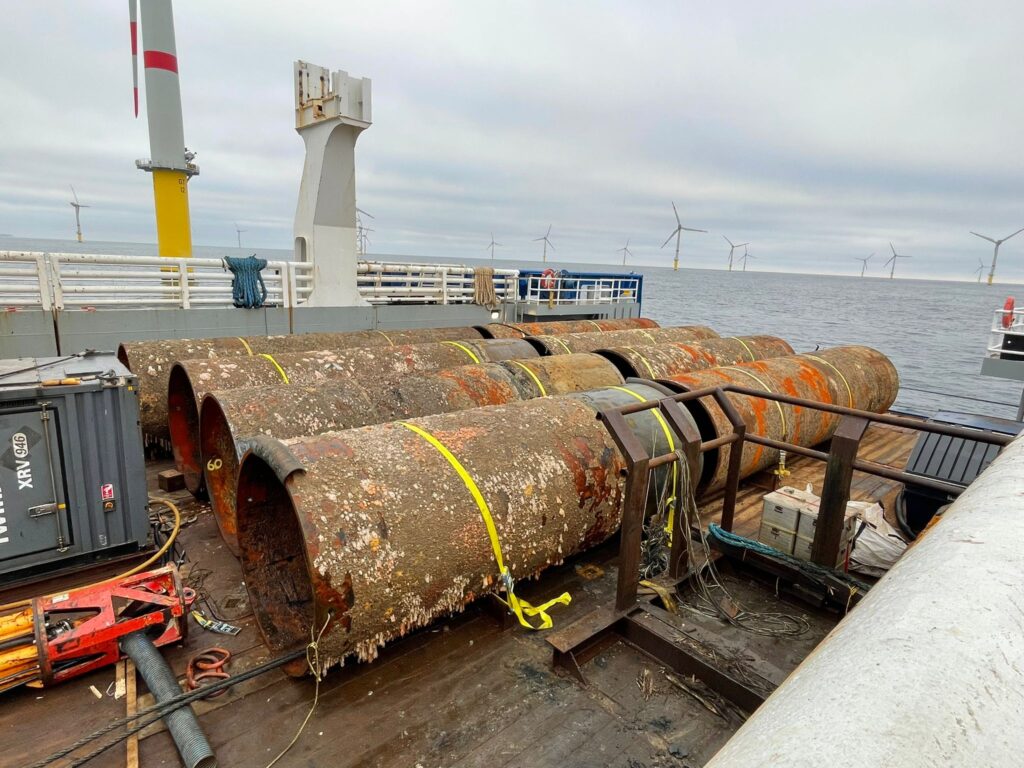
Decommissioned subsea pipelines ready for disposal — a common sight during major decommissioning campaigns.
Pipeline Repurposing
Repurposing involves assessing and modifying existing pipelines so they can safely transport CO₂ (for CCUS) or hydrogen. This approach is gaining strong interest because it can:
- Significantly reduce costs compared to building new pipelines
- Lower the environmental footprint
- Accelerate the deployment of CCUS and hydrogen infrastructure
However, repurposing is not always technically or economically feasible.
Key Comparison: Decommissioning vs Repurposing
| Factor | Decommissioning | Repurposing (CCUS or Hydrogen) | Winner |
|---|---|---|---|
| Cost | High (especially full removal) | Potentially much lower | Repurposing |
| Environmental Impact | High disturbance during removal | Lower if pipeline is reused | Repurposing |
| Technical Risk | Well understood | New risks (material compatibility) | Decommissioning |
| Regulatory Approval | Established process | Still evolving, case-by-case | Decommissioning |
| Timeline | Long planning and execution | Can be faster if assessment is positive | Repurposing |
| Future Flexibility | Asset is gone | Asset remains useful for energy transition | Repurposing |
Challenges of Repurposing for Hydrogen
Hydrogen is particularly challenging for existing pipelines due to hydrogen embrittlement.
Key issues include:
- Hydrogen atoms can diffuse into steel and cause cracking
- Higher risk in high-strength steels and older pipelines
- Welds and heat-affected zones are especially vulnerable
- Need for thorough material assessment and possibly derating operating pressure
Many older subsea pipelines were not designed with hydrogen service in mind, making repurposing technically complex and sometimes uneconomical.
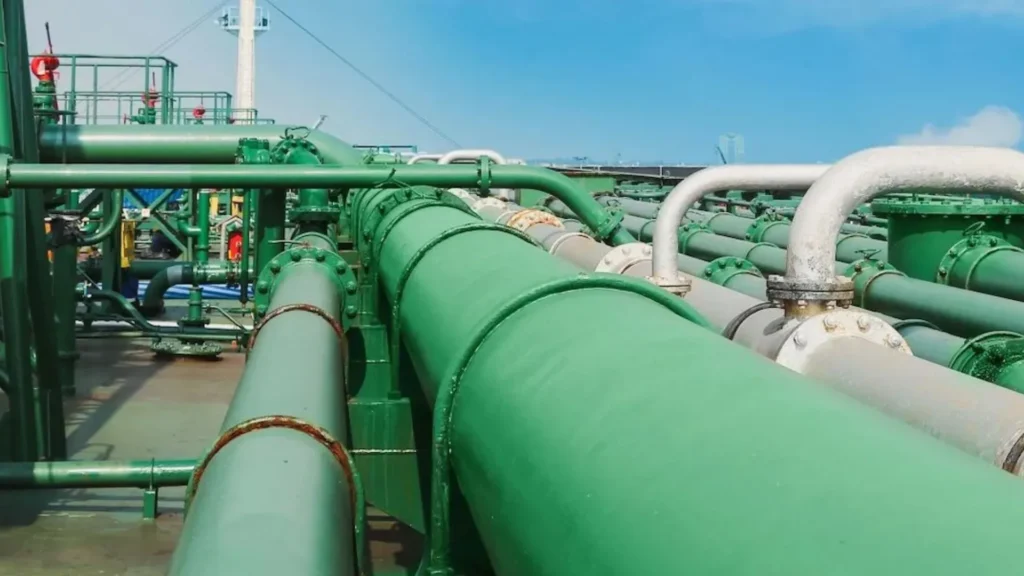
Hydrogen pipeline infrastructure — repurposing existing lines requires careful material compatibility assessment
Challenges of Repurposing for CCUS (CO₂)Repurposing pipelines for dense-phase CO₂ transport also presents challenges:
- CO₂ can cause corrosion if water is present
- Requires very dry CO₂ to prevent carbonic acid formation
- Higher operating pressures than many original designs
- Need for new valves, seals, and monitoring systems
Despite these challenges, CO₂ repurposing is generally considered more feasible than hydrogen in many cases, especially for shorter pipelines or those made from suitable materials.
When Should Pipelines Be Repurposed?
Repurposing makes sense when:
- The pipeline is in good structural condition
- Material compatibility with CO₂ or hydrogen can be proven
- The route aligns with future CCUS or hydrogen projects
- Regulatory approval is achievable
- The cost of repurposing is significantly lower than new build + decommissioning
Decommissioning is usually preferred when:
- The pipeline has significant integrity issues
- Material is unsuitable for new service
- No clear future use exists in the area
- Full removal is required by regulation or stakeholders
Regulatory Landscape (2026)
Regulators are increasingly open to repurposing but still require robust justification.
- UK (NSTA): Supports reuse where it delivers value and meets safety standards.
- Norway: Strong focus on reuse as part of the energy transition strategy.
- OSPAR: Requires that any reuse does not compromise environmental protection.
- EU: Pushing for CCUS and hydrogen infrastructure, creating more opportunities for repurposing.
Operators must submit detailed reuse assessments, including integrity studies, material testing, and risk evaluations.
Economic ConsiderationsRepurposing can offer major cost advantages:
- Avoiding full removal costs (which can run into tens of millions per pipeline)
- Reducing the need for new pipeline construction
- Accelerating CCUS and hydrogen project timelines
However, the cost of detailed integrity assessments, modifications, and potential derating can still be significant. A thorough cost-benefit analysis is essential for every pipeline considered for reuse.
Future Outlook
The coming years will see more pipelines evaluated for repurposing as CCUS and hydrogen projects scale up. Key trends include:
- Development of clearer regulatory frameworks for reuse
- Improved assessment techniques and digital tools
- Growing number of successful repurposing case studies
- Hybrid approaches (partial removal + partial reuse)
While not every pipeline can or should be repurposed, reuse will play an important role in making the energy transition more cost-effective and sustainable.
Conclusion
The decision between decommissioning and repurposing subsea pipelines is no longer straightforward. While decommissioning remains the traditional and well-understood route, repurposing for CCUS and hydrogen offers significant environmental and economic advantages — provided the technical and regulatory hurdles can be overcome.Operators who invest in proper assessment and planning now will be better positioned to make the right choice for each asset as the energy transition accelerates.
Related Reading on Offshore Pipeline Insight:
- Pipeline Integrity Management in Offshore & Subsea Environments
- Hydrogen Embrittlement Risks in Repurposed Pipelines
- North Sea Decommissioning Trends 2026
- Digital Twins for Subsea Pipeline Integrity
<p>You can find this product on Amazon here: <a href="https://amzn.to/44a0w4T" target="_blank" rel="noopener">Check it out on Amazon</a>.</p>