By Oko
Founder, Offshore Pipeline Insight
March 13, 2026
Flettner rotors, also known as rotor sails or Flettner sails, are a type of wind-assisted propulsion system used primarily on ships to reduce fuel consumption and emissions. Invented by German engineer Anton Flettner in the 1920s, they leverage the Magnus effect a physical phenomenon where a spinning cylinder in a fluid flow (like air) generates a sideways force perpendicular to the direction of the flow. This force provides thrust to propel or assist the vessel forward, supplementing traditional engines.
How Flettner Rotors Work
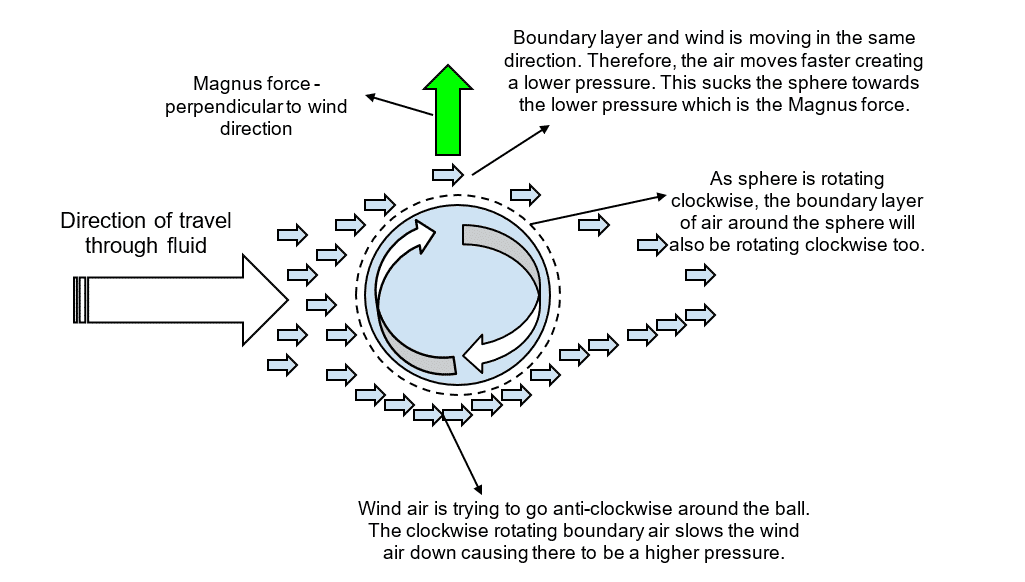
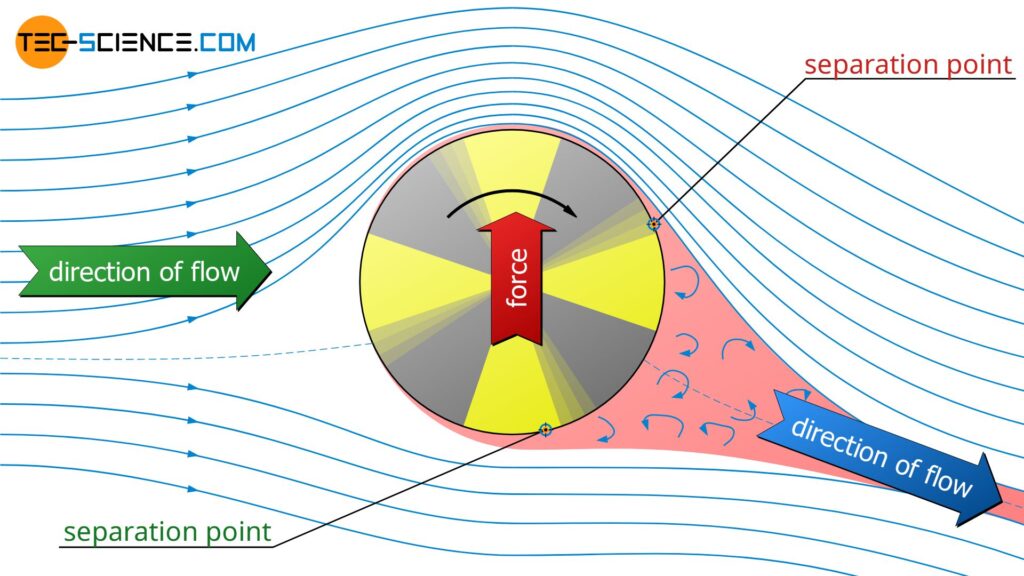
The core principle is the Magnus effect. When wind blows across a rotating cylinder, the rotation alters the airflow around it:
- On one side, the rotation aligns with the wind direction, increasing air speed and creating lower pressure (Bernoulli’s principle).
- On the opposite side, the rotation opposes the wind, slowing the air and creating higher pressure.
- The pressure difference generates a lift force perpendicular to the wind, which can be directed to push the ship forward if the rotor’s spin is controlled properly.
Modern Flettner rotors are tall, vertical cylinders (typically 15–35 meters high and 3–5 meters in diameter) made from lightweight composites like carbon fiber or aluminum. They are powered by small electric motors (using about 1–3% of the saved fuel energy) to spin at speeds of 100–300 RPM, depending on wind conditions. Sensors and automation systems adjust rotation speed and direction in real-time for optimal thrust, integrated with the ship’s navigation.Here’s a visual diagram illustrating the Magnus effect in action:
Advantages in Maritime Applications
- Fuel Savings: In favorable winds (above 10–15 knots), rotors can reduce fuel use by 5–30%, with averages around 10–20% on global routes. Savings increase on wind-exposed trades like transatlantic or transpacific.
- Emissions Reduction: Directly cuts CO₂, NOx, and SOx by lowering engine load, aiding compliance with IMO regulations like the Carbon Intensity Indicator (CII) and Energy Efficiency Existing Ship Index (EEXI).
- Ease of Integration: Retrofittable on existing vessels (e.g., bulkers, tankers, Ro-Ro ships) with minimal deck space (foundations are compact). They fold down for bridges or ports.
- Low Maintenance: No moving parts beyond the drive motor; durable in marine environments.
- Scalability: Multiple rotors (2–6 per ship) amplify effects; modern designs are automated via AI for route optimization.
Challenges and Limitations
- Wind Dependency: Ineffective in calm or headwinds; best as auxiliary, not primary propulsion.
- Initial Costs: Installation ranges from $1–5 million per rotor, though ROI is 3–7 years via fuel savings, especially with high bunker prices or carbon taxes.
- Aerodynamic Interference: Placement must avoid disrupting airflow to other structures; not ideal for all ship types (e.g., container ships with high stacks).
- Regulatory and Safety: Class societies like DNV or ABS certify them; stability assessments ensure no tipping risks.
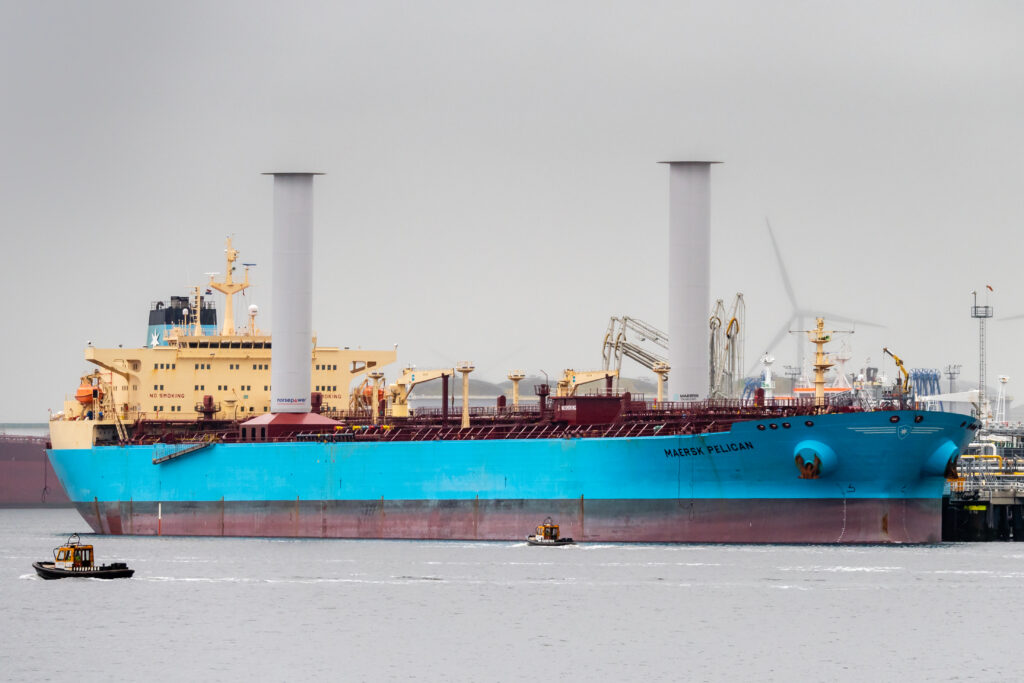
Real-World ExamplesAs of 2026, over 50 vessels worldwide use Flettner rotors, with deployments accelerating. Pioneers include Norsepower (Finland) and Eco Flettner (Germany).The Maersk Pelican tanker, equipped with two Norsepower rotors:
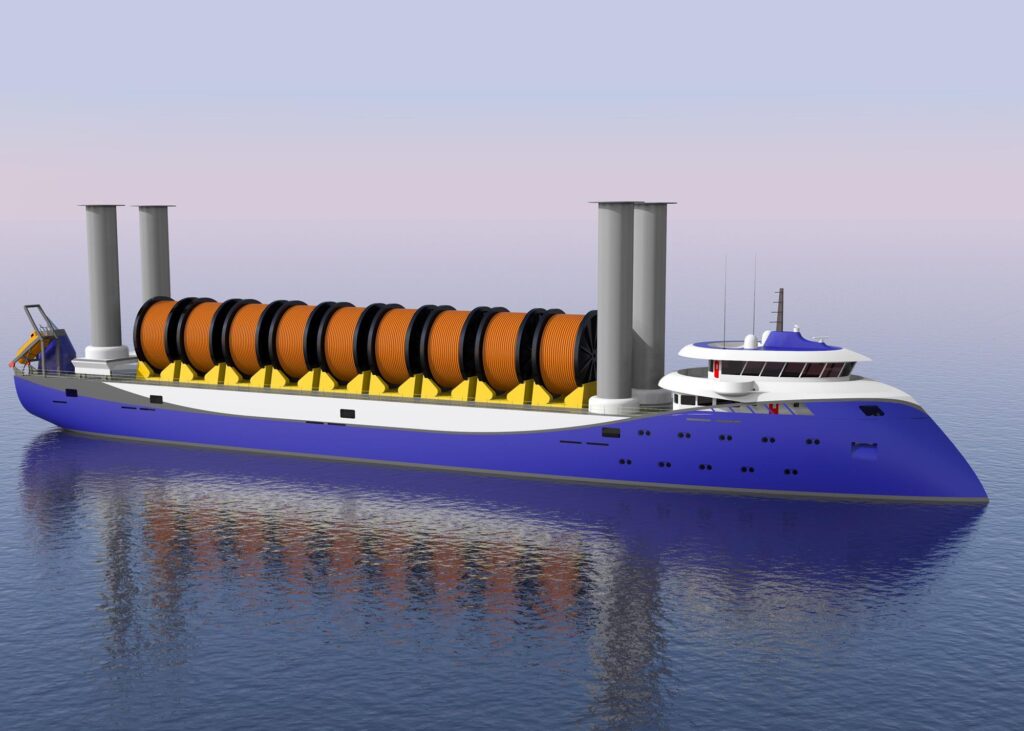
A conceptual hybrid Flettner freighter design:
A conceptual hybrid Flettner freighter design:
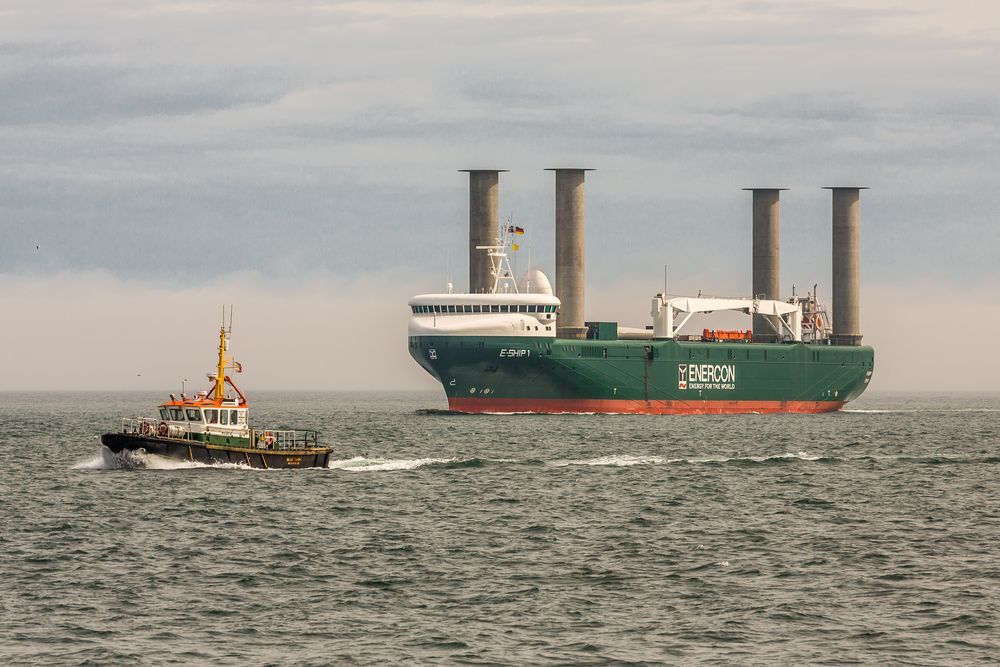
The E-Ship 1, a cargo vessel with four rotors:
In summary, Flettner rotors represent a mature, eco-friendly technology bridging traditional shipping and full decarbonization, with growing adoption amid IMO’s net-zero push.