Written by Oko
Founder, Offshore Pipeline Insight
June 14, 2026
The offshore pipeline sector is experiencing one of the most significant shifts in its history. Traditional methods of inspection, monitoring, and maintenance are being replaced by intelligent, data-driven systems.
Digital transformation — powered by Artificial Intelligence (AI), Digital Twins, and advanced Robotics — is moving from pilot projects to mainstream operations. This change is improving safety, reducing costs, extending asset life, and enabling smarter decisions about pipeline repurposing for the energy transition.This updated cornerstone article explores the current state of digital transformation in subsea pipeline operations in 2026, with fresh insights and visuals.
Why Digital Transformation Is Accelerating
Subsea pipelines operate in extreme conditions where traditional approaches are expensive and limited. As many pipelines age and operators look to repurpose them for CO₂ transport and hydrogen, the need for more intelligent systems has become urgent.Key drivers include:
- Rising costs of conventional inspections
- Need for predictive rather than reactive maintenance
- Regulatory pressure for better data and traceability
- Energy transition projects requiring new integrity assessments
- Shortage of skilled offshore personnel
Digital technologies help address all of these challenges simultaneously.
The Three Core Technologies1. Digital Twins
Digital twins create virtual replicas of physical pipelines that combine real-time data, historical records, and simulation models. In 2026, they are becoming central to how operators manage complex subsea systems.Benefits include:
- Real-time visualisation of pipeline networks
- Predictive modelling of degradation
- Scenario testing for different operating conditions
- Support for repurposing assessments (CCUS and hydrogen)
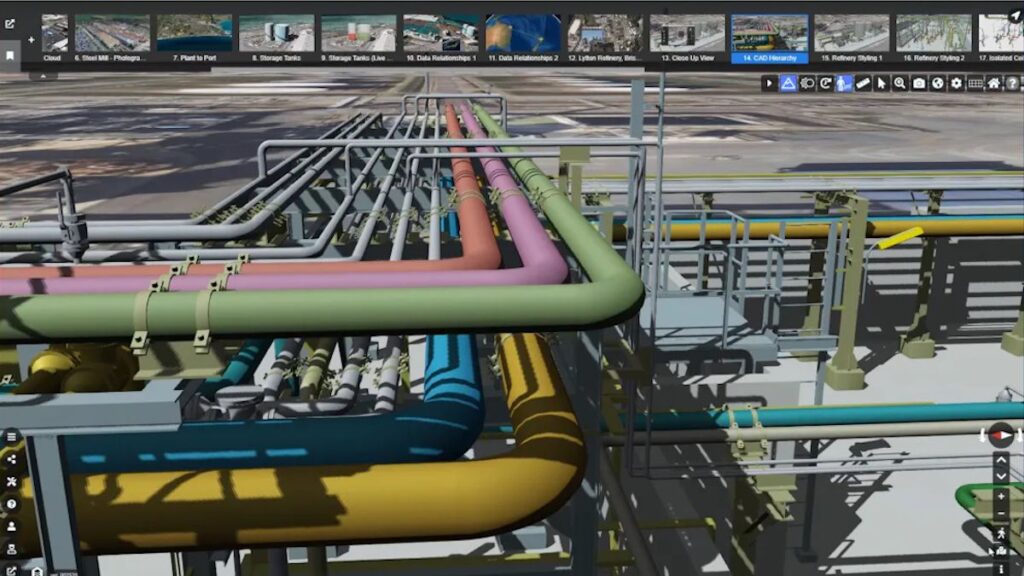
3D Digital Twin visualization of complex pipeline infrastructure — enabling real-time monitoring and advanced simulation.
2. Artificial Intelligence & Machine Learning
AI is transforming how vast amounts of inspection and sensor data are processed. Instead of engineers spending weeks analysing data manually, machine learning models can now:
- Automatically detect anomalies from inspection footage
- Predict remaining life of pipeline sections
- Optimise inspection schedules
- Identify subtle patterns linked to future failures
AI is particularly powerful when integrated with digital twins, creating systems that continuously learn and improve.
3. Robotics and Autonomous Systems
Robotics has advanced rapidly. Modern systems include:
- Autonomous Underwater Vehicles (AUVs) capable of long-range, high-speed pipeline surveys
- Resident ROV systems that stay subsea for extended periods
- Robotic intervention tools for cleaning, coating repair, and minor interventions without full vessel mobilisation
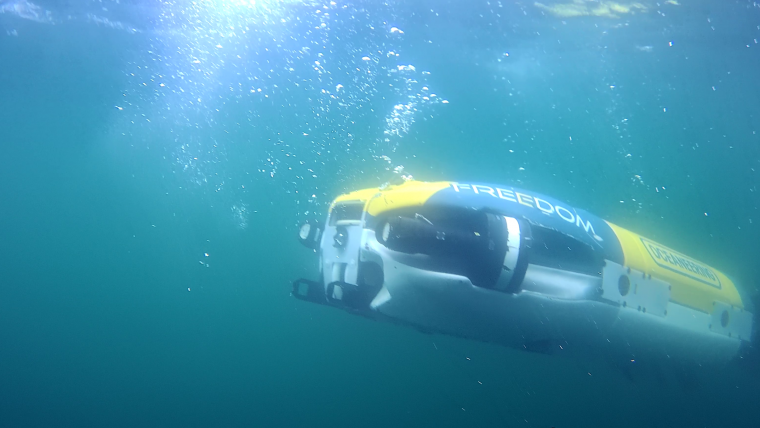
Freedom AUV performing autonomous pipeline inspection — a major step toward reduced vessel dependency
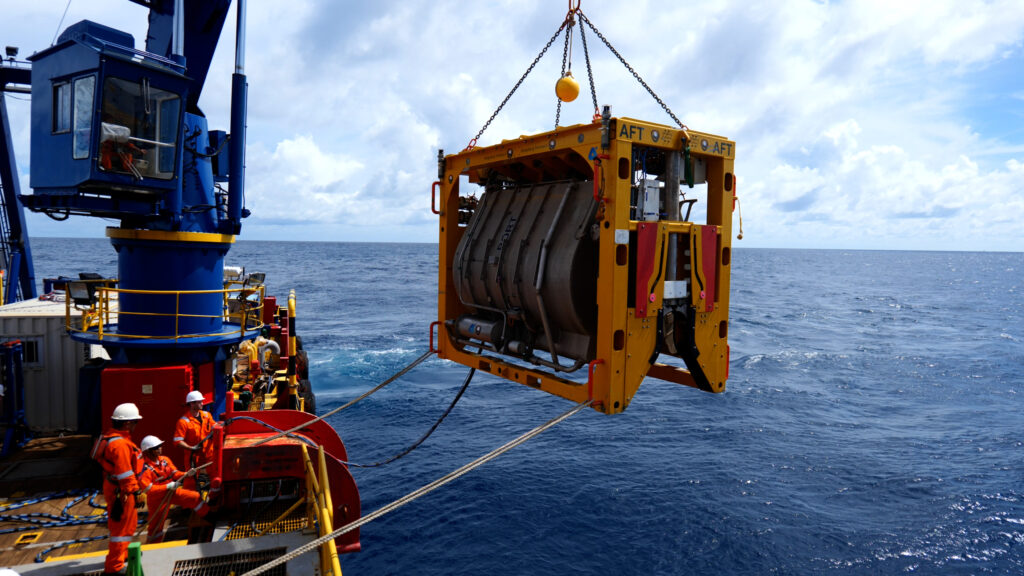
Advanced robotic system being deployed for subsea pipeline intervention and repair.
Real-World Impact in 2026
Operators using these technologies are seeing measurable improvements:
- Reduced inspection costs through smarter, risk-based scheduling
- Faster decision-making during integrity assessments
- Lower operational risk by minimising human exposure offshore
- Better support for repurposing projects through advanced modelling
- Improved data quality and traceability for regulators
Digital twins combined with AI are particularly valuable when evaluating whether existing pipelines can safely carry CO₂ or hydrogen.
Challenges Still Facing the Industry
While progress is significant, several barriers remain:
- High initial investment costs
- Integration challenges with legacy systems
- Shortage of personnel skilled in both engineering and data science
- Cybersecurity concerns with increased connectivity
- Cultural resistance to moving away from traditional methods
Overcoming these challenges requires both technology investment and organisational change.
The Road Ahead (2026–2030)
The next few years will bring even greater integration:
- Wider use of resident autonomous systems
- More pipelines fitted with fibre optic sensing for real-time monitoring
- Stronger AI models trained on industry-wide data
- Deeper connection between digital twins and integrity management systems
- Greater focus on digital solutions specifically for repurposed pipelines
Operators who build strong digital foundations today will be best positioned to manage both existing assets and new energy transition infrastructure.
Conclusion
Digital transformation is fundamentally changing subsea pipeline operations. AI, Digital Twins, and advanced Roboticsare moving from emerging technologies to essential tools for safe, efficient, and future-ready operations.The companies that invest wisely in these areas will gain significant advantages in safety, cost efficiency, and their ability to participate in the energy transition.This cornerstone article provides the foundation for deeper exploration into specific technologies and applications. The future of subsea pipelines will be smarter, more autonomous, and increasingly integrated with digital systems.
Related Reading on Offshore Pipeline Insight: