Offshore Pipeline Insight
Drilling & Upstream Desk | September 9 2026
The U.S. is not in a drilling boom. The rotary count is stuck in the high 500s. Output is still near records. Meanwhile the real heat is in contracts: a half-billion-dollar subsea package off Cyprus, a $14 billion LNG reset in Papua New Guinea, a Clearwater merger in Alberta, and appraisal drilling on one of bp’s biggest finds in a generation. Overlay that with Houthi strikes on southern Saudi energy sites, and Brent has been knocking on $100.
Deck: Fewer rigs than the last cycle. More barrels than almost any year on record. The week’s news is about efficiency on land and big cheques offshore.
By Oko Immanuel
Founder, Offshore Pipeline Insight
The count: 588 and holding
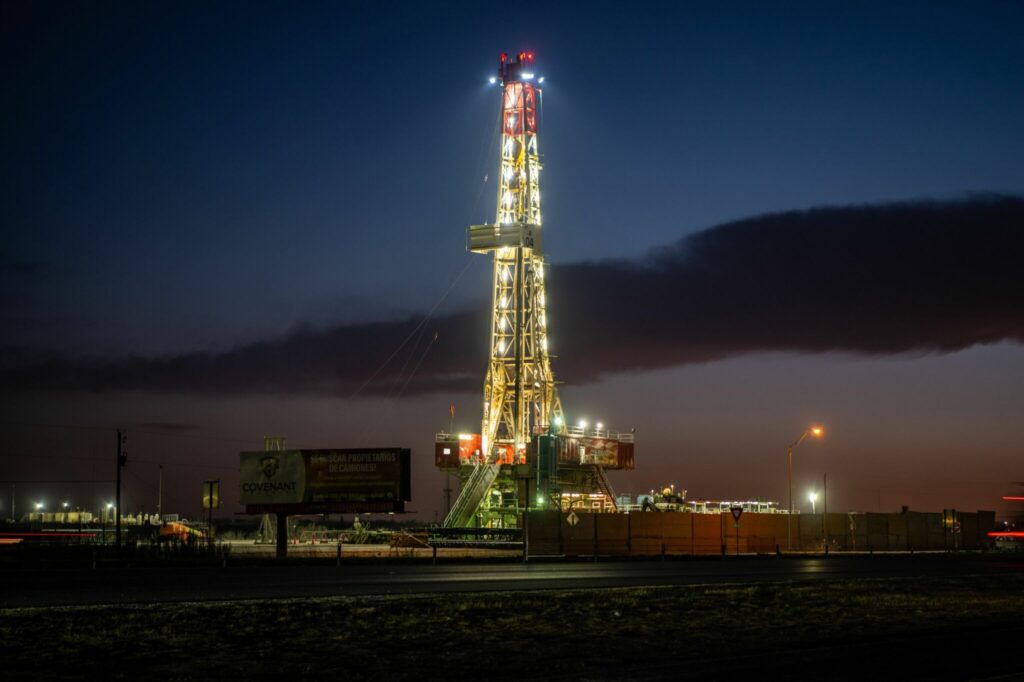
Baker Hughes put the U.S. rotary rig count at 588 for the weeks ending August 28 and September 4. That is unchanged week to week and about 50 rigs above the year-ago level. Oil rigs have been in the mid-to-high 440s. Gas has been mixed in the high 120s to low 130s. Offshore inside the U.S. total remains a thin slice — single digits to low teens.
This is not 2014. It is not even the 2022 rebound. Operators are drilling the best locations, stretching laterals, and letting productivity carry volumes. EIA still sees 2026 U.S. crude and dry gas at or near records, helped by LNG exports and power demand — including data-center load — rather than by a surge in new rigs.
Read the count the right way. A flat 588 with rising output means the service intensity per barrel is falling. That is good for producers. It is tighter for anyone selling commodity rigs and basic well construction.
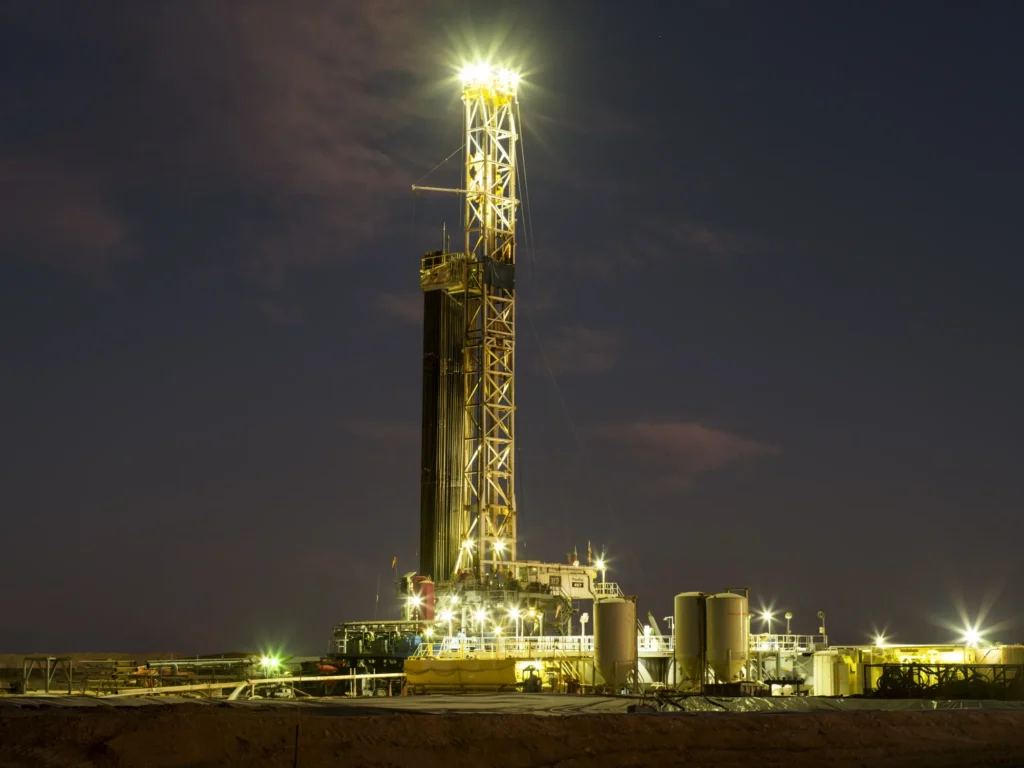
Permian pad at night. One modern horizontal rig can replace the work of several older units. That is why production can rise while the national count sits still.
The Permian still holds the bulk of U.S. activity — on the order of 260-plus rigs in late August basin tallies — with Haynesville, Eagle Ford and a scatter of other plays behind it. Canada’s count has been drifting in the 200s after the summer peak. Worldwide marketed offshore utilization remains high even as the Gulf of Mexico fleet stays relatively tight.
What a rig is, and why the mix matters
On land, the unit that shows up in Baker Hughes is a rotary rig making hole. Offshore, the machine changes with water depth.
A jack-up stands on legs in shallow water. A semi-submersible or drillship works in deep and ultra-deep water. Platform rigs sit on fixed steel. The U.S. onshore story this year is shale efficiency. The international story in the headlines below is deepwater gas, pre-salt oil and LNG.
From land rigs to drillships: water depth decides the kit. Cronos and Bumerangue live on the right-hand side of this picture.
Cronos: McDermott’s first subsea job for Eni
McDermott has won a substantial subsea contract from Eni Cyprus for the Cronos gas field in Block 6, about 185 km southwest of the island, in water around 2,287 metres. McDermott defines “substantial” as $500 million to $750 million. It is the contractor’s first subsea award with Eni.
Scope: project management, engineering, procurement and installation support, run from Houston, Perth, London and Kuala Lumpur, with the marine fleet including the deepwater construction vessel Amazon in the mix. Eni took FID in July. First gas is aimed at 2028. The development concept is four subsea wells, a line to Egypt, processing through Zohr-area facilities, and liquefaction at Damietta for export, mainly to Europe.
For this desk the point is simple. Eastern Mediterranean gas is no longer only a discovery headline. It is SURF work, pipe to Egypt, and an LNG cargo at the other end.
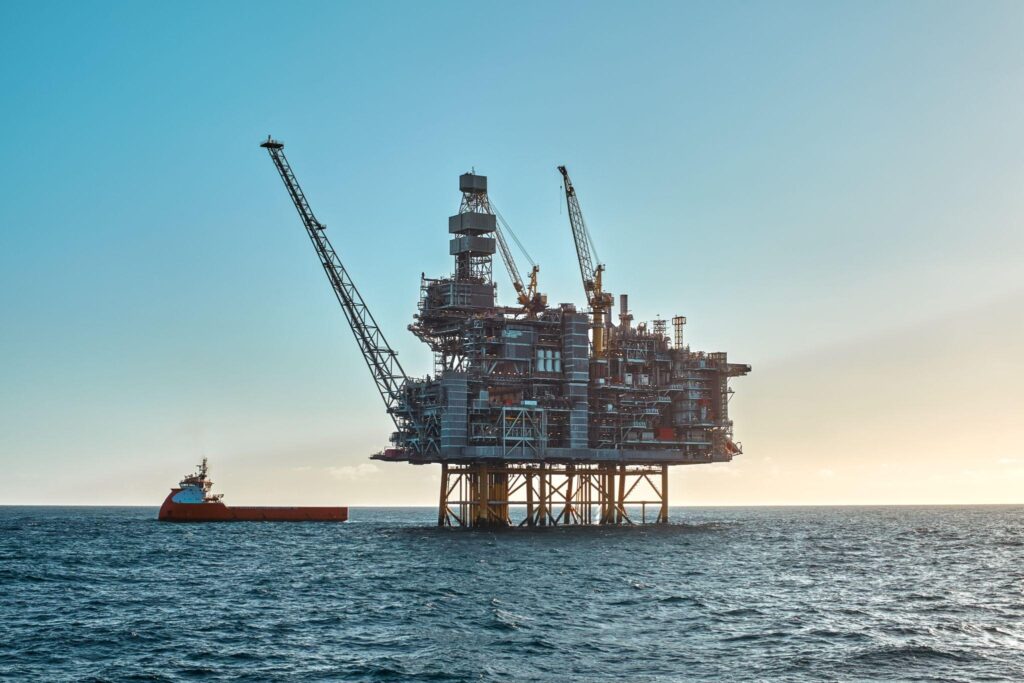
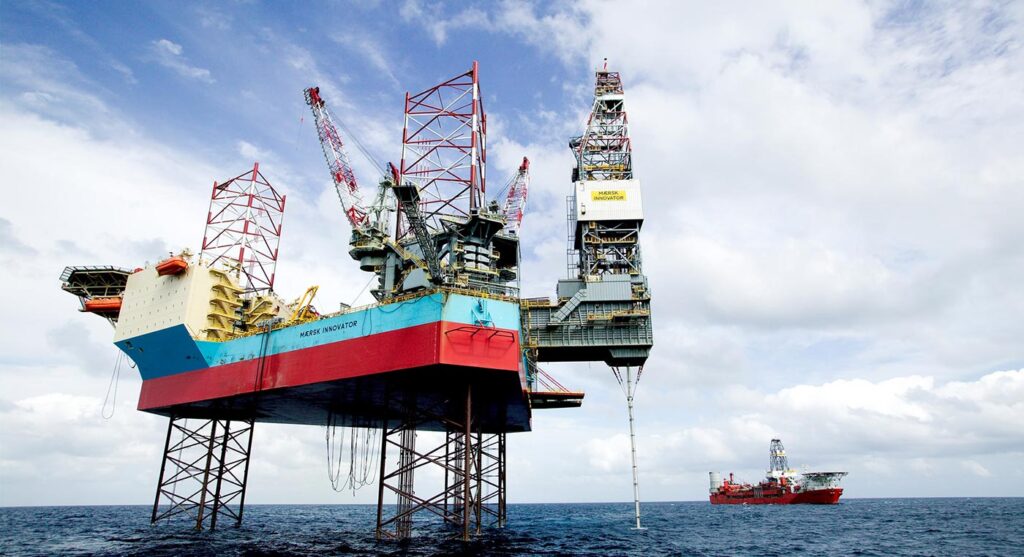
Deepwater kit and an attendant vessel — the class of spread that turns a 2022 discovery into 2028 molecules.
Papua LNG: Exxon takes the chair, costs come down
TotalEnergies is handing operatorship of Papua LNG to ExxonMobil and cutting its own stake, in a package designed to unlock a final investment decision by year-end. Design cuts and EPC rebids have pulled the estimate down by nearly $4 billion to about $14 billion. Nameplate is 5.6 million tonnes a year from the Elk and Antelope fields, with liquefaction planned next to Exxon’s existing PNG LNG plant near Port Moresby
After the state back-in and sell-down, the map looks like this: ExxonMobil 34.1% and operator; Santos 21%; Kumul/MRDC 22.5% combined; TotalEnergies 20% with offtake retained; ENEOS Xplora 2.4%. Santos is paying about $189 million for an extra 3.3% slice, conditional on FID. TotalEnergies is also setting up a marketing JV with state-linked entities for 2.4 Mt/y. The industrial logic is alignment. One operator across Papua LNG and the neighbouring PNG LNG plant is meant to stretch the life of the existing facility, which would otherwise start declining later this decade.
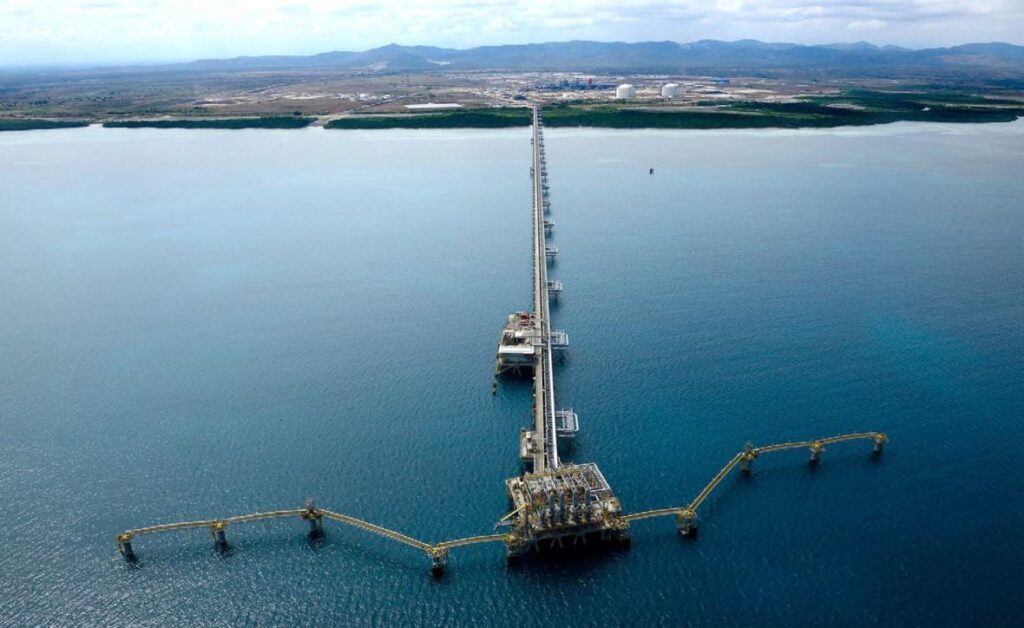
PNG LNG’s jetty near Port Moresby. Papua LNG is being redesigned to sit next door — same coast, same operator if FID lands in the fourth quarter.
Alberta: Tamarack and Headwater build a Clearwater major
Tamarack Valley Energy and Headwater Exploration are combining in an all-stock deal valued around C$10 billion (about $7.2 billion). The merged company would be the public pure-play in Alberta’s Clearwater heavy-oil fairway: more than 1,500 sections, run-rate production above 80,000 boe/d, more than 300 million boe of 2P reserves, and over 3,000identified locations.
Existing Tamarack holders would own about two-thirds; Headwater holders about one-third. Some non-core pieces would spin into a new vehicle, Tributary Exploration. Close is targeted for mid-Q4, with Tamarack’s Steve Buytels as CEO from January 2027.
Clearwater went from almost nothing to roughly 150,000 b/d in eight years. This deal is what a hot, low-cost onshore play looks like when the easy acreage is already in public hands: consolidate, cut overhead, drill the inventory.
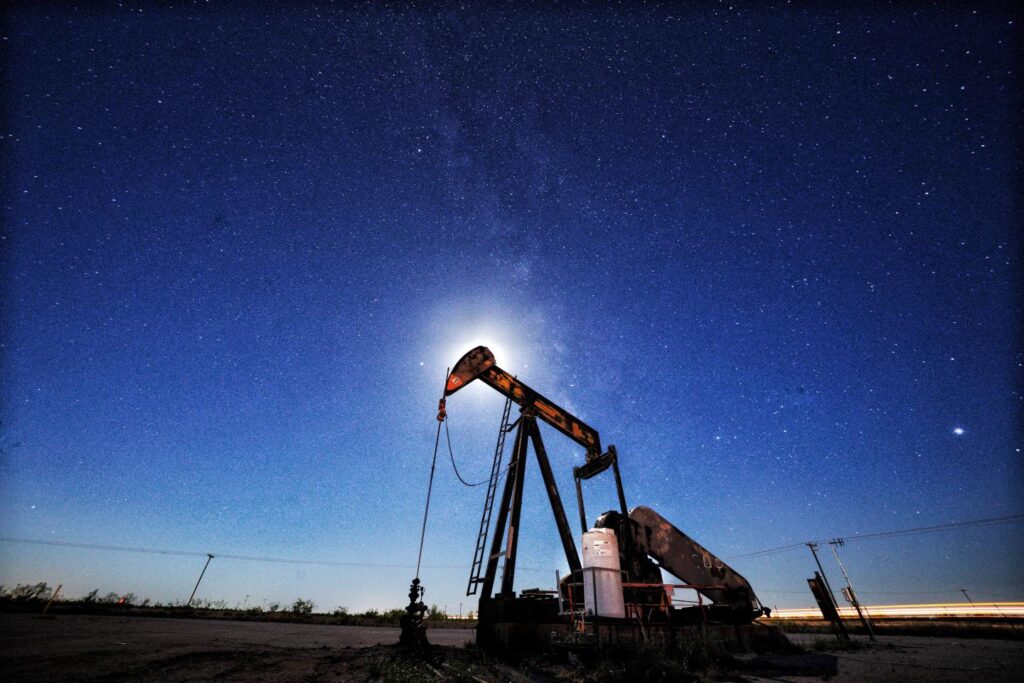
Onshore oil country. The Clearwater merger is not a deepwater story. It is pads, laterals and a drilling inventory long enough to justify a $10-billion combination.
Bumerangue: Halliburton goes in with bp
bp has awarded Halliburton an integrated drilling and evaluation contract for the first appraisal campaign at Bumeranguein Brazil’s Santos Basin pre-salt. Halliburton will bundle planning, drilling and formation evaluation, and use its LOGIX automation and remote-operations stack. Value was not disclosed.
The discovery is the reason the contract matters. Industry coverage has framed Bumerangue as bp’s largest find since Shah Deniz, with multi-billion-barrel potential and a development bill that could run into the tens of billions if CO2 handling and subsea kit get heavy. Appraisal is how those numbers get smaller or more honest. FID talk sits around 2028; first oil talk around 2032.
Saudi south: fires, halt orders, and a $99 print
Saudi authorities said operations at several energy facilities in the south were halted after Houthi missile and drone attacks. The group claimed strikes on sites in Abha, Najran and Jazan. The energy ministry reported fires and temporary disruption. Coalition statements put civilian injuries at 73. Brent traded up toward $99 after the news the highest since late July against an already tight backdrop of Middle East shipping risk.
This is not a U.S. rig-count story. It is a price and security story. Southern facilities are not Ghawar. They still sit on the same risk map as Red Sea exports. For drillers and contractors, a $90-plus Brent tape supports international budgets even when North American managers refuse to grow the fleet.
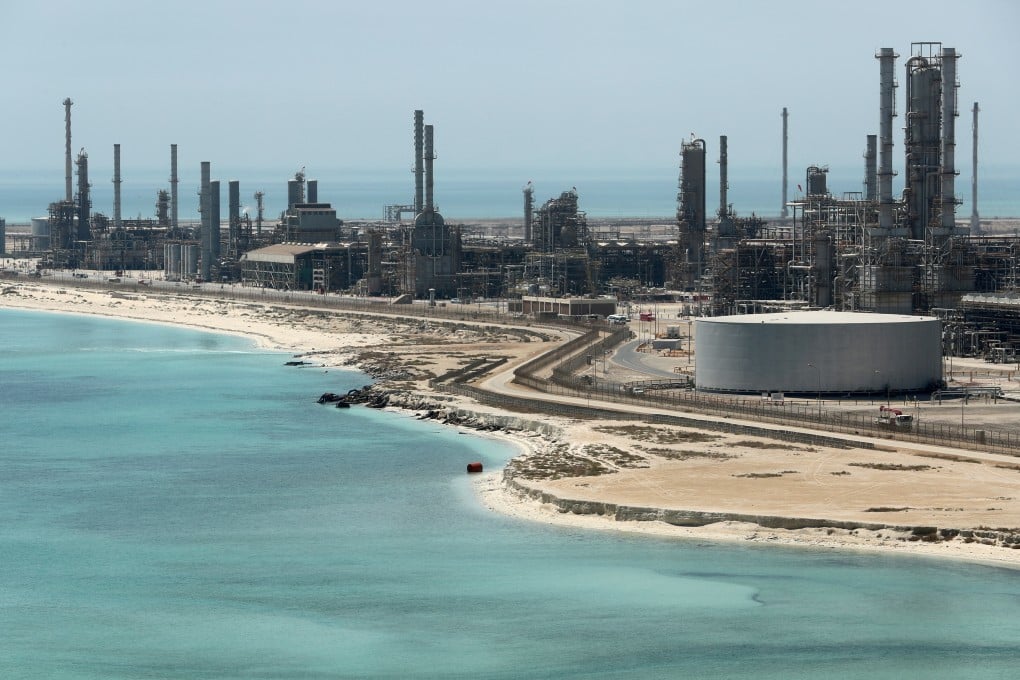
Saudi coastal energy infrastructure. This week’s halt orders were in the south, not a full-system shutdown — enough to move the benchmark, not enough to rewrite the world’s spare-capacity story by itself.
How to read the week
The U.S. machine is efficient, not expansive. 588 rigs and record-area production is the 2026 bargain: more hole, more completion intensity, fewer units.
Deepwater gas and LNG still write the large cheques. Cronos and Papua LNG are multi-year construction stories. They need pipe, SURF spreads and political alignment more than they need another Permian rig.
Onshore oil is consolidating where the rock is cheap. Clearwater is the Canadian version of “best rock, fewer companies.”
Appraisal is the bridge. Bumerangue is not a development yet. Halliburton’s job is to tell bp whether the prize is as big as the discovery headline.
Security risk is back in the price. A southern Saudi halt does not have to cut millions of barrels to lift Brent. It only has to remind the market that export routes are not abstract.
For a pipeline audience the through-line is the same as last week’s onshore brief. Drilling creates the molecules. Pipelines, LNG plants and subsea systems decide whether those molecules get paid. This week added steel off Cyprus, a cheaper path to FID in PNG, more Canadian locations in one set of hands — and a reminder that a missile can do more to the strip than a 10-rig swing in Texas.
Published by Offshore Pipeline Insight.