By Oko
Founder, Offshore Pipeline Insight
March 15, 2026
Offshore oil and gas operations face increasing pressure to reduce greenhouse gas emissions—particularly methane, CO₂, and flaring-related pollutants—while maintaining safety and regulatory compliance. In 2026, emissions abatement has become a core operational priority, driven by stricter regulations (e.g., IMO, EPA methane rules, EU ETS expansion), investor ESG demands, and voluntary commitments like the OGMP 2.0 and Aiming for Zero Methane Emissions.Effective abatement requires continuous monitoring, real-time data integration, proactive mitigation technologies, and robust reporting.
This technical blog outlines key strategies, tools, and technologies for monitoring and managing emissions, with visuals to illustrate real-world applications.
1. Understanding Key Emission Sources in Offshore Operations
Primary sources include:
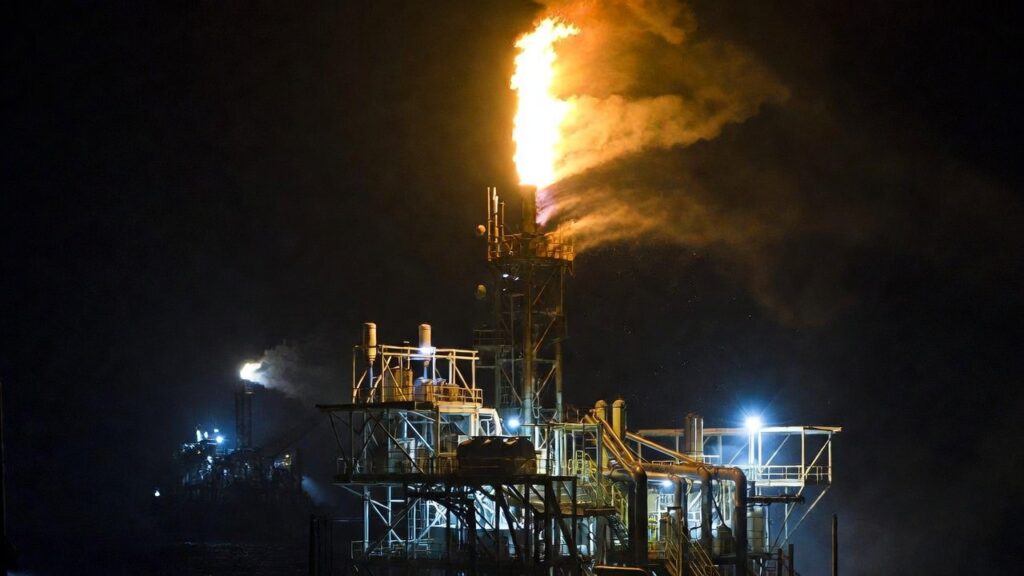
- Flaring & Venting : Routine and non-routine flaring remains a major contributor to CO₂ and black carbon.
- Methane Leaks : Fugitive emissions from valves, connectors, compressors, and pneumatic devices.
- Combustion : Diesel engines on rigs, turbines, and auxiliary power.
- Process Emissions : CO₂ from gas dehydration or enhanced oil recovery.
Visual: Typical offshore platform with visible flare stack during routine flaring operations.Another real-world example of offshore flaring at night, highlighting the scale of combustion emissions.
2. Advanced Monitoring Technologies for Emissions
Continuous, accurate monitoring is foundational. 2026 sees widespread adoption of:
- Optical Gas Imaging (OGI) & Infrared Cameras : Handheld or fixed for leak detection.
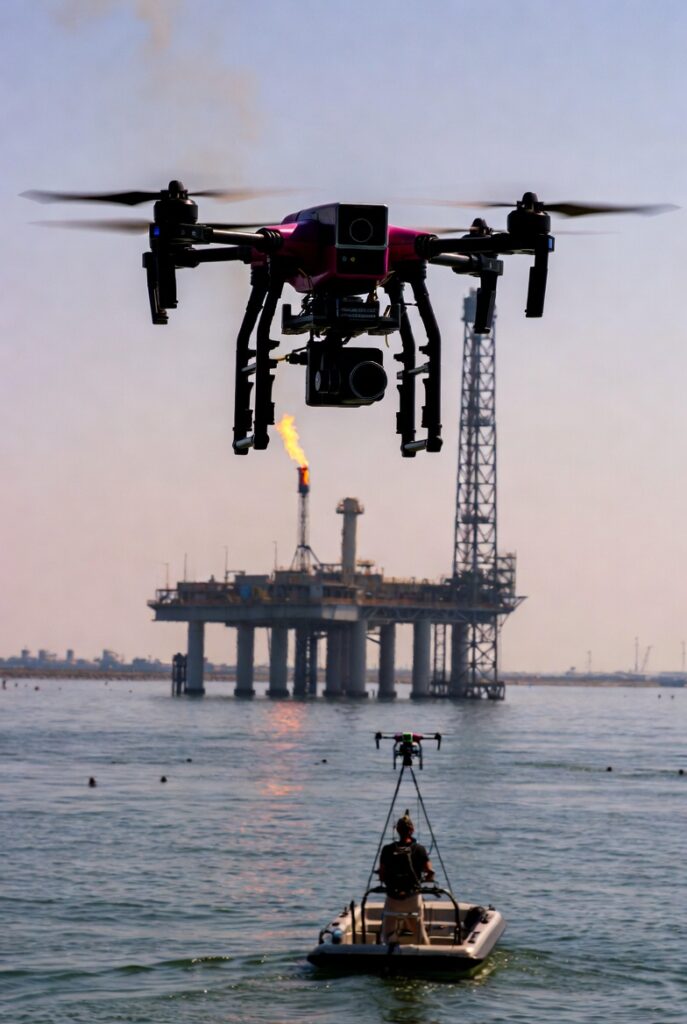
- Drone/Aerial Surveys : Equipped with tunable diode laser absorption spectroscopy (TDLAS) or hyperspectral sensors for rapid methane quantification over large areas.
- Fixed Continuous Monitoring Systems : Sensors on platforms for real-time CH₄/CO₂ tracking.
- Satellite & Aerial Remote Sensing : For basin-wide detection (e.g., GHGSat, Kairos Aerospace).
These tools enable quantification under OGMP levels 4–5 (site-level and source-level measurement).Drone-based methane detection in action on an offshore facility.Another view of drone deployment for emissions surveying near offshore infrastructure.
3. Real-Time Digital Dashboards and Data Integration
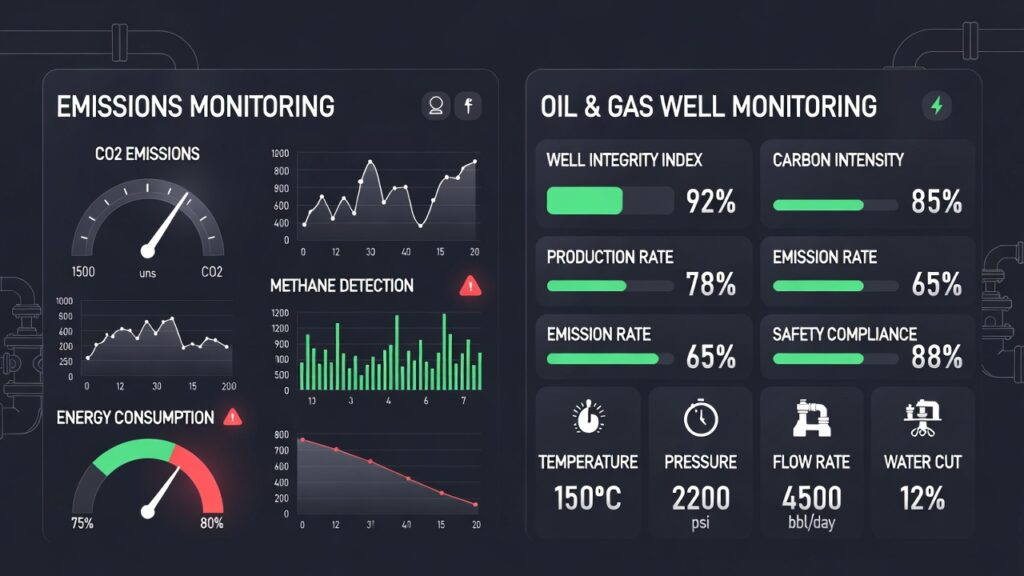
Modern abatement relies on centralized digital platforms that aggregate sensor data, satellite feeds, weather, and production metrics into intuitive dashboards. These systems provide:
- Real-time alerts for anomalies.
- Emissions intensity tracking (e.g., tCO₂e per boe).
- Forecasting and scenario modeling.
- Automated reporting for regulators and stakeholders.
Example of an industrial emissions monitoring dashboard showing real-time CO₂, methane, and energy metrics.Another comprehensive KPI dashboard for oil & gas well monitoring, including carbon emissions and well integrity indices.
4. Abatement Technologies and Strategies
Key mitigation approaches in 2026:
- Flare Minimization & Recovery : Vapor recovery units (VRUs), gas reinjection, or power generation from waste gas.
- Electrification & Hybrid Power : Replacing diesel generators with grid power, battery hybrids, or offshore wind tie-ins.
- Methane Leak Detection & Repair (LDAR) — Quarterly drone/OGI campaigns combined with continuous sensors.
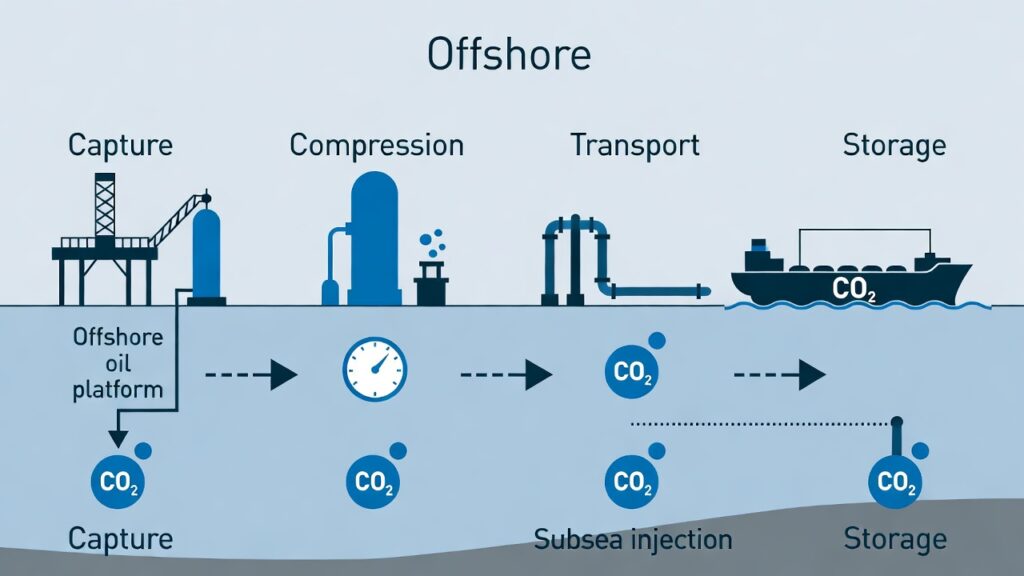
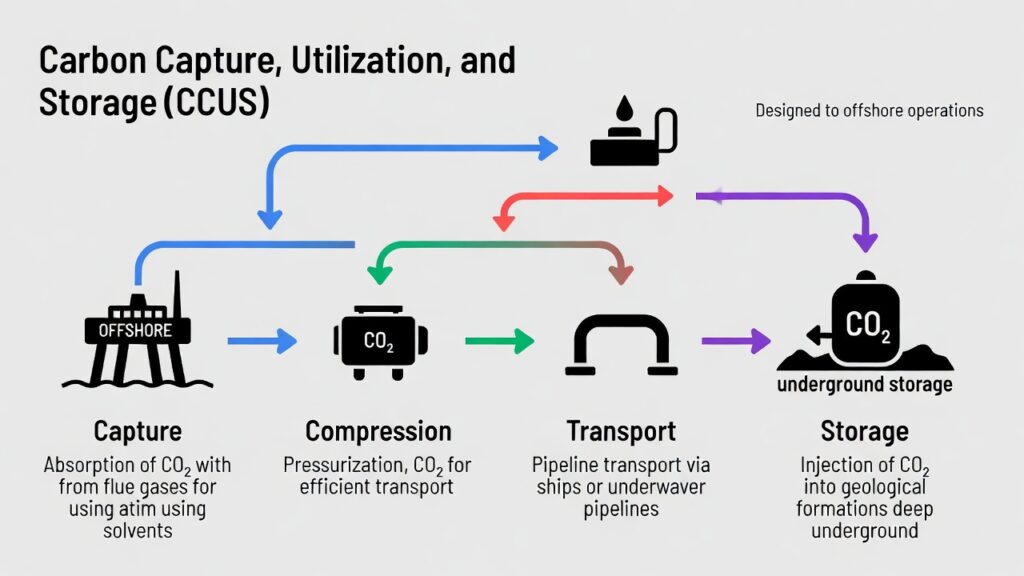
- Carbon Capture Integration : Emerging CCUS on platforms for process CO₂ (e.g., Northern Lights-style tie-ins).
Schematic of full CCUS chain applicable to offshore operations: capture, compression, transport, and storage.
5. Safety & Emissions Synergies
Emissions abatement directly enhances safety: reducing flammable gas releases lowers explosion risks, while better monitoring prevents unintended releases. Integrated systems combine emissions data with process safety parameters (e.g., pressure, H₂S levels) for holistic risk management.
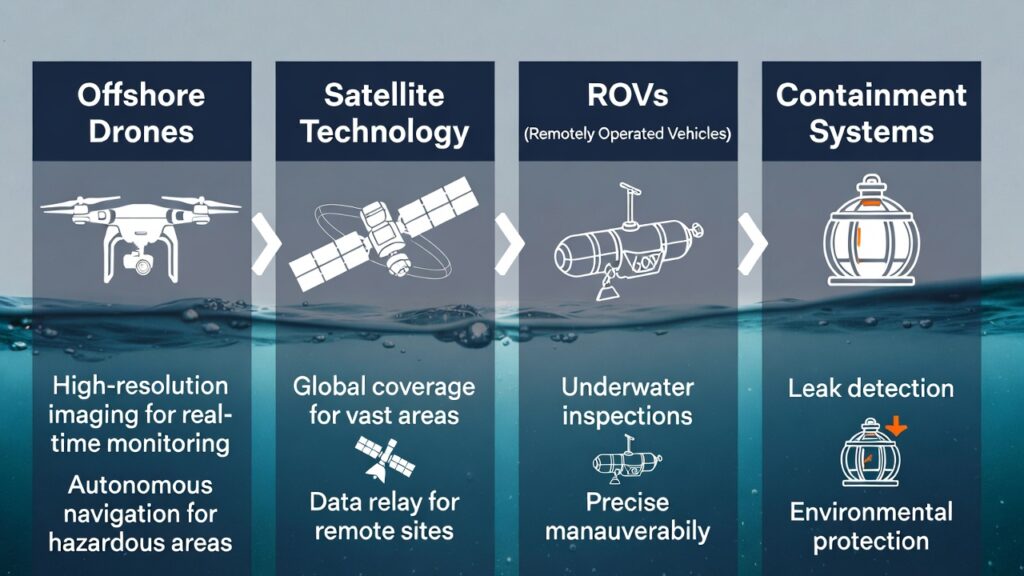
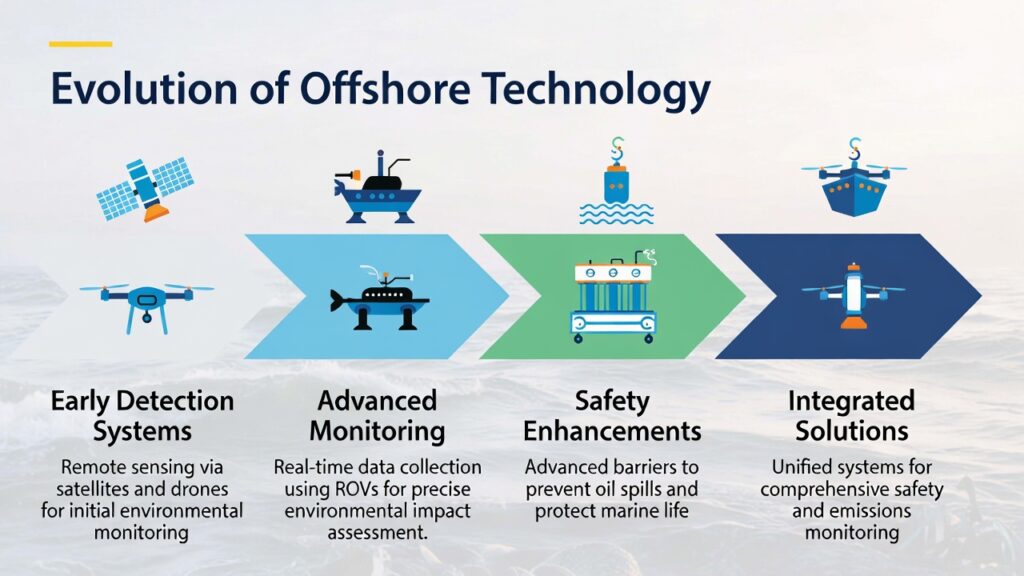
Visual: Evolution of offshore technology infographic, showing drones, satellites, ROVs, and containment systems that support both safety and emissions monitoring.
Conclusion: Path to Net-Zero Targets
In 2026, successful emissions abatement in offshore operations combines advanced monitoring (drones, sensors, satellites), digital integration (real-time dashboards), and targeted mitigation (flare reduction, electrification, CCUS). Operators achieving 50–70% methane intensity reductions are setting benchmarks, proving that safety, emissions targets, and operational efficiency are aligned goals.For pipeline and offshore professionals:
Which abatement technology is delivering the biggest wins in your operations?
Share in the comments!