By Oko, Founder of Offshore Pipeline Insight
Published: April 28, 2026
Guyana has become one of the most exciting offshore success stories of the decade. The Stabroek Block, operated by ExxonMobil with partners Hess (now Chevron) and CNOOC, continues to deliver exceptional results in 2026. With over 30 discoveries and estimated recoverable resources exceeding 8–11 billion barrels of oil equivalent, Guyana is rapidly emerging as a global deepwater powerhouse.
Rapid Production Ramp-Up
Four FPSOs are now operating in the Stabroek Block:
- Liza Destiny
- Liza Unity
- Prosperity
- One Guyana
Combined output is approaching or exceeding 900,000 barrels per day, with further growth expected as new projects come online. Uaru is scheduled for first oil in late 2026, followed by Whiptail in 2027 and Hammerhead in 2029. These developments demonstrate exceptional capital discipline — moving from discovery to production in record time while maintaining high returns.
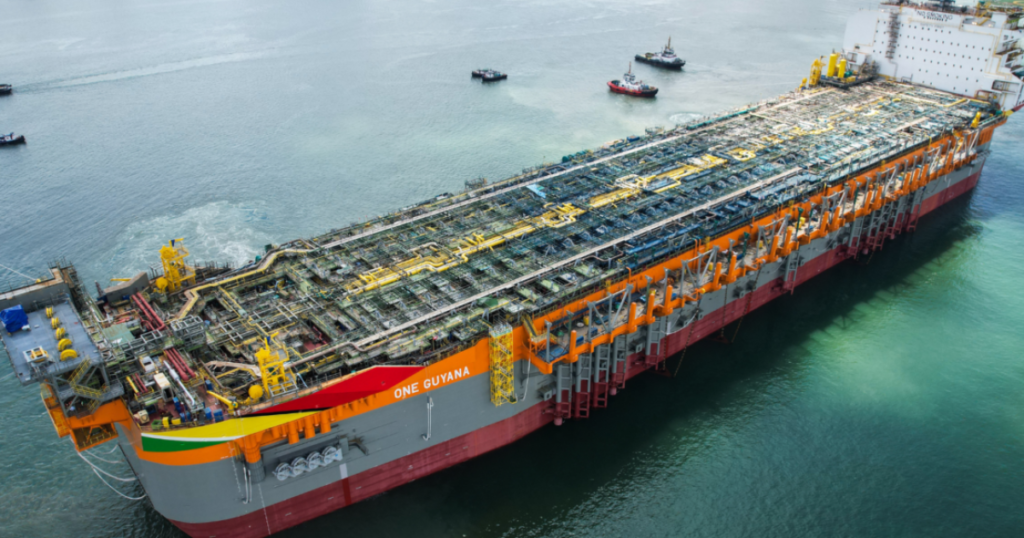
One Guyana FPSO arriving in the Stabroek Block — part of the rapid expansion of Guyana’s offshore production capacity in 2026.
Development Strategy: FPSOs + Subsea Tie-Backs
Rather than building new standalone platforms for every discovery, operators are heavily relying on subsea tie-backs to existing FPSOs. This approach:
- Significantly reduces capital expenditure
- Accelerates first oil
- Maximizes utilization of existing infrastructure
- Delivers higher returns in a capital-disciplined environment
Tie-backs are now a core feature of almost every new phase in the Stabroek Block, connecting new wells and manifolds to the producing FPSOs via flow-lines and risers.
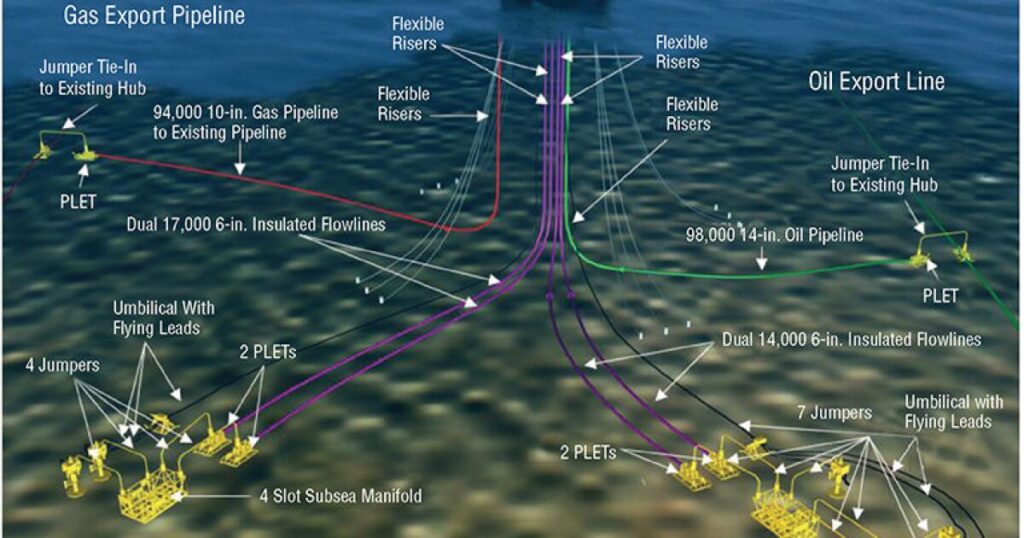
Typical subsea tie-back schematic showing flowlines, risers, and manifolds connecting remote wells to a central FPSO — the dominant development model in Guyana 2026.
Midstream and Pipeline Implications
The boom is creating substantial opportunities for offshore pipeline and midstream infrastructure:
- Increased demand for subsea flowlines and risers to support tie-backs
- Future gas infrastructure: Plans for additional gas-to-shore pipelines are advancing, with the first major gas pipeline already in progress and a second Berbice pipeline under discussion
- Export flexibility: Most crude is exported directly from FPSOs via tankers, minimizing the need for long export pipelines for now
- Long-term potential: New developments are being designed with provisions for gas handling, possible hydrogen blending, or CO₂ transport in the future
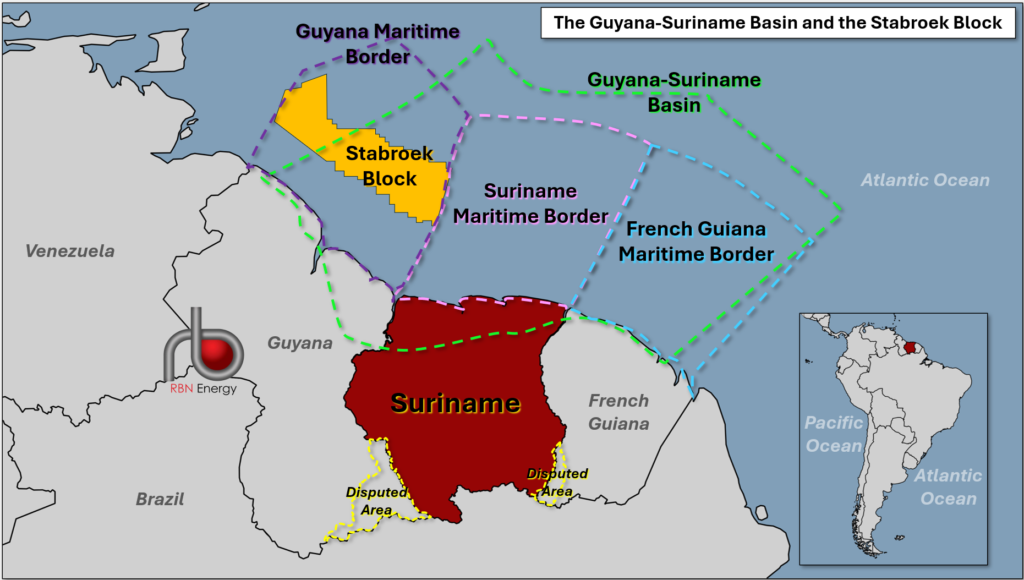
Map of the Stabroek Block offshore Guyana — the heart of the country’s exploration success and future pipeline activity.
Looking Ahead
Guyana’s exploration success in 2026 is a textbook example of disciplined, high-impact development. While global exploration activity has slowed, targeted drilling in proven basins like Stabroek continues to deliver results. For pipeline engineers and midstream professionals, the focus is shifting toward efficient tie-back systems, flow assurance for longer distances, and preparing infrastructure for future gas and low-carbon molecule transport.
What do you think?
How do you see Guyana’s tie-back strategy influencing global deepwater development trends in the coming years? Are you involved in any Stabroek-related projects?