By Oko, Founder of Offshore Pipeline Insight
Published: April 10, 2026
While overall exploration drilling activity remained subdued in 2025 amid capital discipline and lower oil prices, a select group of High Impact Wells (HIWs) punched well above their weight. According to industry analysis, just 12 HIWs accounted for over 46% of the year’s total discovered volumes, with the top 10 discoveries alone contributing around 62%. This concentration of success highlights a clear industry trend: fewer wells, but higher stakes and potentially transformative rewards when they hit.
High Impact Wells are typically defined as frontier or emerging basin tests with the potential to unlock 250 million barrels of oil equivalent (boe) or more — often in deepwater, ultra-deepwater, or new plays. In 2025, nearly 65% of HIW activity targeted deepwater and ultra-deepwater environments, where ultra-deepwater wells made up six of the year’s top 10 discoveries.
The 2025 HIW Story in Numbers
- Global high-impact exploration remained relatively stable, with roughly 75–80 HIWs completed or on track, consistent with the recent five-year average.
- Success was highly concentrated: A small number of wells in key regions (West Africa, Brazil, Middle East, and parts of the US) drove the majority of new resources.
- Notable 2025 discoveries included major finds offshore Brazil (such as BP’s Boomerang prospect with potential multi-billion-barrel scale), along with significant volumes in West Africa and other frontier areas.
- Overall discovered volumes rose year-on-year in some reports, but the industry continues to rely heavily on these “needle-movers” rather than widespread incremental drilling.
This efficiency comes at a cost — HIWs carry high technical and financial risk, with commercial success rates historically around 25–38%. Yet when they succeed, they can transform basin outlooks and create decades of development activity.
Why HIWs Matter Even More in 2026
Looking ahead, forecasts point to continued focus on high-impact exploration, with 65+ HIWs expected in 2026 (similar to recent years). Africa and South America are projected to lead activity, with strong interest in the Orange Basin (Namibia/South Africa), Gulf of Guinea, pre-salt plays in Brazil, and other Atlantic margin opportunities. Ultra-deepwater prospects are expected to dominate, representing about 60% of planned wells.Key drivers include:
- Pursuit of “advantaged resources” with lower carbon intensity or proximity to existing infrastructure.
- Advances in seismic imaging, agentic AI for subsurface modeling, and real-time drilling optimization (topics we’ve covered recently) that improve success odds.
- Strategic bets by supermajors, NOCs, and select independents on frontier basins to replenish reserves amid maturing conventional plays.
Notable wells to watch in 2026 include tests in ultra-deepwater Colombia (e.g., record water-depth prospects), extensions in the Orange Basin, and frontier carbonate plays in Suriname and elsewhere.
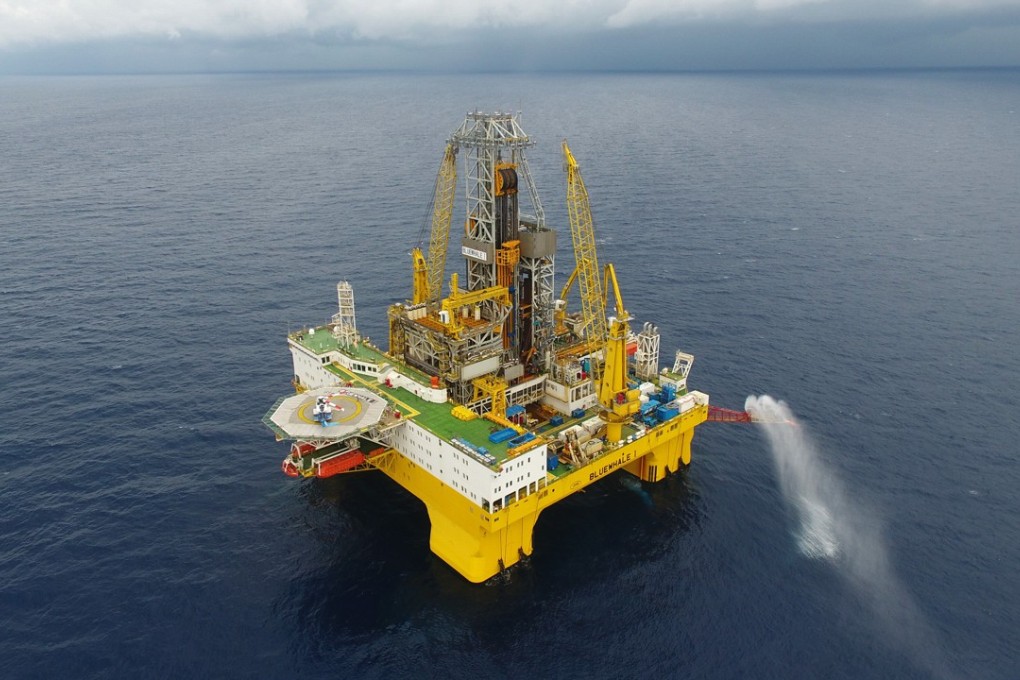
Offshore drilling rig operating in deepwater conditions — the primary setting for High Impact Wells, where ultra-deepwater successes drove a large share of 2025’s discovered volumes and will shape pipeline and midstream infrastructure needs in emerging basins.
Implications for Offshore, Pipelines, and Midstream
For readers focused on pipelines and midstream infrastructure, successful HIWs have outsized ripple effects:
- New production hubs — Major discoveries often lead to clustered developments with super-pads or offshore hubs, requiring new gathering lines, trunk pipelines, and export infrastructure.
- Long-distance transport needs — Finds in frontier deepwater or remote basins (e.g., Atlantic margin) may demand floating production systems tied to subsea pipelines or LNG/FLNG solutions for monetization.
- Repurposing and expansion opportunities — Existing or planned pipeline networks can be extended or repurposed for new volumes, especially when combined with molecule-based decarbonization pathways (CO₂ transport for CCUS or low-carbon fuel export).
- Risk and opportunity balance — While fewer overall wells mean slower near-term volume growth, each successful HIW can justify billions in midstream investment, creating long-term takeaway capacity demand.
In a world shifting toward lower-carbon molecules alongside continued hydrocarbons, HIWs that unlock oil or gas near existing infrastructure (infrastructure-led exploration) or with favorable carbon profiles will be especially attractive.
Looking Ahead
The paradox of 2025–2026 exploration is clear: overall drilling activity is restrained, yet the industry is becoming more selective and efficient, betting on high-impact opportunities. With tools like agentic AI enhancing subsurface modeling and real-time drilling decisions, the success rate for these high-stakes wells could improve further.For offshore operators and pipeline developers, the message is strategic — monitor the HIW results closely in Africa, Latin America, and deepwater frontiers. A few wins can reshape regional infrastructure plans for years to come.
What are your thoughts on how successful High Impact Wells will influence gathering systems, export pipelines, or CCUS tie-ins in the basins you follow?
Have you seen specific midstream implications from recent deepwater discoveries? Share your insights in the comments.