By Oko Immanuel, M.Eng
Founder, Offshore Pipeline Insight | Subsea Engineering Specialist
May 08 2026.
High Pressure High Temperature (HPHT) fields are no longer on the frontier — they are becoming central to offshore development in 2026. As operators chase remaining high-value reserves in deeper waters and harsher environments, HPHT projects are driving major advances in materials, subsea systems, flow assurance, and pipeline engineering.
Why HPHT is Trending Strongly in 2026
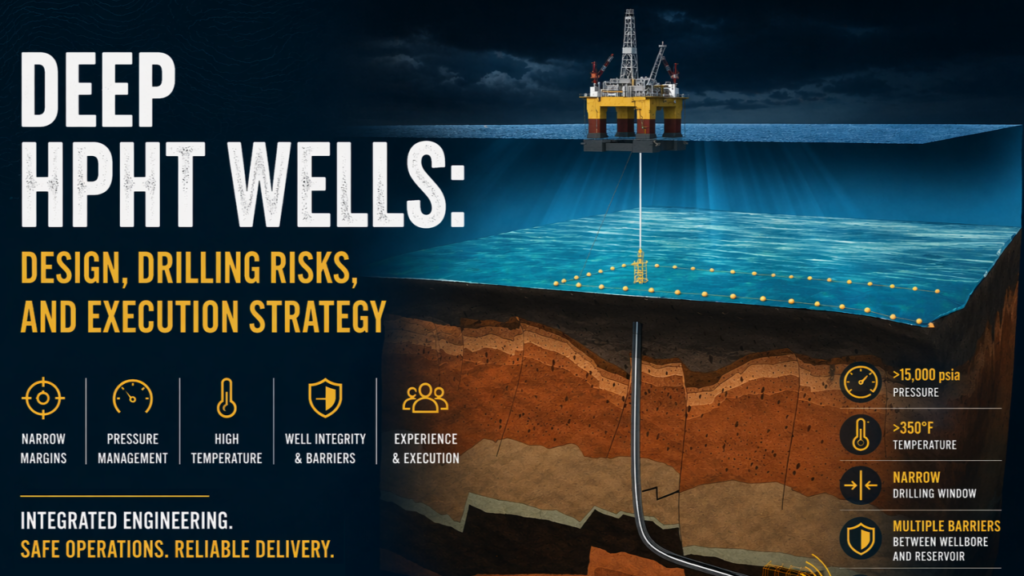
HPHT wells are typically defined as reservoirs with pressures exceeding 10,000–15,000 psi and temperatures above 300–350°F (149–177°C). Many new prospects now push beyond 20,000 psi and 400°F, creating extreme engineering challenges for subsea trees, manifolds, flowlines, and risers.Key drivers include:
- Depletion of easier shallow reservoirs
- Strong economics at current oil prices
- Technological maturity making HPHT more viable
- Longer tie-backs requiring robust thermal and pressure management
Major HPHT Projects and Contracts in 2026
One of the standout developments is Beacon Offshore Energy’s Shenandoah project in the US Gulf of Mexico. SLB OneSubsea secured a significant contract for an HPHT multiphase subsea boosting system rated above 15,000 psi — a critical enabler for ultra-deep, high-pressure production.In the North Sea and Asia-Pacific, several operators are advancing HPHT tie-backs with:
- Corrosion-resistant alloy (CRA) clad or lined pipelines
- Advanced pipe-in-pipe insulation systems
- High-collapse resistant line pipe for deepwater
Brazil’s pre-salt fields and Guyana’s deeper prospects are also incorporating more HPHT-rated equipment as development moves into higher-pressure zones.
Materials & Pipeline Engineering Challenges
HPHT conditions place enormous stress on materials:
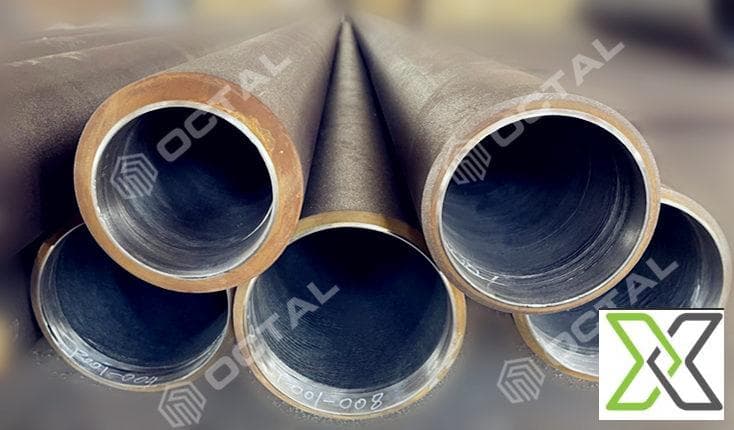
- Sour Service Requirements: Many HPHT reservoirs contain H₂S and CO₂, demanding high-grade CRAs (Inconel 625, 316L, or duplex stainless steels).
- Lateral Buckling & Walking: Longer tie-backs in HPHT increase the risk of pipeline buckling due to thermal expansion. Engineers are using advanced sleepers, buoyancy modules, and sophisticated finite element analysis (FEA) to mitigate this.
- Insulation & Cool-Down: Maintaining fluid temperature to prevent hydrates and wax is critical. Pipe-in-pipe (PIP), wet insulation, and trace heating systems are evolving rapidly.
- Welding & Fabrication: High-strength steels require specialized welding procedures and rigorous qualification to maintain integrity under cyclic loading.
Subsea Systems Innovation for HPHT
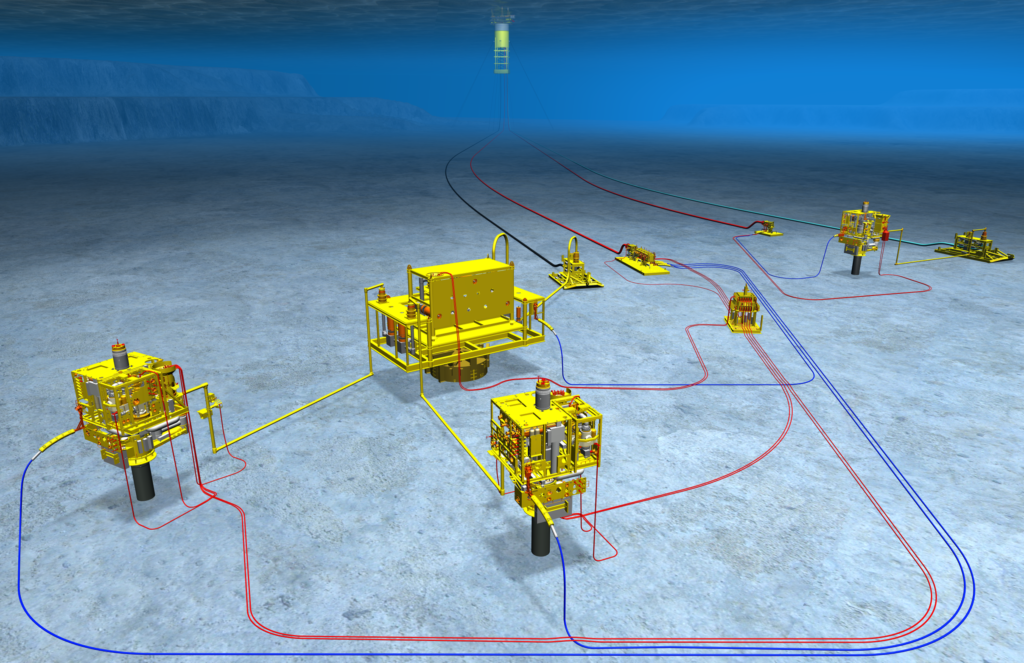
Subsea trees, manifolds, and boosting systems are undergoing major upgrades:
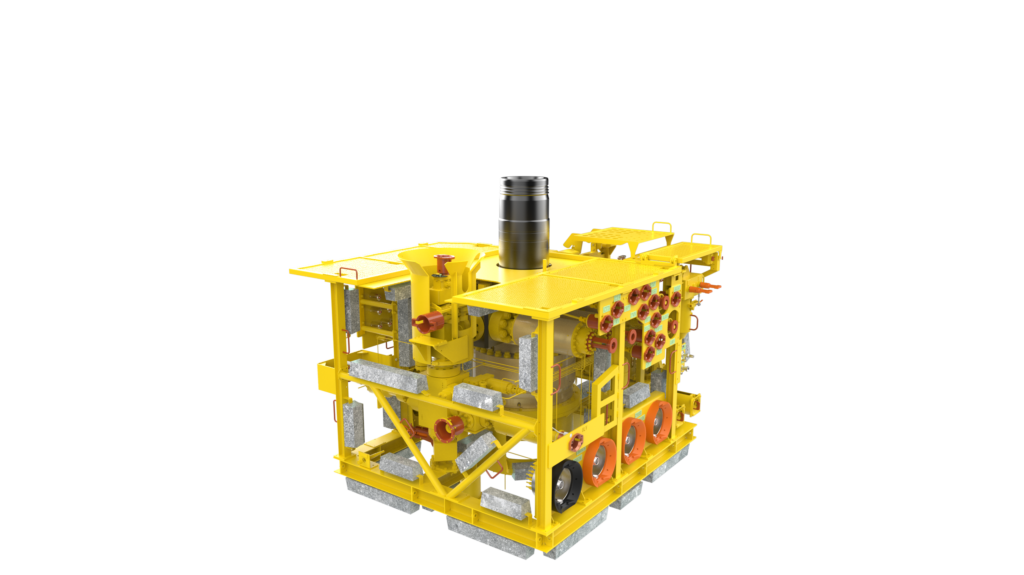
- All-Electric HPHT Trees: Faster actuation, reduced hydraulic fluid risk, and better condition monitoring.
- Subsea Boosting & Compression: High-integrity multiphase pumps designed for extreme pressure and temperature.
- Digital Twins & Real-Time Monitoring: Operators now deploy fiber-optic sensing and AI-driven models to predict hotspots, fatigue, and integrity issues.
These technologies are reducing intervention frequency and extending asset life in challenging HPHT environments.
Installation & Flow Assurance Best Practices
Longer HPHT tie-backs demand careful planning:
- Reel-Lay & J-Lay Methods: Preferred for high-grade, heavy-wall pipes.
- Flow Assurance Strategies: Chemical injection, direct electric heating (DEH), and advanced insulation to manage cool-down during shutdowns.
- Integrity Management: Regular intelligent pigging (ILI) and acoustic emission monitoring are becoming standard for early detection of corrosion or buckling.
The Future of HPHT in Offshore Development
By late 2026 and into 2027–2028, expect:
- More projects exceeding 20,000 psi and 400°F
- Greater integration of all-electric systems with HPHT-rated equipment
- Wider adoption of hybrid materials and advanced composites
- Strong focus on decarbonization features (e.g., CCUS readiness in HPHT infrastructure)
For subsea and pipeline engineers, HPHT expertise is becoming one of the highest-value specializations in the industry. Projects in this space reward deep knowledge of materials selection, thermal management, buckling analysis, and digital monitoring.
Key takeaway: HPHT is no longer a niche challenge — it is a core capability required for the next generation of offshore developments. Operators who master HPHT design, installation, and life-cycle management will gain a significant competitive edge in 2026 and beyond.
By Oko Immanuel, M.Eng
Founder, Offshore Pipeline Insight | Subsea Engineering Specialist
May 08 2026