By Oko Immanuel, M.Eng | Offshore Pipeline Insight | August 2026
Onshore natural gas pipelines form the backbone of modern power generation infrastructure. As electricity demand surges from data centers, industrial growth, and grid reliability needs, large-scale gas-fired power plants, pipeline compressor stations, and battery energy storage systems (BESS) are becoming increasingly interconnected. This article examines the technical relationship between onshore pipelines, gas turbines, and battery storage in supporting reliable, large-scale power generation.
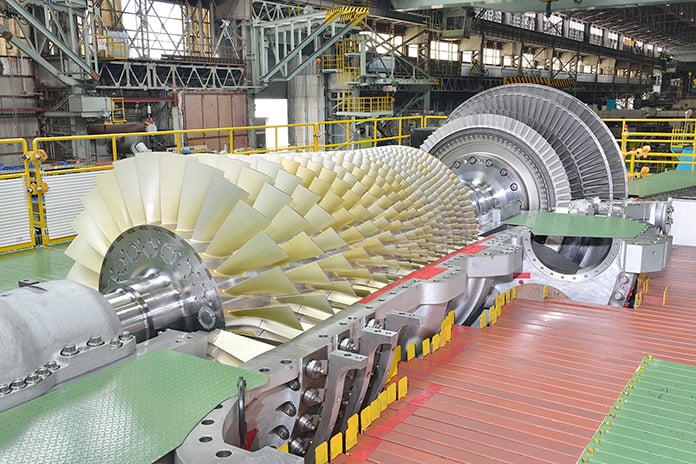
Caption: Large industrial gas turbine rotor assembly used in high-efficiency power generation plants.
The Critical Role of Onshore Pipelines in Power Generation
Natural gas pipelines deliver fuel to two primary categories of large power users:
- Centralized gas-fired power plants (simple-cycle and combined-cycle)
- Pipeline compressor stations that keep gas moving across long distances
In 2026, rising demand from AI data centers and industrial electrification has accelerated the development of new gas-fired generation capacity, much of it located near major pipeline corridors for reliable fuel supply. Behind-the-meter power solutions pairing gas turbines with battery storage are also gaining traction to serve hyperscale loads without overloading the public grid.
Gas Turbines in Power Generation and Pipeline Compression
Gas turbines remain the dominant technology for both large-scale power generation and mechanical drive applications on pipelines.
Power Generation Turbines
- Heavy-duty industrial gas turbines (e.g., HA-class or equivalent) are used in combined-cycle plants, achieving efficiencies above 60%.
- Aeroderivative turbines offer faster start-up times and higher flexibility, making them popular for peaking plants and data-center support.
- Modern units are designed for high reliability, low emissions, and increasing hydrogen-blend capability.
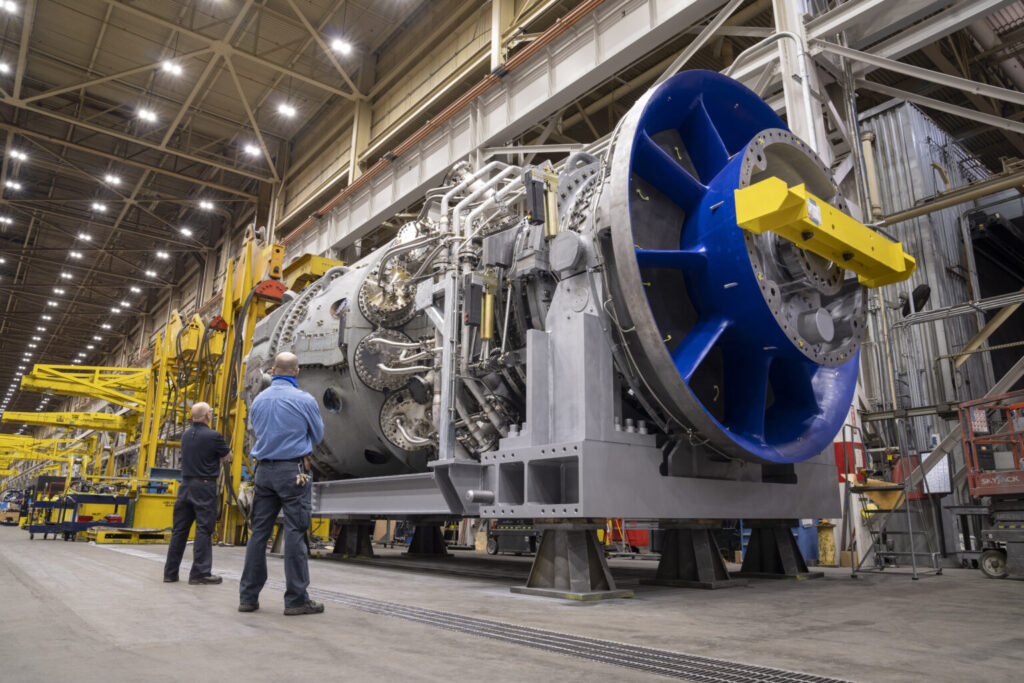
Caption: Large gas turbine unit prepared for installation in a power generation facility.Pipeline Compressor Station Turbines Compressor stations spaced along transmission pipelines use gas turbines (or electric motors) to boost pressure and maintain flow.
Key technical points include:
- Fuel is typically taken directly from the pipeline (fuel gas system).
- Turbines drive centrifugal compressors that restore pressure lost to friction.
- Modern stations increasingly favor larger, more efficient units and, where power is available, electric-drive compression to reduce on-site emissions.
- Waste heat recovery and advanced controls improve overall station efficiency.
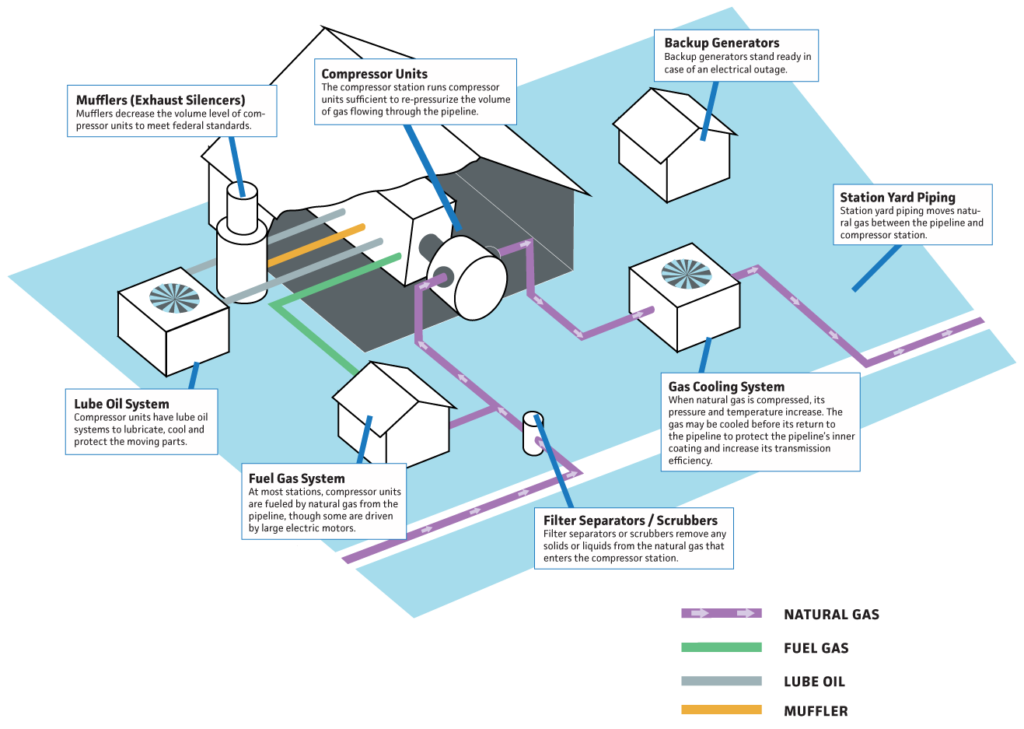
Caption: Schematic of a typical natural gas compressor station showing turbine-driven compressors, cooling, and fuel gas systems.
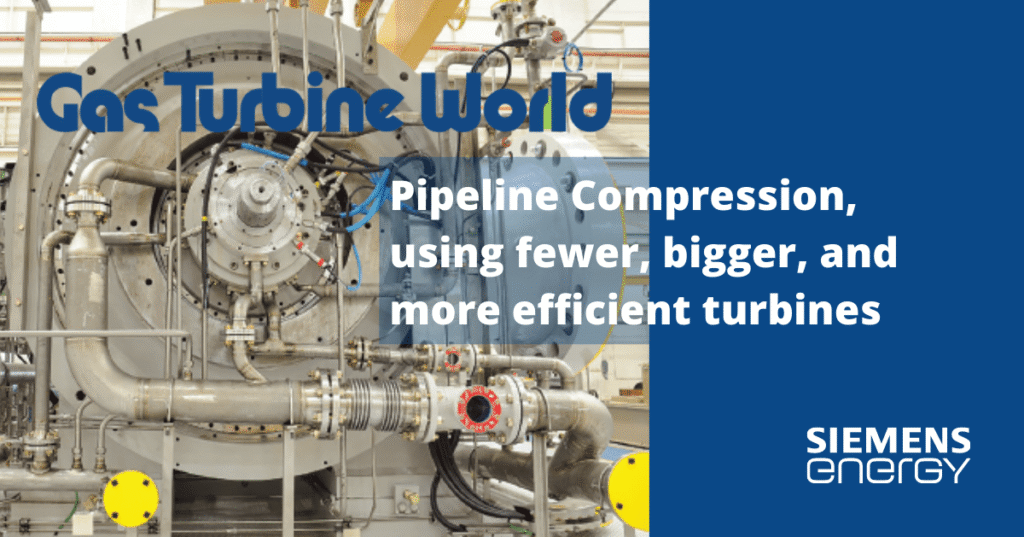
Caption: Modern pipeline compression turbine installation emphasizing fewer, larger, and more efficient units.
Integration of Battery Energy Storage Systems (BESS)Battery storage is rapidly becoming a standard complement to gas turbines and pipeline-related power infrastructure.
Key applications include:
- Load balancing and ramp support — Batteries respond in milliseconds to smooth rapid changes in demand, especially from data centers.
- Black-start and backup capability — BESS can provide immediate power while gas turbines spool up.
- Frequency regulation and ancillary services — Critical for grid stability.
- Hybrid power plants — Gas turbines + solar + batteries create flexible, dispatchable power blocks.
In Texas and other high-growth regions, new behind-the-meter projects are combining hundreds of megawatts of gas-fired generation with large BESS installations to serve AI and cloud computing loads reliably.
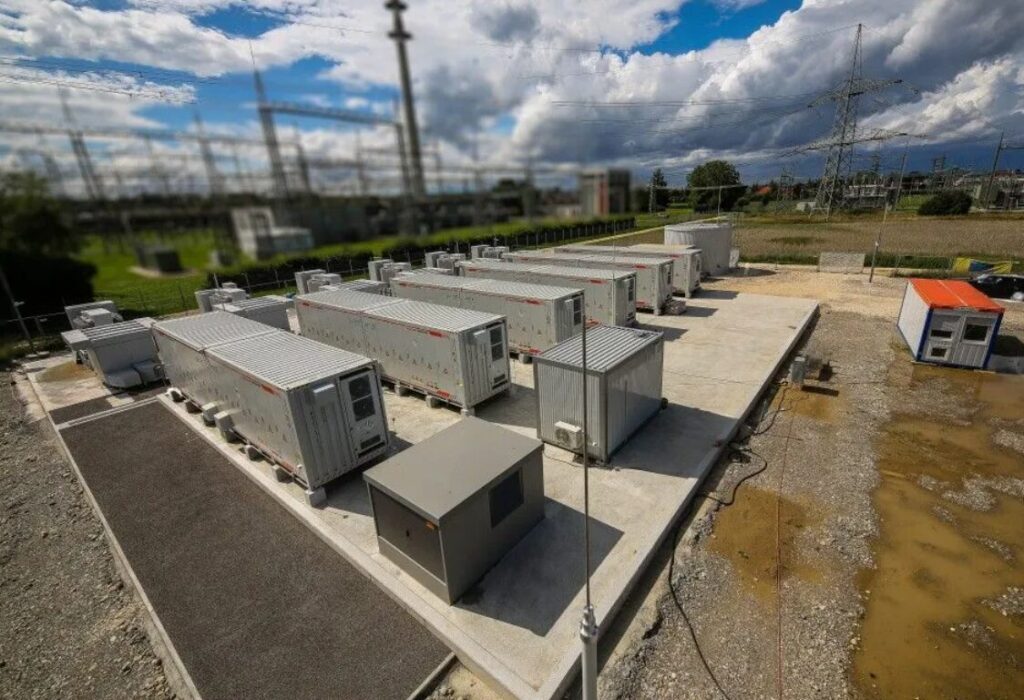
Caption: Grid-scale battery energy storage system (BESS) installation providing fast-response support to power generation and transmission infrastructure.
Technical Synergies and Design Considerations
Fuel Supply Reliability
Large power plants require firm pipeline capacity. Interruptible service is rarely acceptable for data-center or baseload applications. New pipeline projects (such as Permian takeaway expansions) are partly justified by power generation demand.
Emissions and Decarbonization Pathways
- High-efficiency combined-cycle plants already offer significantly lower CO₂ intensity than older coal or simple-cycle units.
- Many new turbines are specified for 30–50% hydrogen blending today, with pathways to higher percentages.
- Pairing turbines with batteries reduces the need for inefficient peaking operation.
Compression Station Electrification vs. Gas Turbines
Where grid power is strong and reliable, operators are shifting toward electric-drive compressors. In remote locations, gas turbines remain the preferred solution due to fuel availability and independence from the electrical grid.
System Integration Challenges
- Coordinating pipeline pressure management with power plant offtake
- Ensuring fuel quality and heating value consistency
- Managing transient flows when large generators start or trip
- Cybersecurity and control system integration between pipeline SCADA and power plant DCS
Current Market Trends (2026)
- Strong order books for both heavy-duty and aeroderivative gas turbines driven by data-center and industrial demand.
- Increasing deployment of hybrid gas + battery projects.
- Continued investment in pipeline capacity to support power generation growth.
- Growing interest in hydrogen-ready turbines and dual-fuel capability for future fuel flexibility.
Conclusion
Onshore natural gas pipelines, large gas turbines, and battery storage systems form an interdependent energy ecosystem. Pipelines deliver the fuel; turbines convert it into reliable electricity or mechanical power; and batteries provide the speed and flexibility that modern grids and large digital loads require.
For pipeline and energy professionals, understanding these linkages is essential. As power demand continues to rise, the technical and commercial connections between transmission pipelines, compression assets, gas-fired generation, and energy storage will only grow stronger.