By Oko, Founder of Offshore Pipeline Insight
Published: April 10, 2026
As operators continue pushing the boundaries of capital efficiency in unconventional plays, Part 1 of this series explored how routine 4-mile (and longer) laterals are unlocking previously marginal acreage even at lower oil prices. In Part 2, we dive deeper into two transformative advancements: AI-powered drilling optimization and horseshoe (U-shaped or U-turn) well designs. These technologies are not only extending lateral reach but also delivering significant cost reductions and improved economics where contiguous acreage is limited.
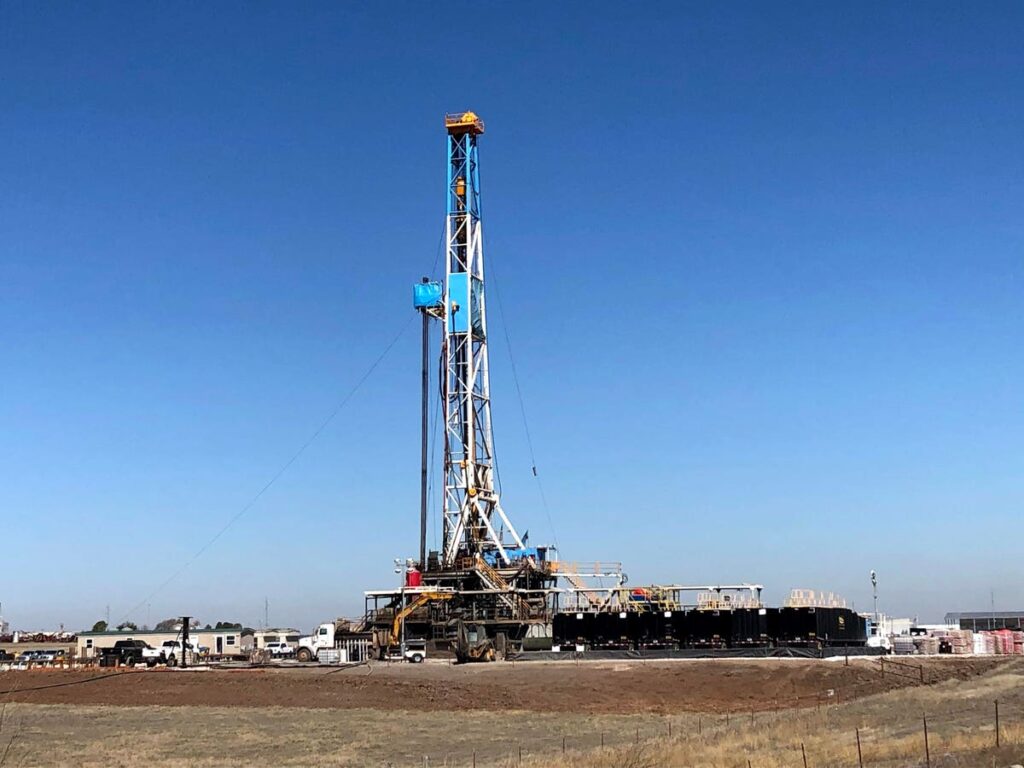
The Rise of Horseshoe Well DesignsHorseshoe wells (also called U-shaped, U-turn, or paperclip wells) feature two parallel horizontal laterals connected by a 180-degree underground turn, all drilled from a single surface pad. This design effectively doubles reservoir contact without requiring additional pads or surface locations — a major advantage in areas with tight lease constraints or fragmented acreage.Adoption has accelerated rapidly: from just a handful in 2019 to over 70 horseshoe wells drilled in the U.S. by late 2025, with a significant surge in 2024–2025. Operators in the Permian (Delaware and Midland), Bakken, and other basins are using them to access more reservoir from limited sections while reducing overall development costs.
Key benefits include:
- Cost savings — Reports show savings of up to $3 million per well compared to drilling two separate 1-mile laterals, thanks to shared surface infrastructure, fewer rig moves, and optimized drilling.
- Reduced surface footprint — Fewer pads mean less road construction, smaller environmental impact, and simplified permitting.
- Improved economics on marginal acreage — Horseshoe designs breathe life into fringe areas by maximizing drainage from a single location.
Recent examples highlight strong performance: Matador Resources achieved total depth 20% faster than previous 2-mile laterals in the Permian by optimizing bottom-hole assemblies and using advanced RSS for precise directional control. Vital Energy and others have cited similar efficiency gains.For midstream and pipeline professionals, horseshoe wells concentrate production at fewer hubs. This allows for optimized gathering systems with larger trunk lines, fewer tie-ins, and reduced right-of-way needs — potentially lowering midstream capital requirements while supporting sustained volumes from super-pads.
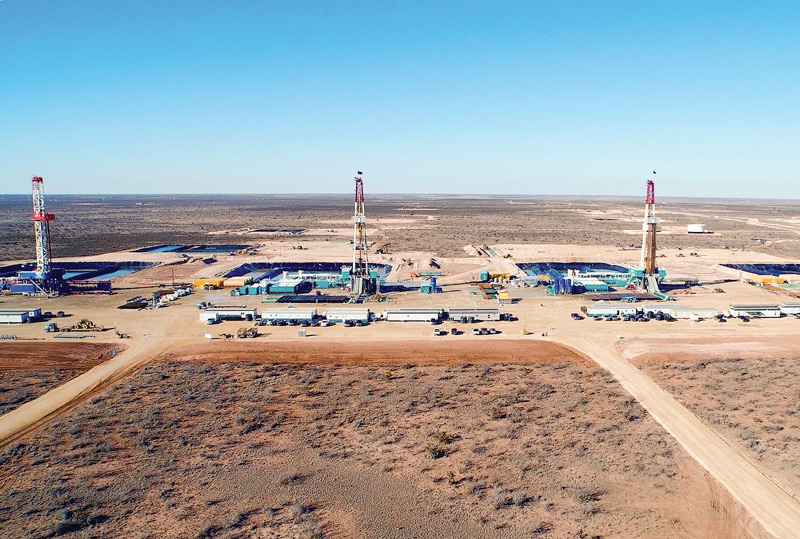
Aerial view of a large multi-well pad in the Permian Basin — horseshoe designs enable concentrated production from single pads, simplifying gathering pipeline routing and reducing overall infrastructure density.
AI Drilling Optimization: Enabling Precision at Scale
Artificial intelligence has become a critical enabler for both ultra-long laterals and the complex geometries of horseshoe wells. Real-time AI systems process thousands of data points from downhole sensors, surface equipment, seismic models, and drilling parameters to optimize rate of penetration (ROP), weight-on-bit, torque, and trajectory on the fly.
Benefits operators are seeing include:
- Reduced non-productive time (NPT) — AI can predict and mitigate issues like stuck pipe, vibration, or excessive torque before they escalate, cutting NPT by 15–30% in extended-reach drilling.
- Faster drilling — Closed-loop AI adjusts parameters autonomously, enabling single-run curve-to-lateral sections and faster completion of 180-degree turns in horseshoe wells.
- Higher precision — Especially valuable for the tight directional control needed in U-turns, AI-integrated rotary steerable systems (RSS) maintain smooth wellbores with minimal tortuosity.
In the Permian and Bakken, AI-assisted drilling has delivered 10–20% faster overall drilling times on long laterals. Combined with high-powered AC rigs and advanced RSS, these tools are pushing the envelope toward even longer and more complex designs while lowering costs per foot.
Technical and Operational Advances
Pushing laterals to 4 miles and beyond — or executing precise U-turns — still presents challenges: torque and drag management, hole cleaning, and equivalent circulating density (ECD) control. However, innovations in RSS, high-performance bits, optimized drilling fluids, and AI-driven predictive analytics continue to overcome them.
Diminishing returns per foot of lateral remain a reality due to pressure gradients and fracture interference, but the overall economics favor these designs through capital savings, accelerated cash flow, and extended inventory life.
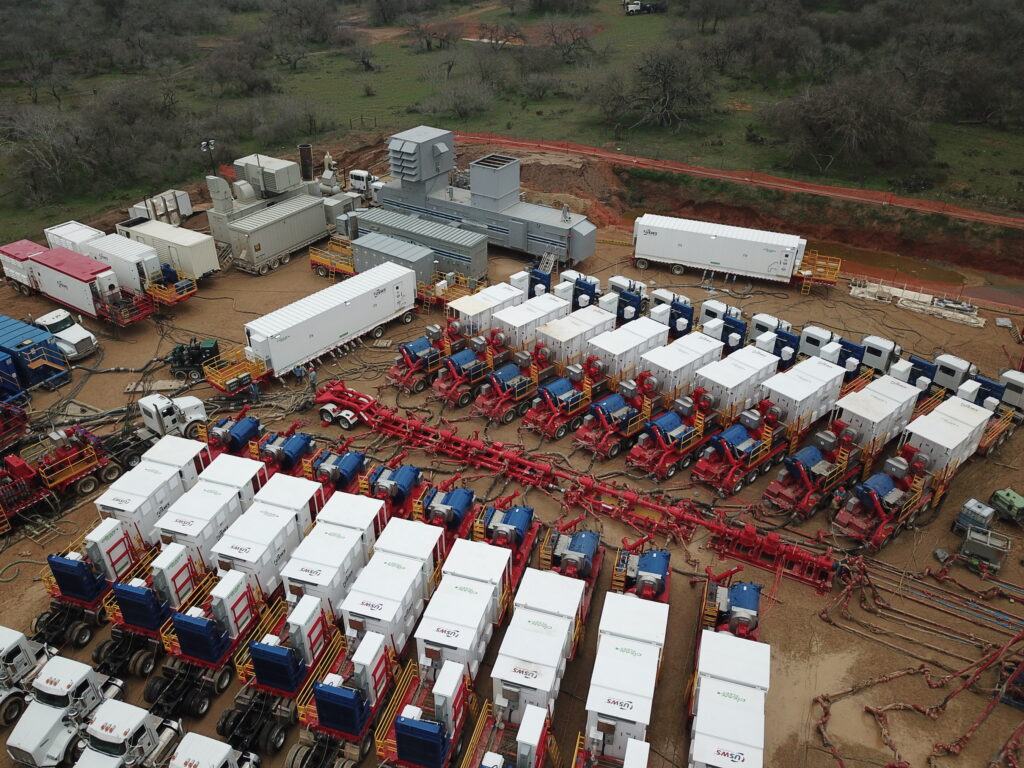
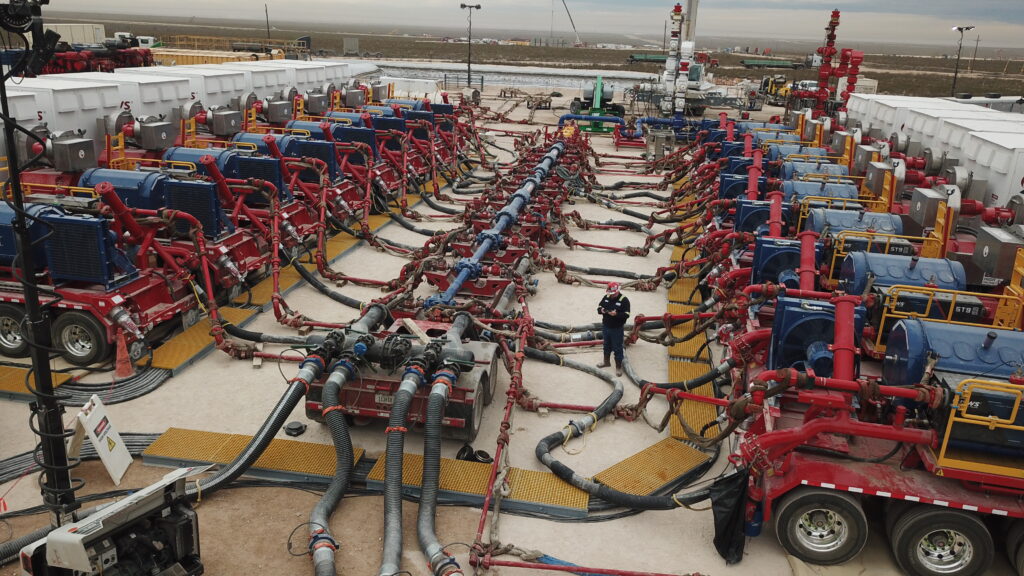
Massive frac spreads in action on extended-reach wells — concentrated output from horseshoe and long-lateral designs influences pipeline takeaway capacity and midstream planning.
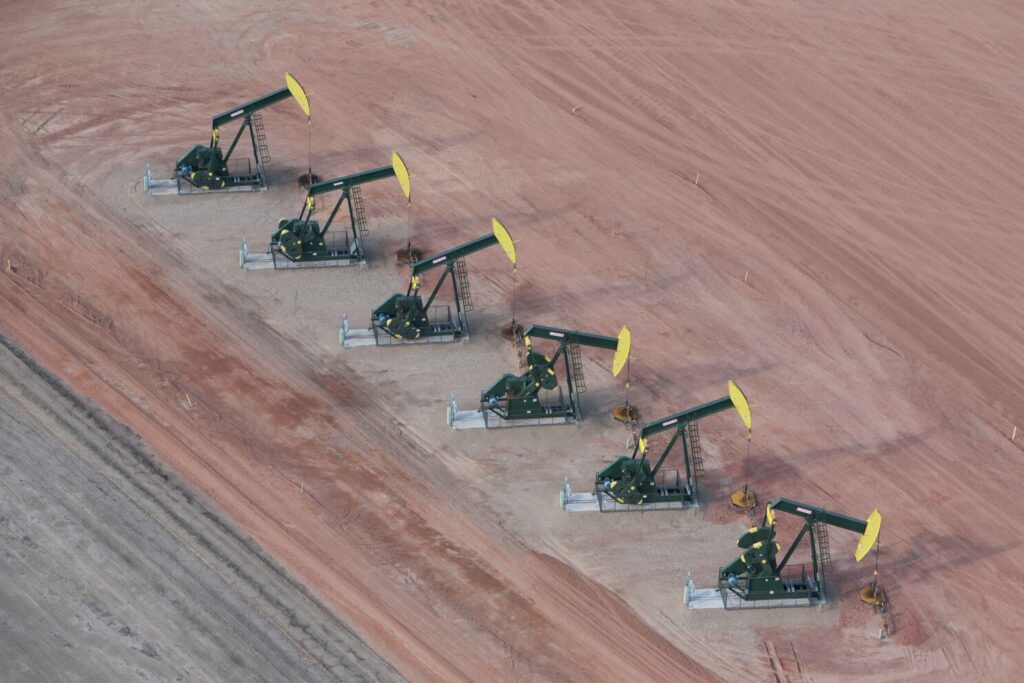
Pump jacks on a developed shale field — longer laterals combined with horseshoe designs and AI optimization reduce surface footprint while maximizing recovery from each pad.
Implications for Midstream and Pipeline Infrastructure
Longer laterals and horseshoe wells are reshaping gathering and export strategies:
- Fewer surface locations mean more concentrated production hubs, enabling larger, more efficient trunk lines.
- Development of acreage farther from existing infrastructure may require new pipeline extensions or laterals.
- Higher initial production rates from these mega-wells can create temporary takeaway bottlenecks — or opportunities — for pipeline operators.
- Overall, reduced pad density lowers right-of-way demands and supports longer production plateaus with less infrastructure spend.
Continued acreage consolidation to enable these designs will likely drive further M&A activity across key basins.
Looking Ahead
The industry shows no signs of slowing. Record 5+ mile laterals (such as Expand Energy’s 5.2-mile Marcellus lateral in 2025) demonstrate what’s possible, while AI optimization and horseshoe designs make complex, efficient development routine even on marginal acreage.For operators, the combination delivers resilient economics in volatile price environments. For the broader energy value chain — especially pipeline developers and midstream players — it demands fresh thinking on infrastructure density, capacity planning, and long-term basin development.What impacts have you observed from AI-optimized long laterals or horseshoe wells in the basins you follow? How do these designs influence your pipeline routing or gathering strategies? Share your thoughts in the comments.