By Oko Immanuel, M.Eng | Offshore Pipeline Insight | June 2026
Natural gas and LNG infrastructure is experiencing one of the largest construction waves in the industry’s history. In 2026, the global energy sector is witnessing unprecedented investment in liquefaction plants, export terminals, subsea pipelines, and supporting infrastructure as countries race to secure long-term energy supplies.
This surge is driven by strong demand from Asia, Europe’s continued need for energy security, and the role of natural gas as a reliable “bridge fuel” during the energy transition. For pipeline professionals, field engineers, and offshore contractors, this wave presents significant opportunities — but also new technical and commercial challenges.
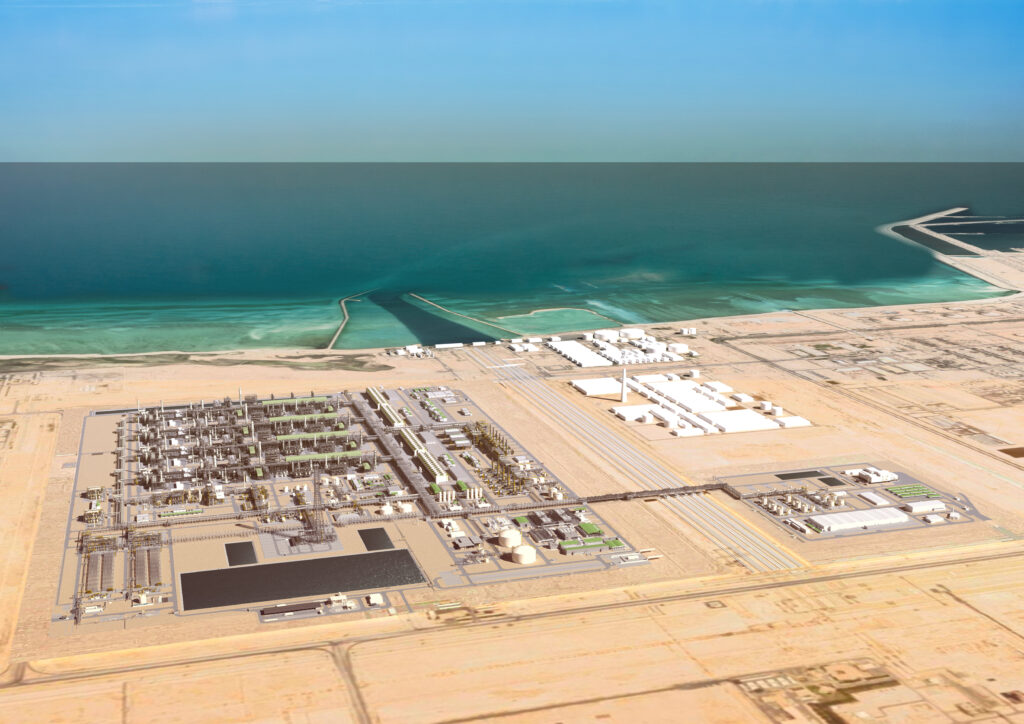
Caption: Artist rendering of Qatar’s massive North Field East (NFE) LNG project at Ras Laffan — one of the largest LNG infrastructure developments in the world.
Why LNG Infrastructure Is Scaling Up in 2026
Several powerful forces are converging in 2026:
- Asian demand growth — China, India, Japan, and South Korea continue to import large volumes of LNG to support power generation and industrial growth.
- European energy security — Europe remains heavily reliant on LNG imports following the reduction in Russian pipeline gas.
- U.S. export dominance — America has become the world’s largest LNG exporter and continues to add significant new capacity.
- Qatar’s ambitious expansion — The world’s lowest-cost producer is aggressively increasing output.
According to industry data, between 2025 and 2030, approximately 345 billion cubic meters per year of new LNG export capacity is expected to come online from projects that had already reached Final Investment Decision (FID). This represents the largest single wave of LNG capacity additions ever seen.
Qatar’s North Field Expansion: The World’s Largest LNG Project
Qatar remains the centerpiece of global LNG growth.
The North Field East (NFE) project is the largest LNG development currently under construction.
- Capacity: Four mega-trains, each producing 8 million tonnes per annum (mtpa), for a total of 32 mtpa.
- Status (June 2026): Construction is well advanced. First LNG production is now expected in the second half of 2026 (some reports suggest possible slippage into Q4 2026 or early 2027).
- Investment: Over $28 billion.
This is only the first phase. Qatar plans to follow with North Field South and North Field West, ultimately targeting 142 mtpa of LNG export capacity by the early 2030s — an 85% increase from current levels.
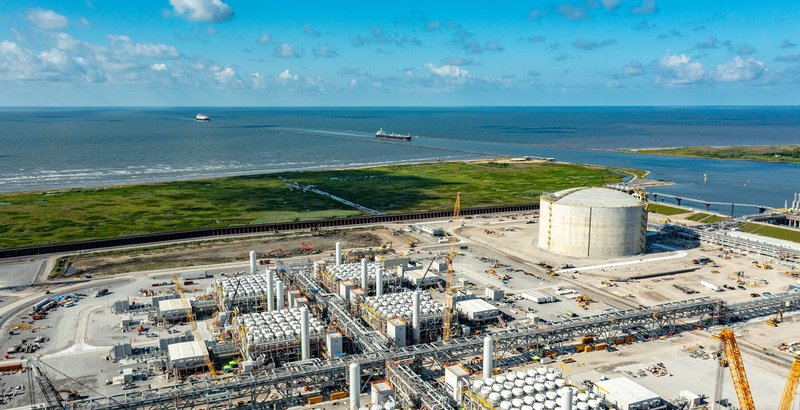
Caption: Aerial view of Venture Global’s Plaquemines LNG facility under construction in Louisiana — part of the massive U.S. LNG expansion wave.
The U.S. LNG Boom Continues
The United States is in the middle of its own historic expansion. U.S. LNG export capacity has grown rapidly and is expected to increase significantly through 2027–2028.Key projects contributing to the 2026 wave include:
| Project | Location | Additional Capacity | Expected Online | Status |
|---|---|---|---|---|
| Plaquemines LNG | Louisiana | Significant | 2025–2026 | Ramping up |
| Golden Pass | Texas | ~2.57 Bcf/d | 2026 | Under construction |
| Corpus Christi Stage 3 | Texas | 1.4+ Bcf/d | 2025–2026 | Partially online |
| Port Arthur LNG | Texas | Large | 2027+ | Under construction |
By the end of 2026, U.S. LNG export capacity is projected to exceed 19 Bcf/d, with further growth expected through 2030. This makes the U.S. the clear leader in new LNG supply additions.
The Infrastructure Behind the LNG Wave
LNG export projects require massive supporting infrastructure, much of which directly involves pipeline and subsea work:
- Feed gas pipelines — Large-diameter pipelines bringing natural gas from onshore fields or offshore platforms to liquefaction plants.
- Subsea tiebacks — Many new LNG projects (especially in the U.S. Gulf of Mexico and offshore Qatar) require complex subsea infrastructure.
- Compressor stations — Critical for maintaining pressure in long-distance feed gas pipelines (as discussed in previous articles).
- Storage and loading facilities — LNG storage tanks and marine loading arms at export terminals.
- LNG carriers — A growing fleet of specialized ships is needed to transport the increased volumes.
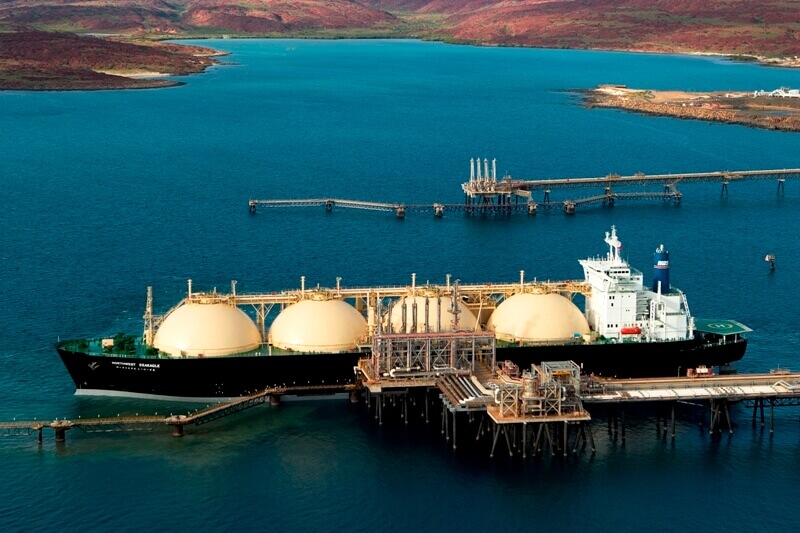
Caption: LNG carrier loading at a terminal — the final link in the LNG supply chain that is seeing record demand.
Challenges Facing the Current LNG Buildout
Despite the strong momentum, several challenges exist:
- Project delays — Some major projects, including parts of Qatar’s expansion, have faced minor delays due to regional tensions and supply chain issues.
- Rising costs — Inflation, labor shortages, and high material costs are pressuring project economics.
- Regulatory and environmental scrutiny — New projects face increasing opposition over emissions and methane leakage.
- Market oversupply risk — If all planned capacity comes online as scheduled between 2026–2028, the market could move into oversupply, potentially pressuring LNG prices.
Opportunities for Pipeline and Field Professionals
For professionals in the offshore pipeline and energy infrastructure sector, this LNG wave creates real opportunities:
- Increased demand for pipeline engineers, field engineers, and construction supervisors on feed gas pipelines and subsea tiebacks.
- Growing need for compressor station expertise as more long-distance pipelines are built or expanded.
- Work on brownfield expansions at existing LNG terminals and pipelines.
- Opportunities in integrity management, maintenance, and decommissioning of older infrastructure as new facilities come online.
Companies involved in subsea construction, pipeline installation, and facilities work are seeing stronger order books as operators push to bring new LNG capacity online.
Outlook for 2026–2030
The period from mid-2026 through 2028 is expected to be the peak of the current LNG capacity wave. After this, the pace of new project startups is likely to slow, which could lead to a more balanced (or even oversupplied) market by the end of the decade.However, long-term demand fundamentals remain supportive, especially in Asia. Additionally, many new LNG projects are being designed with future hydrogen blending and carbon capture capabilities, positioning natural gas infrastructure as part of the energy transition rather than against it.
Conclusion
Natural gas and LNG infrastructure is undergoing a historic expansion in 2026. From Qatar’s massive North Field developments to the continued growth of U.S. export terminals, the scale of investment is reshaping global energy flows.
For those working in pipelines, subsea infrastructure, and field operations, this represents both a busy period and a strategic opportunity to be involved in some of the largest energy projects of the decade.
As the industry scales up, success will depend on delivering projects safely, on time, and with strong focus on emissions reduction and operational efficiency.
The LNG wave is here — and the infrastructure supporting it will define energy markets for years to come.