Written by Oko
Founder, Offshore Pipeline Insight
June 13, 2026
The North Sea is entering a new era. After more than 50 years of production, hundreds of platforms, thousands of wells, and thousands of kilometres of pipelines are approaching the end of their operational lives. Decommissioning is no longer a distant future activity it is becoming one of the largest and most sustained work programmes in the basin.
For professionals working in pipelines, subsea infrastructure, integrity management, and flow assurance, understanding these trends is essential. Decommissioning decisions directly affect future work scopes, whether that involves full removal, partial removal, or repurposing assets for carbon capture and hydrogen.
The Scale of the Challenge
The UK Continental Shelf (UKCS) currently leads global decommissioning activity due to its large number of mature assets. According to the North Sea Transition Authority (NSTA), the remaining decommissioning liability for the UKCS from 2025 onwards is estimated at approximately £44 billion (in constant prices).
Key figures include:
- Decommissioning expenditure exceeded £2 billion in 2024 the highest annual spend on record.
- Wells are the single largest cost driver, accounting for nearly half of total expenditure.
- Nearly 2,000 wells are forecast to be decommissioned by 2034.
In Norway, activity is also rising steadily as major fields mature, supported by strict regulatory oversight and a strong focus on environmental performance.
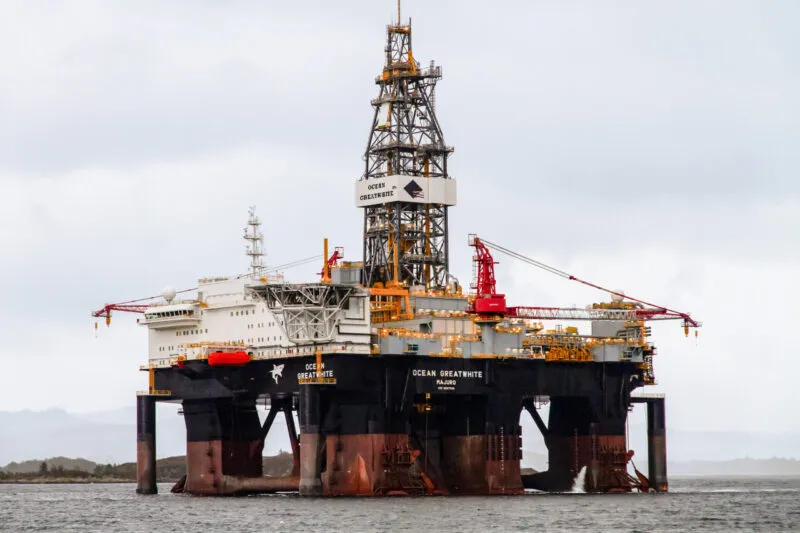
A typical harsh-environment platform in the North Sea many assets like this are now entering decommissioning planning phases.
Regulatory Landscape
Decommissioning in the North Sea operates under one of the world’s most rigorous frameworks:
- OSPAR Decision 98/3 generally requires full removal of disused installations, with limited derogations for very large structures.
- In the UK, the NSTA and OPRED oversee the process. Operators must submit detailed Decommissioning Programmes.
- In Norway, the Petroleum Safety Authority and Norwegian Petroleum Directorate enforce high environmental and safety standards.
A growing trend is the use of comparative assessments, where operators evaluate full removal against partial removal or repurposing options based on safety, environmental impact, technical feasibility, and cost.
Key Decommissioning Trends in 2026 and Beyond
1. Well Plugging & Abandonment (P&A) Leads the Way
Well decommissioning remains the biggest and most urgent workstream. There is a recognised backlog, and regulators are increasing pressure on operators to meet P&A schedules. New technologies in rigless abandonment and barrier placement are helping improve efficiency.
2. Platform and Jacket Removal Campaigns
Large-scale removal projects are increasing, particularly in the Central and Northern North Sea. Heavy-lift vessels and innovative methods (single-lift or piece-small dismantling) are being deployed more frequently.
3. Pipeline Decommissioning: Removal vs Repurposing
Pipeline decisions are more complex than platform removal. Smaller infield flowlines are often fully removed or trenched and buried. Larger export pipelines may be candidates for leaving in place (with monitoring) or, increasingly, repurposingfor CO₂ transport or hydrogen.
This is where the biggest opportunity lies for the pipeline community. Repurposing can significantly reduce or defer decommissioning costs while supporting the energy transition.
4. The Rise of Repurposing
More operators are actively evaluating assets for second life:
- Pipelines for CCUS clusters
- Platforms or jackets for potential alternative uses
- Infrastructure supporting hydrogen blending or transport
This shift is changing the conversation from “how do we remove this?” to “how can we maximise the value of existing infrastructure?”
Challenges Facing the Industry
Despite progress, several challenges remain:
- High Costs: Decommissioning remains expensive, and fiscal uncertainty (particularly in the UK) can affect timing.
- Supply Chain Capacity: Peak activity in the late 2020s and early 2030s could stretch available vessels, personnel, and facilities.
- Technical Complexity: Aging infrastructure, marine growth, and uncertain condition of assets increase project risk.
- Regulatory Pressure: Operators face strict timelines, especially for wells.
- Stakeholder Expectations: Environmental groups and coastal communities closely scrutinise end-state solutions.
Opportunities for Pipeline & Subsea Professionals
Decommissioning is creating significant new work for companies focused on subsea and pipeline infrastructure:
- Pre-decommissioning surveys and integrity assessments
- Comparative assessment studies (removal vs repurposing)
- Engineering support for pipeline isolation, cleaning, and abandonment
- Repurposing projects for CCUS and hydrogen (a major growth area)
- Subsea intervention and well support services
- Circular economy solutions recycling and reuse of materials
The skills developed in pipeline integrity management, flow assurance, and subsea intervention are highly transferable to decommissioning and repurposing work.
What This Means for the Future
Decommissioning activity in the North Sea is expected to remain elevated through the early 2030s, with a potential peak period in the late 2020s. The UKCS will see the highest volume of work, while Norway will continue delivering high-specification projects.
Importantly, decommissioning is no longer viewed in isolation. It is increasingly integrated with the broader energy transition. Assets that can be repurposed for carbon storage or hydrogen infrastructure may avoid or significantly reduce traditional decommissioning costs.
For the supply chain, this creates a longer-term, more diverse workload than pure removal projects alone.
Final Thoughts
The North Sea is transitioning from a pure production basin to one that must manage the responsible retirement and in some cases, repurposing of decades of infrastructure. This represents both a challenge and a major opportunity.
For those of us working in pipelines, subsea systems, and integrity management, decommissioning and repurposing will form an increasingly important part of the workload over the next 10–15 years.Staying informed, developing relevant capabilities, and engaging early in comparative assessment and repurposing studies will be key to capturing value in this evolving landscape.