By Oko Immanuel, M.Eng | Offshore Pipeline Insight | August 2 2026
Onshore pipeline construction remains highly active in 2026, driven primarily by the need to move growing volumes of natural gas from prolific production basins to LNG export terminals, power markets, and industrial demand centers. While offshore and subsea work continues to attract attention, large-diameter onshore natural gas pipelines are seeing significant capital investment, particularly in the Permian Basin and Western Canada.
This article reviews the key onshore pipeline projects currently under construction or advancing, with technical details on design, capacity, and construction approaches.
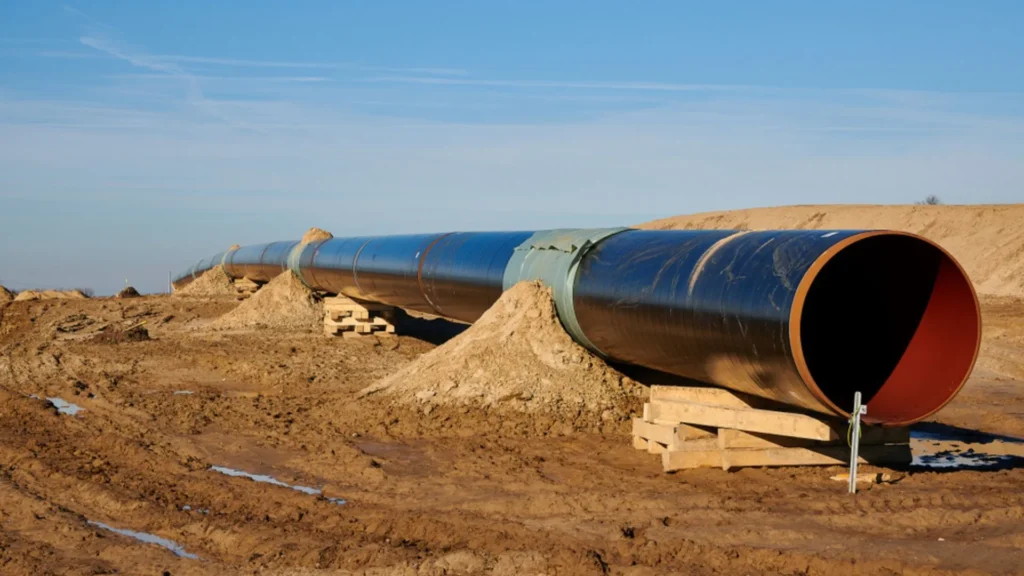
Caption: Large-diameter natural gas pipe sections staged for installation on an onshore right-of-way.
1. Solitude Pipeline System – Permian Basin to Katy, Texas
One of the most significant recent developments is the Solitude Pipeline System. In August 2026, WhiteWater and its joint venture partners (including Devon Energy, MPLX, Diamondback Energy, and Western Midstream) reached a positive Final Investment Decision (FID).Technical highlights:
- Two parallel 48-inch diameter natural gas pipelines
- Route: Permian Basin to the Katy hub near Houston, Texas
- Phased capacity: 2.25 Bcf/d expected in the second half of 2029, followed by an additional 2.25 Bcf/d in 2030
- Total capacity: approximately 4.5 Bcf/d, with expansion potential beyond that
- Designed to provide firm, long-haul takeaway from the Waha area, where associated gas production has frequently outpaced existing pipeline capacity
The use of 48-inch pipe allows high-volume transport at relatively moderate pressures while optimizing compression requirements. The project is expected to support both Gulf Coast LNG exports and growing power generation demand, including data centers.
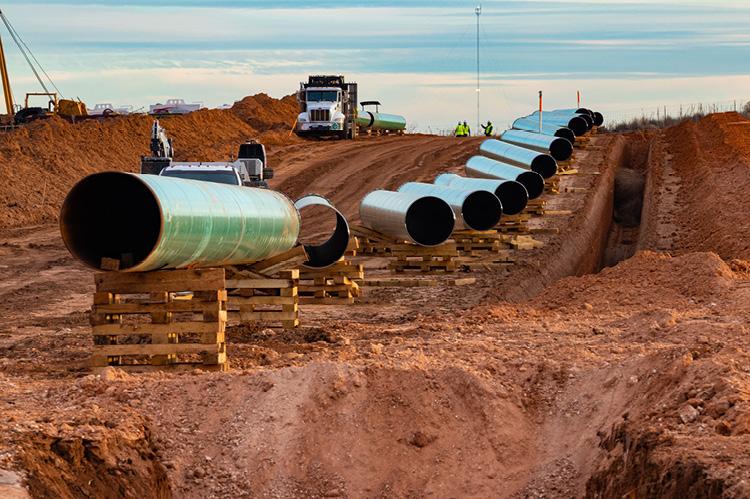
Caption: Pipe sections lined up along a Permian Basin right-of-way during construction preparation.
2. Enbridge Sunrise Expansion – British Columbia, Canada
Enbridge’s $4 billion Sunrise Expansion of the Westcoast natural gas pipeline system is another major onshore project currently under construction.
Key technical and project details:
- Construction began in July 2026
- Addition of approximately 139 km of new pipeline through 11 loops
- Pipe specification: 42-inch diameter, high-strength steel (typically X70 or equivalent grade)
- New compressor units and associated power infrastructure
- Capacity increase: 300 MMcf/d
- Target completion: 2028
The project has been divided into four construction segments with different mainline contractors to manage logistics across varied terrain in British Columbia. It will support domestic Canadian demand as well as feed gas supply for LNG facilities such as Woodfibre LNG.
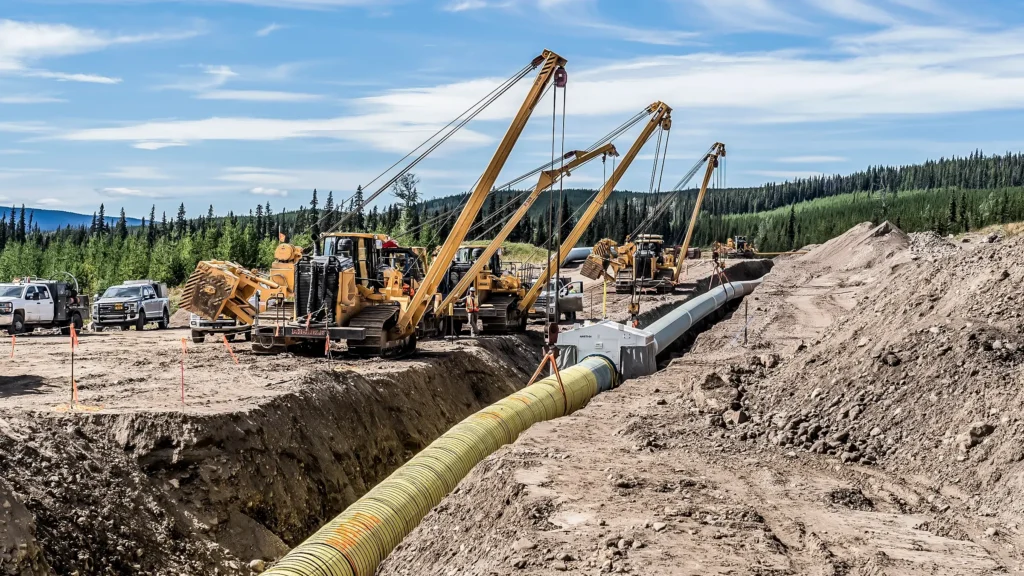
Caption: Pipeline construction equipment and lowering-in operations on a major natural gas project.
3. Prince Rupert Gas Transmission (PRGT)
The Prince Rupert Gas Transmission project is advancing as the critical onshore feedgas link for the proposed Ksi Lisims LNG export terminal in British Columbia. First onshore construction contracts have been awarded, marking an important step toward potential Final Investment Decision on the broader LNG development.
This pipeline will transport natural gas from the Western Canadian Sedimentary Basin to the northwest coast, requiring careful routing through challenging terrain and environmental management.
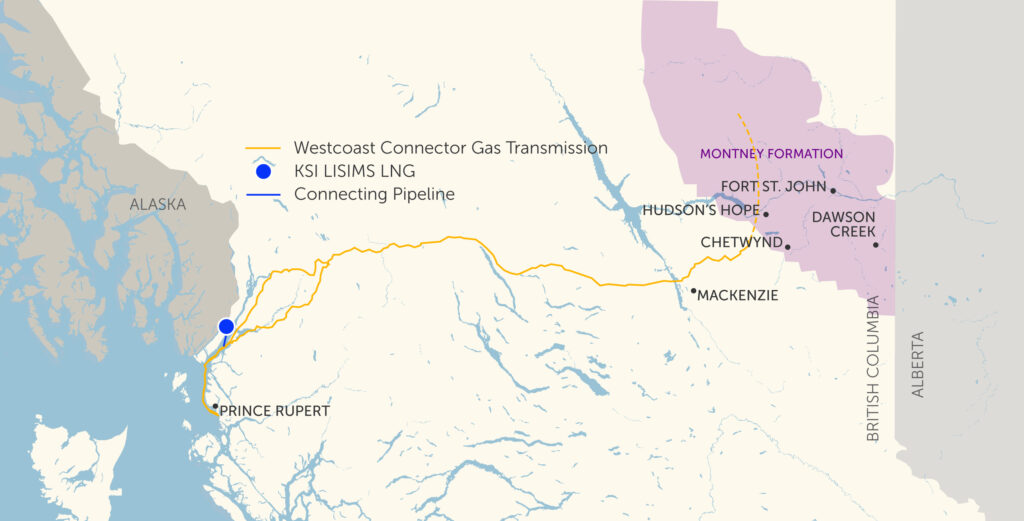
Caption: Map illustrating proposed and existing natural gas pipeline routes in British Columbia supporting LNG development.
Broader Construction Trends in 2026 Several
Several technical and market trends characterize current onshore pipeline work:
- Large-diameter pipe preference: 42-inch and 48-inch diameters dominate new long-haul gas projects to maximize capacity and improve economies of scale.
- Focus on Permian takeaway: Multiple projects aim to relieve constraints at the Waha hub and move gas to the Texas Gulf Coast.
- LNG and power demand linkage: New pipelines are increasingly justified by LNG export growth and rising electricity demand from data centers and industrial loads.
- Construction methods: Standard open-cut trenching remains primary, with specialized techniques (horizontal directional drilling, boring) used at road, rail, and water crossings. Welding, non-destructive testing, coating, and lowering-in follow established industry practices.
- Compression and facilities: Most expansions include new or upgraded compressor stations, often with a shift toward electric-drive units where power is available.
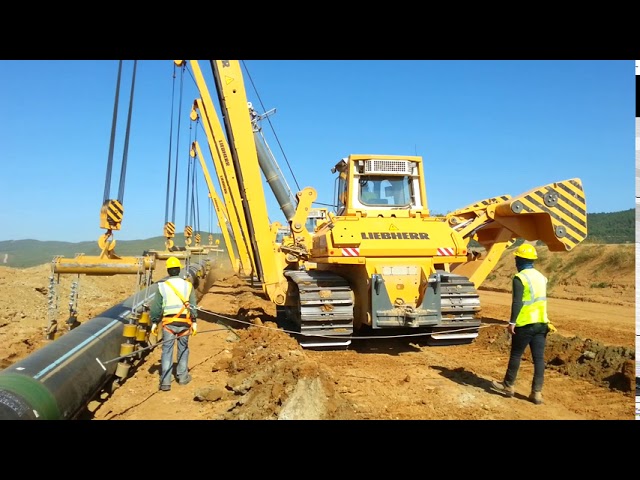
Caption: Sideboom tractors carefully lowering a welded pipeline section into the trench.
Challenges and Considerations
Despite strong project activity, onshore pipeline developers continue to face:
- Lengthy permitting and environmental review processes
- Landowner and community engagement requirements
- Supply chain pressures on high-grade line pipe and specialized equipment
- Cost inflation for labor, fuel, and materials
- The need to design for future flexibility (including potential hydrogen blending in some corridors)
ConclusionOnshore pipeline construction in 2026 is robust and heavily weighted toward natural gas infrastructure. Projects such as the Solitude Pipeline System, Enbridge’s Sunrise Expansion, and the advancing Prince Rupert Gas Transmission line demonstrate the industry’s response to production growth in key basins and rising demand from LNG and power markets.
For pipeline professionals, these developments highlight continued opportunities in large-diameter gas transmission, compression facilities, and related field engineering and construction support roles. As takeaway capacity expands, the focus will remain on safe, efficient execution and long-term system reliability.