By Oko M.Eng | Offshore Pipeline Insight | August 2026
Oil headlines in late August 2026 have been dominated by the Strait of Hormuz, sanctions, and a weekly drop in crude prices. That noise can hide what is actually happening in the field. Upstream companies are still buying drilling inventory, shifting capital toward basins they consider workable, and reallocating rigs between oil and gas. None of this looks like a boom. None of it looks like a collapse either.
For pipeline, midstream, and field-engineering readers, the important question is not whether Brent finished the week at $88 or $92. The important question is where new wells will be drilled, how much associated gas those wells will produce, and whether gathering systems, long-haul pipelines, and compression will be ready when that volume shows up.
This article reviews three late-August signals: Ovintiv’s continued acreage and location buying in the Permian and Montney, a visible shift of some UK-linked capital into New Mexico and the broader Permian, and a U.S. rig count that slipped on the oil side while gas rigs rose. Taken together, they describe a market that is selective, inventory-driven, and still tightly connected to pipeline takeaway.
Why upstream “quiet” activity still matters
The U.S. and Western Canadian onshore businesses no longer grow by simply adding as many rigs as possible. Operators have spent several years emphasizing capital discipline, shorter cycle times, and locations that can be developed from existing pads, facilities, and midstream connections. That strategy shows up in small and mid-size transactions rather than in splashy billion-dollar announcements.
Those transactions still change the map. A company that adds 200-plus drilling locations is not buying production for next month. It is buying the right to keep a program running into the next decade. Each of those locations, if drilled, will require water handling, produced-water pipelines or disposal, oil gathering, gas gathering, and eventually residue-gas takeaway. In the Permian especially, the constraint in recent years has often been gas egress, not the ability to drill the well.
That is why a $460 million string of bolt-on deals and a five-rig move in the national count can tell pipeline professionals more than a single day’s crude price.
Ovintiv’s bolt-on strategy in the Permian and Montney
Ovintiv has been one of the more active consolidators in 2026. Through more than 60 transactions totaling about $460 million, the company added roughly 41,000 net acres and about 240 drilling locations across its Permian and Montney positions.The structure of that buying is as important as the headline number. This is not one large corporate acquisition. It is a series of smaller deals designed to fill in around existing operations. The advantages are practical:
- Locations sit closer to known facilities and crews.
- Cycle times can stay short because the operator already understands the rock and the midstream.
- Overhead does not jump the way it does after a mega-merger.
- The company can high-grade the inventory and leave weaker locations undeveloped if prices soften.
The Permian remains the core oil growth engine in the United States. Longer laterals, including so-called super-laterals beyond 15,000 feet in parts of the basin, have increased oil and associated-gas output per well. That productivity is exactly why midstream projects such as new 42-inch and 48-inch gas lines from the Permian toward Katy and the Gulf Coast have reached final investment decisions this year. More oil per well also means more gas per well. If residue-gas takeaway lags, Waha pricing weakens and operators either flare under tighter limits, shut in, or accept a worse netback.
The Montney is a different play with a similar logic. It is one of Western Canada’s most important gas and condensate regions and a key source of feedgas for current and proposed LNG on the British Columbia coast. Adding Montney locations is a bet that Canadian gas will still find a market through existing systems and through LNG-linked demand. It also puts more pressure on Western Canadian processing, sales-gas pipelines, and, eventually, coastal feedgas lines.
For a midstream or pipeline engineer, Ovintiv’s activity is a reminder that “inventory” is not an abstract financial term. It is a queue of future wellheads, flowlines, and compressor stations.
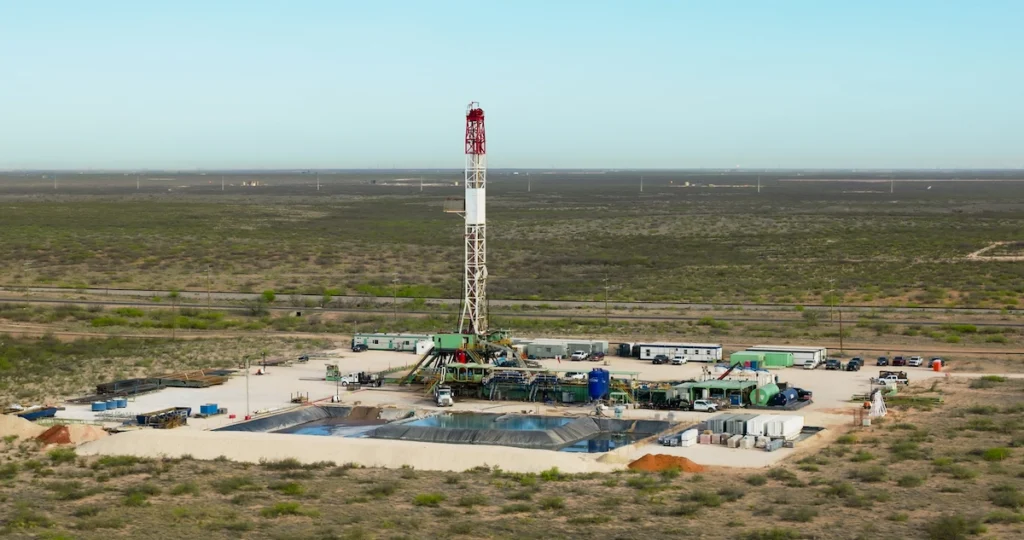
Caption: A Permian Basin drilling pad — the type of short-cycle inventory companies are still adding in 2026.
What 240 locations actually represent
A drilling location is only as valuable as the well it can support. In modern unconventional development, one “location” often means a future horizontal well in a defined bench, spacing pattern, and lateral-length assumption. If an operator assumes 10,000- to 15,000-foot laterals, stacked benches, and multi-well pads, 240 locations can support several years of activity even at a moderate rig pace.That is why buyers pay for locations near:
- Existing tank batteries and central production facilities
- Gas gathering with available capacity
- Oil gathering that can reach a market hub
- Produced-water infrastructure
- Power and road access
A location in a constrained gas area is worth less than the same rock next to an open residue line. This is one reason Permian gas pipeline news and upstream acreage news belong in the same conversation. The rock and the pipe are now priced together, whether companies admit it on the slide deck or not.
UK-linked capital moves toward New Mexico and the Permian
A second late-August signal came from BritENERGY Group, which said it is shifting investment from the United Kingdom to the U.S. Permian. The company’s chairman described the UK environment as “uninvestable” and pointed to interests in 13 New Mexico oil and gas wells targeting about 5 million barrels by 2032.
One small company does not define global capital flows. The comment does fit a broader pattern visible since 2024–2026: some investors and independents prefer basins with faster cycle times, clearer well economics, and existing service-sector density. The Permian and adjacent New Mexico Delaware still offer that combination. Permitting, midstream access, and oilfield services are not frictionless, but they are familiar. A well can be drilled, completed, and connected on a timeline that many North Sea or onshore UK projects cannot match.
There is also a policy overlay. When fiscal terms, licensing delays, or political opposition raise the cost of capital, money looks for a basin where the decline curve and the netback are easier to model. That does not mean every dollar leaving Europe lands in Midland or Eddy County. It does mean the Permian remains a default destination when companies want onshore oil exposure with a known playbook.
For pipeline contractors and field engineers, inbound capital of this type usually shows up first as more work on flow-lines, tank batteries, metering, and short gas laterals — not immediately as a new 200-mile transmission line. The large-diameter projects follow later, after enough of those wells have been drilled to justify the next increment of takeaway.
The U.S. rig count: oil down, gas up, total still in the high 580s
Baker Hughes data at the end of August showed a mixed but stable picture:
- U.S. oil rigs fell by 5
- Gas rigs rose
- The total U.S. oil and gas rig count held near the high 580s, around 588
This is not the rig count of a 2014-style boom, and it is not the count of a 2020 collapse. It is the count of a market that is allocating iron by commodity and by netback.
A drop in oil rigs after a 4–5 percent weekly decline in crude is not surprising. Operators can defer a pad for a month more easily than they can defer a pipeline that has already reached FID. Gas rigs rising at the same time points to a different demand stack: LNG feedgas, power generation, and the need to handle associated gas without destroying price at Waha or other constrained hubs.
Rig count is a blunt tool. It does not capture lateral length, drilling days per well, or completion intensity. A basin can grow production with a flat rig count if laterals get longer and cycle times get shorter. That has been the Permian story. It is also why a “flat” national count can still mean rising gas volumes into the Gulf Coast and rising crude volumes into Cushing, Houston, and export docks.
For readers who work around pipelines, the better question is not “how many rigs?” It is “what are those rigs pointing at, and which pipes sit downstream of them?” Right now the answer is still concentrated in Texas, New Mexico, and a handful of gas-focused areas.
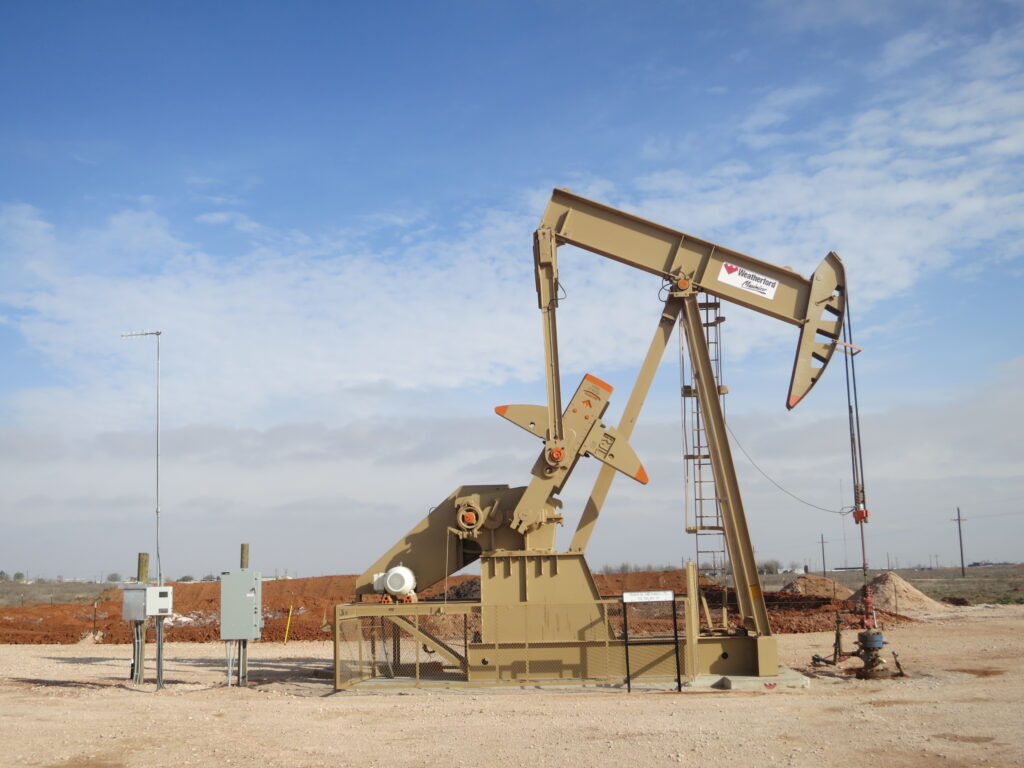
Caption: A pumping unit in the Permian Basin. Production from existing wells continues even when the rig count moves only slightly.
Associated gas is the hidden pipeline driver
Oil rigs get the attention. Associated gas often creates the infrastructure emergency. A high-oil well in the Delaware or Midland Basin can still produce large volumes of gas. If gathering is short, if processing is full, or if residue takeaway is tight, the operator faces a bad menu: curtail oil, accept a weak gas price, or fight for the next increment of pipeline capacity.
That is why 2026’s large onshore gas projects — including new long-haul systems out of the Permian toward Katy and the Gulf Coast — belong next to this upstream story. Acreage deals and rig moves are the demand signal. 48-inch pipe, compressor stations, and residue laterals are the response.
The same logic applies, at a different scale, in the Montney. Condensate-rich wells still produce gas that must be processed and shipped. If Canadian LNG projects advance, that gas has a coastal destination. If they slip, the gas competes into an already complex Western Canadian and U.S. market.
Field implications for engineers and inspectors
The current upstream pattern has direct consequences for people who work on construction quality, materials, and field execution:
- More multi-well pads mean more simultaneous operations, more crossing of existing lines, and more third-party damage risk.
- Longer laterals and higher gas-oil ratios increase the importance of properly sized gathering, measurement, and high-pressure piping.
- Bolt-on acreage often sits next to older flowlines and facilities. Tie-ins, hot work, and quality documentation become daily issues.
- Gas-directed rigs raise the value of compression, dehydration, and residue-gas metering skills.
- A stable national rig count can still create local labor and inspector shortages where activity clusters.
QA/QC and field engineers will see this first as drawings, hydrotests, walkdowns, and material traceability — not as a Bloomberg headline.
What the week does not show
It is easy to over-read one week of data. A five-rig oil decline does not mean the Permian is finished. A $460 million package of deals does not mean every operator is in expansion mode. A single UK-to-Permian shift does not mean the North Sea is empty.What the week does show is selectivity. Companies are paying for locations they can drill from a known operating base. Capital is sensitive to policy and cycle time. Rigs are being pointed toward the commodity with the clearer near-term pull. That is a mature upstream market, not a panicked one.
Conclusion
Upstream activity in late August 2026 can be summarized in three points.
First, inventory still has value in the Permian and Montney. Ovintiv’s string of small deals added acres and locations without changing the company’s entire shape.
Second, policy and cost of capital are still pushing some international money toward U.S. onshore oil. New Mexico and the wider Permian remain the default destination when investors want short-cycle barrels.
Third, the U.S. rig count is balanced rather than broken. Oil slipped. Gas rose. The total stayed in the high 580s.
Those wells, if drilled, will need gathering lines, long-haul gas pipes, crude takeaway, produced-water handling, and compression. Prices eased this week on hopes of more Hormuz flow.
The upstream machine did not stop. It simply kept buying the next pad and waiting for the next open valve on the residue system.
That is the real story for Offshore Pipeline Insight readers: the map of future pipe is being drawn, quietly, by acreage deals and rig allocations long before the first joint of line pipe is welded.