By Oko Immanuel, M.Eng | Offshore Pipeline Insight | August 2026
Pipeline infrastructure is back at the center of energy strategy. Geopolitics, trade tension, and aging assets are pushing governments and operators to expand, renew, or replace long-distance oil and gas lines. Four developments from late August 2026 illustrate the trend: Canada’s push for more west-coast export capacity, an early reauthorization effort for the Trans-Alaska Pipeline, a Hormuz-bypass expansion in the UAE, and a large subsea replacement program in India.
Canada: Trans Mountain Says a New West-Coast Line Is Now More UrgentThe existing Trans Mountain Expansion (TMX) system is Canada’s only major east-west crude export pipeline to the Pacific. After the 2024 expansion, nameplate capacity is about 890,000 barrels per day. That line is already running near full as Canadian oil production continues to grow.
On August 28, 2026, Trans Mountain’s CEO said the collapse of trade talks with the United States has added urgency to planning another west-coast oil pipeline. The goal is simple: give Canadian barrels more access to Asian markets and reduce reliance on U.S. routes.Near-term work on the existing system is also moving:
- Drag-reducing agents are expected to add about 90,000 bpd by the end of 2026
- Additional pumping stations could add about 210,000 bpd by the end of 2028, subject to a year-end 2026 investment decision
A brand-new coastal pipeline remains a concept, not a sanctioned project. Even so, the message from Calgary is clear: current Pacific export capacity is no longer enough.
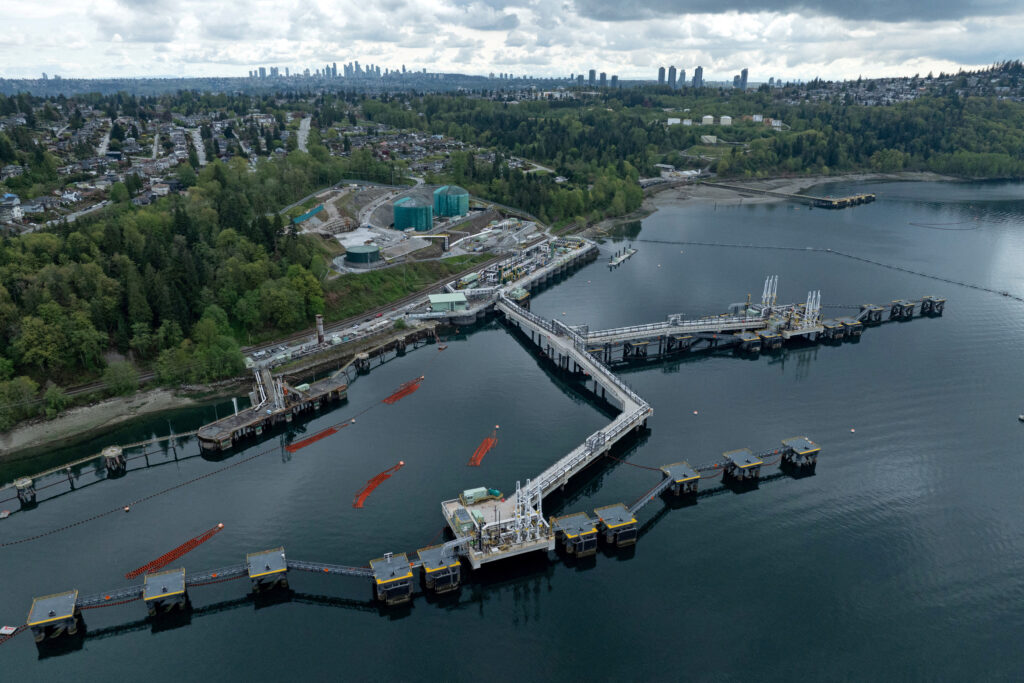
Caption: Trans Mountain marine terminal infrastructure on Canada’s west coast — the outlet for Pacific-bound crude.
Alaska: Early Renewal of the 800-Mile Trans-Alaska Pipeline
The Trans-Alaska Pipeline System (TAPS) remains one of the most important crude lines in the United States. It runs about 800 miles from Prudhoe Bay to the Valdez Marine Terminal and uses 48-inch pipe. Roughly 420 miles are above ground because of permafrost. The line was designed to handle seismic movement and extreme cold.
Federal rights-of-way are not due to expire until January 2034. In late August 2026, however, Alyeska Pipeline Service Company (on behalf of owners including ConocoPhillips, ExxonMobil, and Hilcorp) applied for early reauthorization. The Bureau of Land Management opened an environmental review and shortened the public scoping comment window to 15 days.
If approved, the renewal would lock in federal land authorization for another 30 years. Recent throughput has been far below original design capacity — on the order of 460,000 bpd last year — but TAPS is still the only way North Slope crude reaches tidewater.
The engineering issues are as important as the politics: aging pump stations, permafrost change, corrosion management, and long-term integrity of an above-ground arctic system.
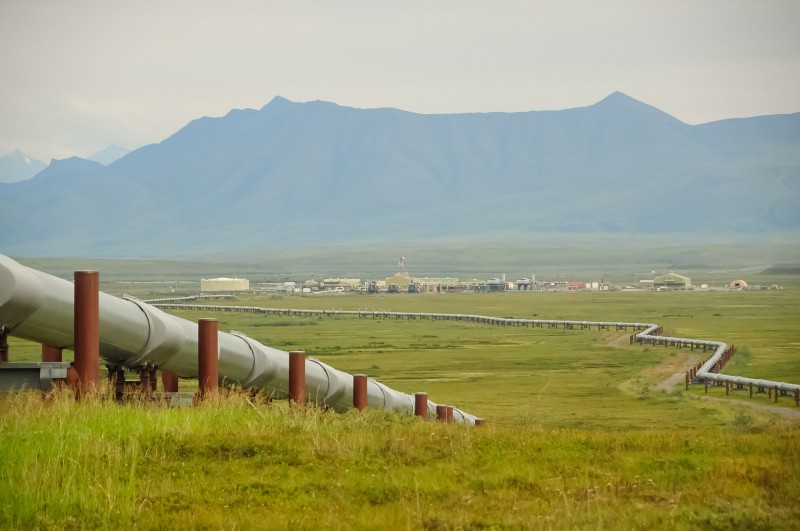
Caption: The Trans-Alaska Pipeline crossing tundra on elevated supports designed for permafrost and seismic movement.
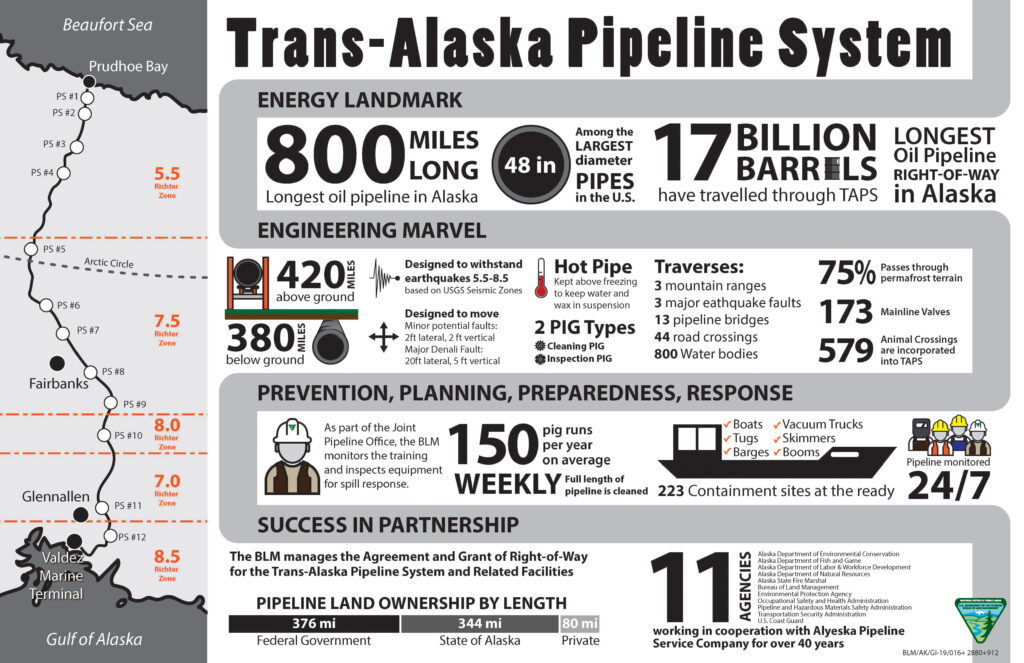
Caption: Key facts on TAPS: 800 miles, 48-inch pipe, mixed above-ground and buried sections, and continuous integrity monitoring.
UAE: Expanding the Habshan–Fujairah Line That Bypasses Hormuz
The Abu Dhabi Crude Oil Pipeline (ADCOP), also known as the Habshan–Fujairah line, already gives the UAE a route from inland production to the Gulf of Oman that does not pass through the Strait of Hormuz. Current capacity is about 1.8 million barrels per day.
In late August 2026, TotalEnergies confirmed it would invest in expanding that west-east system. UAE plans point to a rough doubling of export capacity through Fujairah around 2027, which would put nominal throughput near 3.6 million bpd if fully realized.
This matters because Hormuz remains constrained. A land pipeline to Fujairah is not just a commercial asset; it is a strategic bypass. Additional connections from offshore processing centers into the same west-east network are also being studied.
For pipeline engineers, the project is a reminder that large-diameter onshore crude systems can change global flow security faster than new tanker routes.
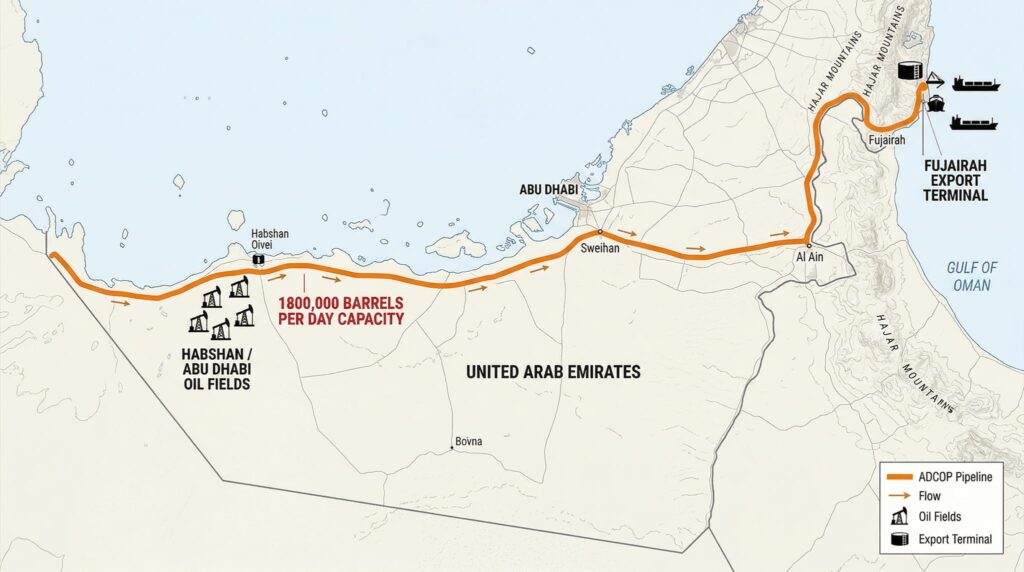
Caption: Map of the Habshan–Fujairah crude pipeline, which moves Abu Dhabi oil to the Gulf of Oman and avoids the Strait of Hormuz.
India: ONGC’s 285 km Subsea Pipeline ReplacementOffshore construction has not paused. Lamprell holds a major contract from Oil and Natural Gas Corporation (ONGC) for Pipeline Replacement Project PRP-IX. The job covers about 285 km of subsea pipelines of mixed diameters across western offshore fields, including Mumbai High, Neelam and Heera, and Bassein and Satellite.Scope includes:
- Replacement and installation of aging subsea lines
- Associated topside modifications on multiple platforms
- Integrated engineering, procurement, construction, transport, and installation
This is classic brownfield offshore pipeline work: replace deteriorating lines, keep fields producing, and upgrade platform interfaces. For the global contractor market, it is one of the larger current subsea replacement campaigns in Asia.
Why These Four Projects Matter Together
These developments are different in geography, but they share one theme: pipeline capacity and route security are strategic again.
- Canada wants Pacific options beyond a nearly full TMX.
- Alaska wants long-term legal certainty for an 800-mile arctic crude system.
- The UAE is expanding a Hormuz-bypass line to protect export flexibility.
- India is replacing hundreds of kilometers of aging subsea pipe to protect production.
For readers of Offshore Pipeline Insight, the engineering takeaway is practical. Integrity, pumping capacity, route diversity, and replacement of old offshore lines are not side issues. They are the infrastructure decisions that will shape oil flow through 2027 and beyond.