Written by Oko
Founder, Offshore Pipeline Insight
June 13, 2026
Pipeline Integrity Management (PIM) is one of the most critical disciplines in the offshore oil, gas, and energy transition sectors. With thousands of kilometres of subsea pipelines operating in some of the harshest environments on Earth, maintaining their safety, reliability, and longevity is essential — not only for production continuity but also for environmental protection and regulatory compliance.
This cornerstone guide covers everything you need to know about Pipeline Integrity Management in offshore and subsea environments, including current technologies, best practices, challenges, and emerging trends in 2026.
Why Pipeline Integrity Management Matters More Than Ever
Subsea pipelines are the arteries of the offshore energy industry. They transport hydrocarbons, CO₂, and increasingly hydrogen across vast distances in deep water, high-pressure, and corrosive conditions.A single failure can result in:
- Major environmental incidents
- Production shutdowns costing millions per day
- Regulatory penalties and reputational damage
- Safety risks to personnel and marine life
In mature basins like the North Sea, many pipelines are now 30–50 years old. At the same time, operators are repurposing existing lines for CCUS and hydrogen — which introduces new integrity challenges such as hydrogen embrittlement and dense-phase CO₂ corrosion.
Effective PIM is no longer optional. It is a core business and safety requirement.
Key Threats to Offshore & Subsea Pipelines
Subsea pipelines face a unique combination of threats:
| Threat | Description | Typical Impact | Common Mitigation |
|---|---|---|---|
| External Corrosion | Seawater attack on external coating | Metal loss, leaks | Coatings + Cathodic Protection |
| Internal Corrosion | CO₂, H₂S, water, bacteria inside the pipe | Pitting, wall thinning | Chemical inhibition, monitoring |
| Mechanical Damage | Anchors, trawling, dropped objects | Dents, gouges, buckling | Burial, rock dumping, monitoring |
| Fatigue & Stress | Dynamic loading from waves, currents, thermal | Cracks, fatigue failure | Design, monitoring, strain gauges |
| Hydrogen Embrittlement | New risk when repurposing for hydrogen | Cracking in high-strength steels | Material selection, monitoring |
| Microbiologically Influenced Corrosion (MIC) | Bacteria activity | Accelerated pitting | Biocides, monitoring |
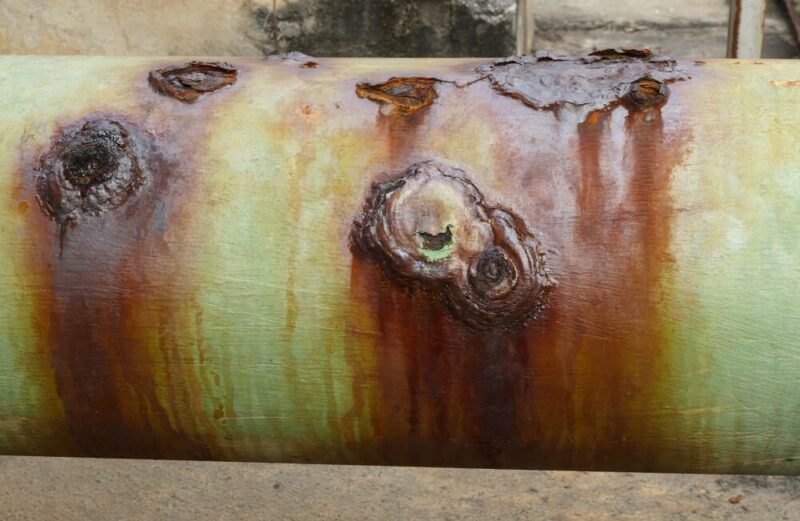
Severe external corrosion damage on a pipeline — a common threat that integrity management programmes aim to detect early.
Core Components of a Modern Pipeline Integrity Management System
A robust PIM system typically includes these key elements:
- Data Management & Integration
Centralised database combining inspection data, operational history, design records, and environmental data. - Threat Identification & Risk Assessment
Qualitative and quantitative risk assessments (QRA) to prioritise high-risk segments. - Inspection & Monitoring Programmes
Combination of internal (ILI) and external inspection methods. - Fitness-for-Service (FFS) Assessment
Engineering evaluations to determine if anomalies can be safely operated or require repair. - Mitigation & Repair Planning
Decision framework for when and how to intervene. - Performance Monitoring & Continuous Improvement
KPIs, audits, and lessons learned.
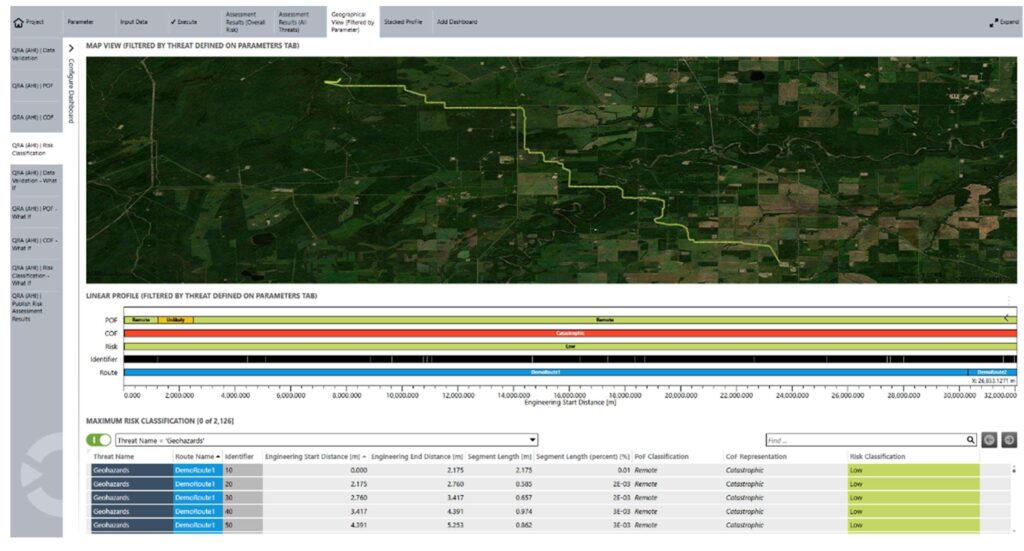
Example of a modern Pipeline Integrity Management software dashboard showing risk profiles, integrity indices, and key performance indicators.
Inspection Technologies Used in Subsea Environments
1. External Inspection (ROV & AUV)
Remotely Operated Vehicles (ROVs) and Autonomous Underwater Vehicles (AUVs) remain the workhorses for external pipeline surveys.They provide:
- Visual inspection
- Sonar and multibeam mapping
- Cathodic protection measurements
- Laser profiling and 3D modelling
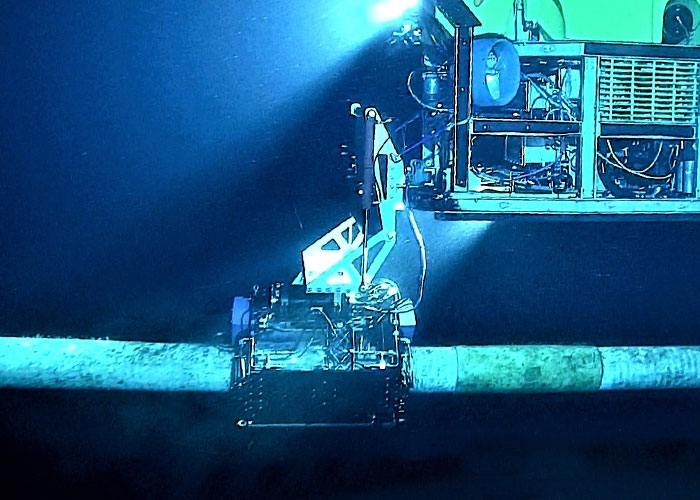
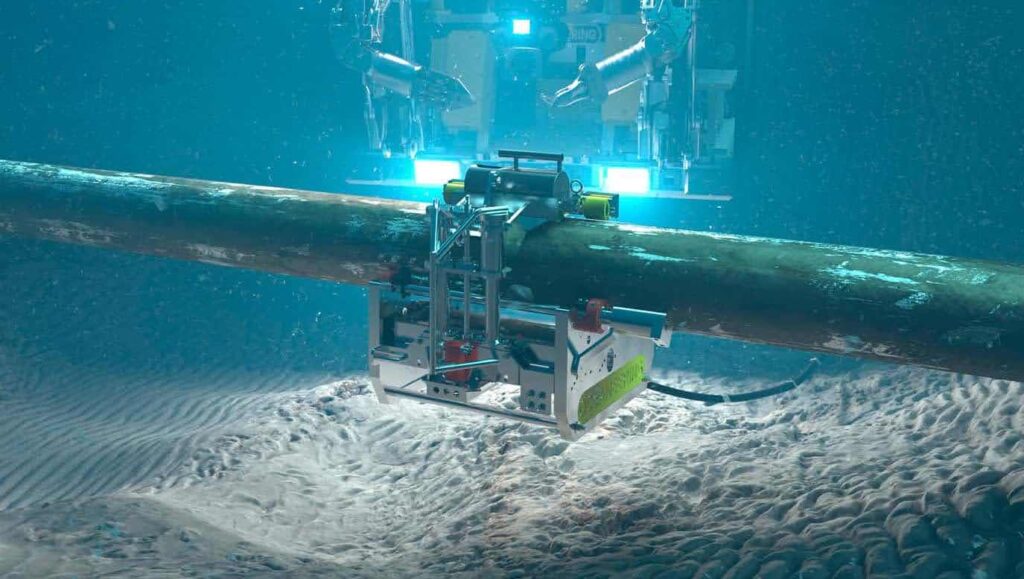
ROV performing close visual and sensor-based inspection on a subsea pipeline.
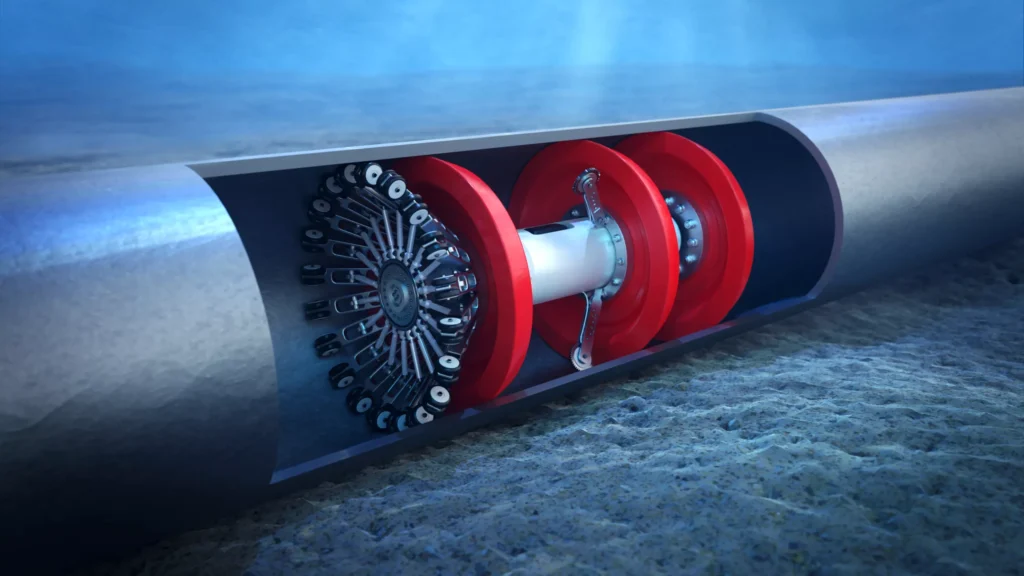
2. Inline Inspection (ILI) – “Smart Pigs”
Intelligent pigs travel inside the pipeline and collect high-resolution data on wall thickness, cracks, dents, and other anomalies.Modern ILI tools can detect:
- Metal loss (corrosion)
- Cracks (including stress corrosion cracking)
- Geometric anomalies (dents, ovality)
- Pipeline movement
ROV performing close visual and sensor-based inspection on a subsea pipeline.
2. Inline Inspection (ILI) – “Smart Pigs”
Intelligent pigs travel inside the pipeline and collect high-resolution data on wall thickness, cracks, dents, and other anomalies.Modern ILI tools can detect:
- Metal loss (corrosion)
- Cracks (including stress corrosion cracking)
- Geometric anomalies (dents, ovality)
- Pipeline movement
The Rise of Digital Twins in Pipeline Integrity
One of the biggest shifts in 2025–2026 is the adoption of Digital Twins for subsea pipelines.
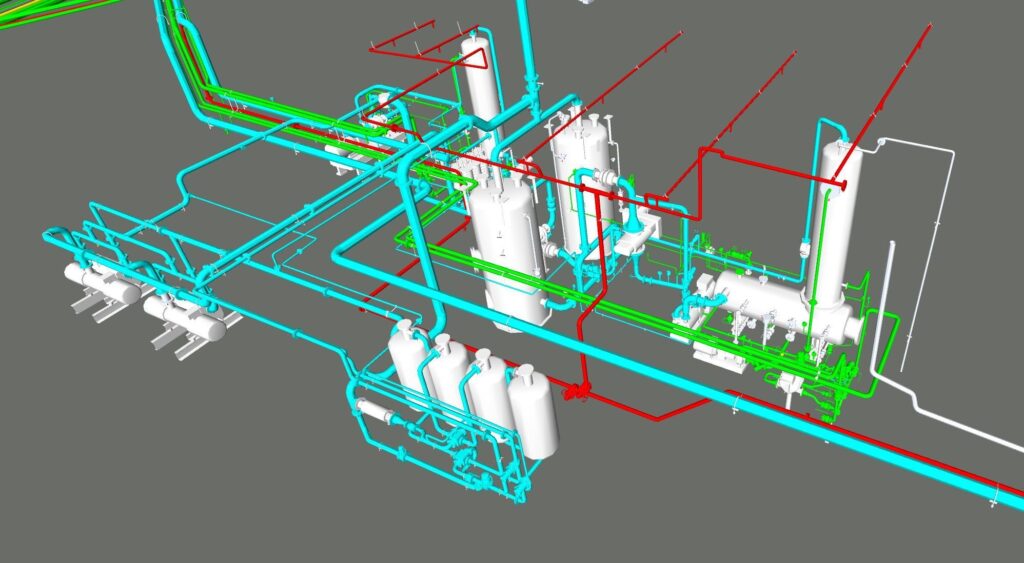
A digital twin is a virtual replica of the physical pipeline that integrates real-time sensor data, inspection results, and simulation models. This allows operators to:
- Predict future degradation
- Simulate different operating scenarios
- Optimise inspection intervals
- Make data-driven repair decisions
Regulatory Requirements (Focus on North Sea)
- UK: North Sea Transition Authority (NSTA) and OPRED require robust integrity management under the Pipeline Safety Regulations.
- Norway: Petroleum Safety Authority (PSA) enforces very high standards with strong emphasis on barrier management.
- International: ISO 19345 and DNV standards provide global frameworks for subsea pipeline integrity.
Operators must demonstrate that pipelines remain fit for purpose throughout their lifecycle, including during repurposing for CCUS or hydrogen.
Best Practices for Effective PIM in 2026
- Combine multiple inspection methods (ILI + ROV + sensors) rather than relying on one.
- Move from time-based to risk-based inspection (RBI) programmes.
- Invest in data quality and integration — poor data leads to poor decisions.
- Plan for repurposing early — assess material compatibility for hydrogen or CO₂ service.
- Use predictive analytics and machine learning to forecast threats.
- Maintain strong collaboration between operators, integrity engineers, and service providers.
Emerging Trends in Subsea Pipeline Integrity (2026+)
- Greater use of resident ROV/AUV systems for continuous monitoring
- Integration of fibre optic sensing along pipelines for real-time strain and leak detection
- AI-powered anomaly detection from inspection data
- Increased focus on circular economy — assessing pipelines for reuse rather than decommissioning
- Stricter requirements for hydrogen-ready integrity assessments
Conclusion
Pipeline Integrity Management in offshore and subsea environments has evolved from a reactive maintenance activity into a sophisticated, data-driven discipline. With aging infrastructure, energy transition projects, and rising regulatory expectations, operators who invest in robust, modern PIM systems will achieve better safety outcomes, lower long-term costs, and greater operational flexibility.
Whether you are managing existing hydrocarbon pipelines or planning to repurpose them for CCUS and hydrogen, a strong integrity management foundation is non-negotiable.