By Oko , M.Eng | Offshore Pipeline Insight | July 29 2026
Pipeline leaks remain one of the most significant operational, environmental, and safety risks facing the oil, gas, and midstream industries. Even small, undetected releases can lead to product loss, environmental damage, regulatory penalties, and reputational harm. In 2026, operators are under increasing pressure to detect leaks faster, more accurately, and across longer distances.
Advances in sensing technology, remote monitoring, and artificial intelligence are transforming how the industry approaches leak detection. This article examines the main technologies in use today, what is delivering the strongest results, and the developments likely to shape the next phase of pipeline integrity management.
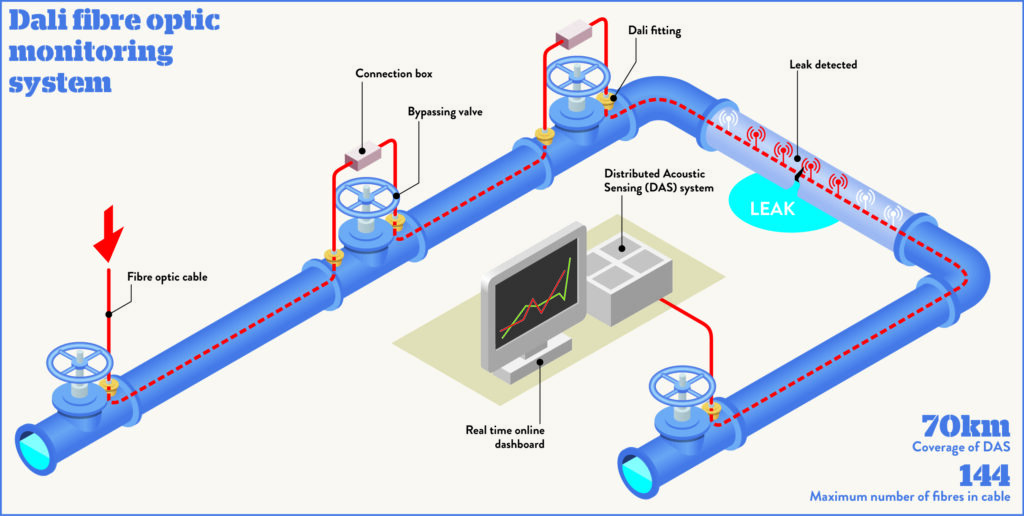
Caption: Fiber-optic distributed acoustic sensing system for continuous pipeline leak detection.
The Growing Importance of Effective Leak Detection
Modern pipelines transport large volumes of hydrocarbons under high pressure across diverse terrain — from remote onshore rights-of-way to deepwater subsea systems. Traditional methods such as pressure monitoring, volume balance, and periodic aerial patrols still play a role, but they often struggle to identify small or slow leaks quickly enough.Regulatory expectations, ESG commitments, and public scrutiny have raised the bar. Operators now seek systems that provide near-real-time alerts, precise location data, and lower false-alarm rates. The result is a rapid expansion of multi-layered leak detection strategies that combine several technologies.
Fiber-Optic Sensing: Distributed Acoustic and Temperature Systems
Fiber-optic cables installed along pipelines have become one of the most effective continuous monitoring solutions.
Two primary techniques dominate:
- Distributed Acoustic Sensing (DAS) detects vibrations and acoustic signals caused by escaping fluid.
- Distributed Temperature Sensing (DTS) identifies temperature changes associated with leaks, particularly useful for liquid hydrocarbons or in colder environments.
These systems can monitor tens of kilometers from a single interrogator unit and provide continuous coverage along the entire monitored segment. In 2026, improvements in signal processing and machine learning have reduced false positives while improving sensitivity to smaller leaks.
Fiber-optic systems are especially valuable on high-consequence segments, new construction, and pipelines where right-of-way access is limited. Installation costs remain relatively high for retrofits, but many operators now specify fiber during new pipeline projects.
Drones and Unmanned Aerial Systems
Drones have moved from experimental tools to routine operational assets. Equipped with optical cameras, thermal infrared sensors, and increasingly methane-specific detectors, unmanned aerial systems allow rapid inspection of long pipeline corridors.
Key advantages in 2026 include:
- Faster coverage than ground patrols
- Ability to reach difficult or hazardous terrain
- High-resolution visual and thermal data
- Integration with automated flight planning and AI-based anomaly detection
Many operators now combine scheduled drone flights with targeted inspections after third-party activity or extreme weather. While drones are excellent for visual confirmation and periodic surveys, they are not continuous monitors and still depend on weather and airspace regulations.
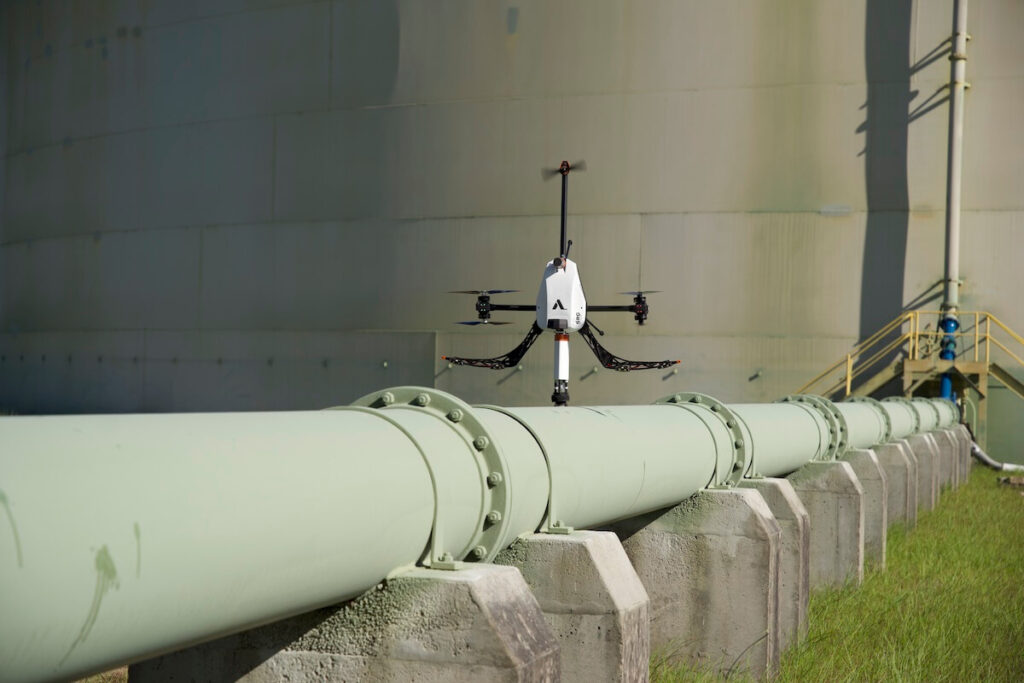
Caption: Inspection drone positioned on a pipeline segment during aerial survey operations.
Satellite Monitoring and Remote Sensing
Satellite-based leak detection has matured significantly. Modern commercial satellites equipped with optical, multispectral, and hyperspectral sensors can detect vegetation stress, soil discoloration, and, in some cases, methane plumes.
In 2026, several service providers offer regular satellite passes over pipeline corridors, with AI algorithms flagging potential anomalies for further investigation. Coverage is particularly useful for remote or cross-country pipelines where frequent physical patrols are costly.
Limitations remain: cloud cover, resolution constraints for very small leaks, and the time lag between satellite passes. Nevertheless, satellites provide a valuable wide-area screening layer that complements ground-based and aerial systems.
Artificial Intelligence and Continuous Monitoring Platforms
Artificial intelligence and advanced analytics are now central to modern leak detection strategies. AI systems process data from multiple sources — SCADA pressure and flow readings, fiber-optic sensors, drone imagery, and satellite feeds — to identify patterns that indicate a leak.
Machine learning models improve over time as they are trained on historical events and false-alarm data.
The best-performing systems in 2026 focus on:
- Reducing nuisance alarms
- Providing confidence scores with alerts
- Estimating leak size and location
- Integrating with control-room workflows for faster response
Continuous monitoring platforms that combine real-time sensor data with AI analysis are becoming the preferred approach for operators managing large networks.
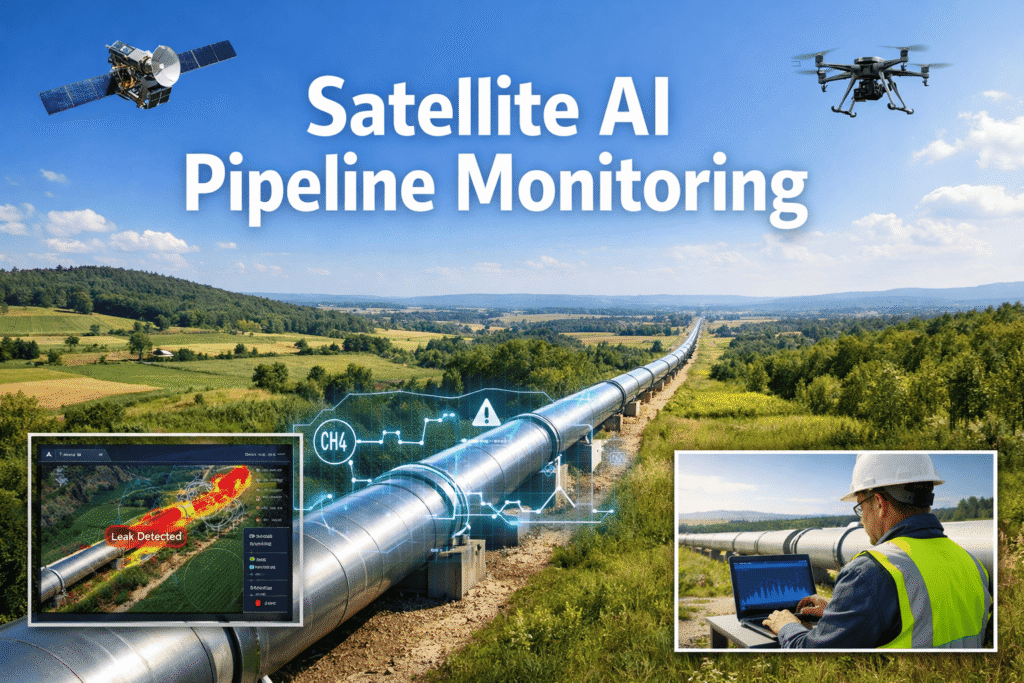
Caption: Satellite and AI-based pipeline monitoring concept showing remote detection and field verification.
Computational Pipeline Monitoring and SCADA Enhancements
Traditional computational pipeline monitoring (CPM) methods — real-time transient modeling, mass balance, and statistical analysis — continue to improve. Better instrumentation, higher-frequency data, and tighter integration with AI have increased sensitivity and reduced detection times for larger leaks.
Modern control rooms now display integrated dashboards that combine CPM alerts with data from fiber, aerial, and satellite sources. This multi-layered view helps operators prioritize responses and avoid alert fatigue.

Caption: Modern pipeline control room with SCADA and monitoring displays supporting continuous leak detection.
What Is Working Best in 2026
No single technology solves every leak detection challenge. The strongest results come from layered systems:
- Continuous sensing (fiber-optic DAS/DTS or high-quality CPM) for rapid initial detection
- Aerial or satellite confirmation for location and visual assessment
- AI analytics to filter false alarms and prioritize response
- Ground verification and emergency procedures for confirmed events
Operators who invest in data integration and trained personnel achieve the lowest overall risk and fastest response times.
Challenges That Remain Despite progress,
several challenges persist:
- Cost of installing fiber on existing long pipelines
- False alarms in complex operating environments
- Data overload without proper analytics
- Regulatory differences across jurisdictions
- Cybersecurity risks associated with connected monitoring systems
- Limited performance on very small or intermittent leaks in some technologies
What Comes Next
Looking ahead, several developments are expected to gain traction:
- Wider deployment of permanent fiber-optic systems on new and critical pipelines
- Greater use of autonomous drones and resident robotic systems for frequent surveys
- Improved methane-specific satellite and aerial sensors driven by emissions regulations
- Deeper AI integration that predicts leak risk based on integrity data, third-party activity, and operating conditions
- Hybrid systems that automatically trigger drone flights or additional sensor checks when an anomaly is detected
- Increased focus on cybersecurity and data validation for remote monitoring platforms
The industry is moving toward proactive, risk-based leak detection rather than purely reactive response.
Practical Recommendations for Operators
Pipeline professionals evaluating or upgrading leak detection programs should consider:
- Starting with a clear risk assessment of high-consequence areas
- Combining complementary technologies rather than relying on one method
- Investing in data quality and analytics as much as in sensors
- Training control-room and field teams on new systems
- Documenting performance and continuously refining alarm thresholds
- Planning for fiber or advanced sensing on new construction projects
Conclusion
In 2026, pipeline leak detection has advanced well beyond traditional pressure and volume monitoring. Fiber-optic sensing, drones, satellites, and AI-powered continuous monitoring platforms are delivering faster detection, better location accuracy, and stronger overall performance when used together.
The most successful operators treat leak detection as an integrated system rather than a collection of individual tools. As technology continues to improve and regulatory expectations rise, the ability to detect and respond to leaks quickly will remain a core element of safe and responsible pipeline operations.
For pipeline and integrity professionals, staying current with these technologies is no longer optional — it is essential to managing risk in an increasingly scrutinized industry.