Neighbours offered a land bypass. Al-Kaabi said no. Two Ras Laffan trains need three years. That is why U.S. and Pacific FIDs suddenly look like insurance.
21 September 2026
Oil can sneak around a strait. Saudi Arabia has been trying that with the East–West line and ship-to-ship transfers off Oman. LNG cannot play the same trick.
Qatar’s energy minister and QatarEnergy chief, Saad Sherida Al-Kaabi, said so in New York this week. Neighbours had offered territory for a pipeline that would skip the Strait of Hormuz. He thanked them.Then he shut the idea down. LNG is Qatar’s main export. You cannot put that product in a land line and call the problem solved. You would have to ship gas, then build new liquefaction at the far end — a second set of trains next to the ones Qatar is already expanding at home.“This makes no economic sense,” he said.The decision not to use pipelines as a Hormuz workaround was commercial and technical, not sentimental.
That is the sentence this site exists to unpack.
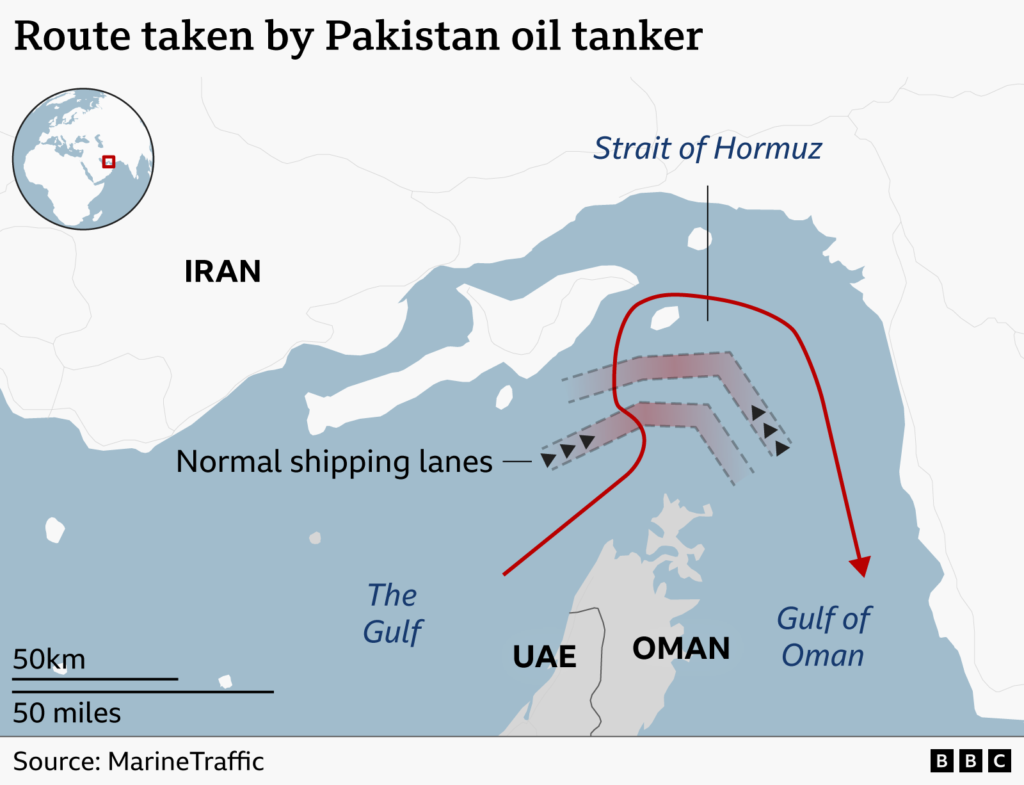
Caption: Hormuz is a shipping problem. A land line can move crude or lean gas. It cannot move a cargo of LNG that has already been chilled in Qatar.
What actually broke
Al-Kaabi also put numbers on the Ras Laffan damage. Attacks hit two LNG trains and a GTL plant. GTL repairs are aimed at first quarter 2027. The two LNG trains will take about three years. That is not a spot outage. That is a multi-year hole in the world’s largest LNG export complex while North Field expansion steel is still going in
Shell told Gastech the Middle East has lost about 36 million tonnes of LNG supply this year. New trains elsewhere cut the net global loss to about 5 million tonnes — roughly 1 to 1.5 percent of world supply.
That is how a war can look “contained” on a balance sheet and still force PetroChina, GAIL and PTT onto the spot market at a premium. Buyers are now shopping Oman, North America, West Africa and
Indonesia. East Timor is talking a 5 mtpa Sunrise plant and a 1.5 mtpa plant on leftover Bayu-Undan gas. Pakistan says it moved another Qatar cargo through Hormuz after a deal with Iran. That is not a market at rest. That is a market writing new routes in pencil.Brent slipped toward $100–102 on Monday on diplomacy talk. The LNG clock does not care. A train that needs three years is still three years.
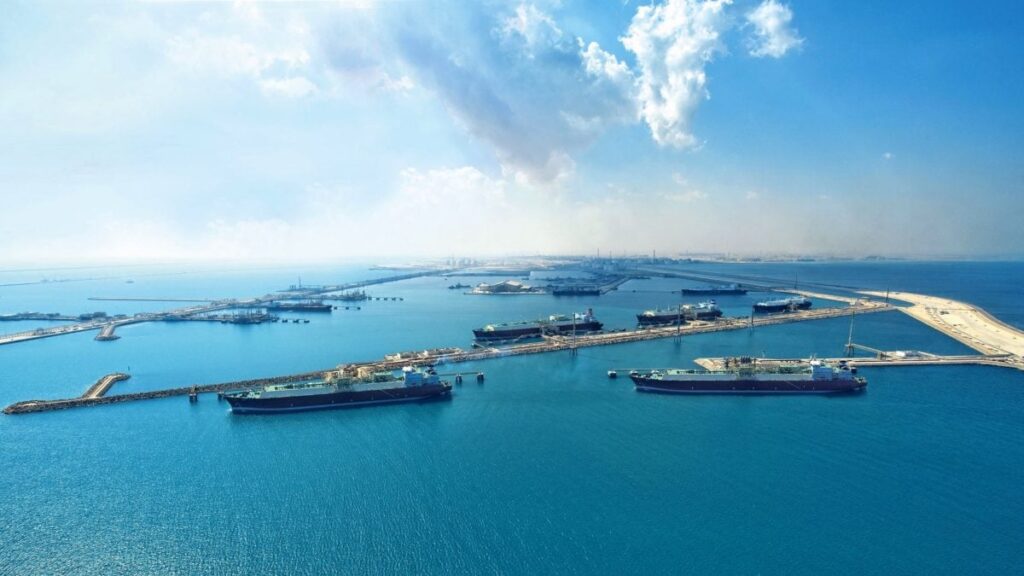
Caption: Ras Laffan is a jetty business. If two trains are down for three years, the only spare capacity that matters is somewhere else — a Gulf Coast plant, a Pacific train, or an FSRU.
Why a pipeline does not fix LNG
A crude bypass works because the molecule leaving Yanbu is still crude. A gas trunkline works if the customer burns gas. LNG is a manufactured product. The value is in the cold box, the tank and the carrier. Move the methane overland and you have thrown away the plant you already paid for, unless you build another plant on the far side of the mountains.
That is Al-Kaabi’s “redundant facilities” point. Qatar is already spending on North Field expansion. A Hormuz-avoiding gas line plus a new liquefier in, say, Oman or the UAE would be a second capex cycle for the same molecules. For a pipeline engineer it is also a different design: high-rate, high-pressure, cross-border gas with treating, compression and a political right-of-way that has to survive the same war the ships are trying to dodge.
Saudi crude can use East–West plus STS off Sohar. Qatar LNG cannot. That asymmetry is why U.S. FIDs and Pacific sanctions are not a separate beat from this war. They are the spare trains.
What this does to the articles already posted
Delfin FLNG 1 is a 4.4 mtpa hull off Louisiana. It does not transit Hormuz.
Commonwealth LNG is 9.5 mtpa in Cameron Parish, with a 17 mtpa expansion on the table. Same story.
Papua LNG and LNG Canada Phase 2 sell into Asia on a Pacific voyage. No Panama, no Hormuz.
None of those projects were designed as “Iran war insurance.” That is how the market will use them. Shell’s 5 mt net-loss figure only holds if those new trains actually start. A delayed UTOS repair, a late Cameron header or a slipped Kitimat FID puts the 5 mt back toward 36.
Port Arthur Phase 2 just signed about 0.8 mtpa for 20 years to Petrobras. That is a buyer leaving the Gulf of Arabia book. Excelerate is converting another FSRU. Indian Oil approved a 425 km Kochi–Thoothukudi gas line so imported LNG can move inland. The construction map is already shifting
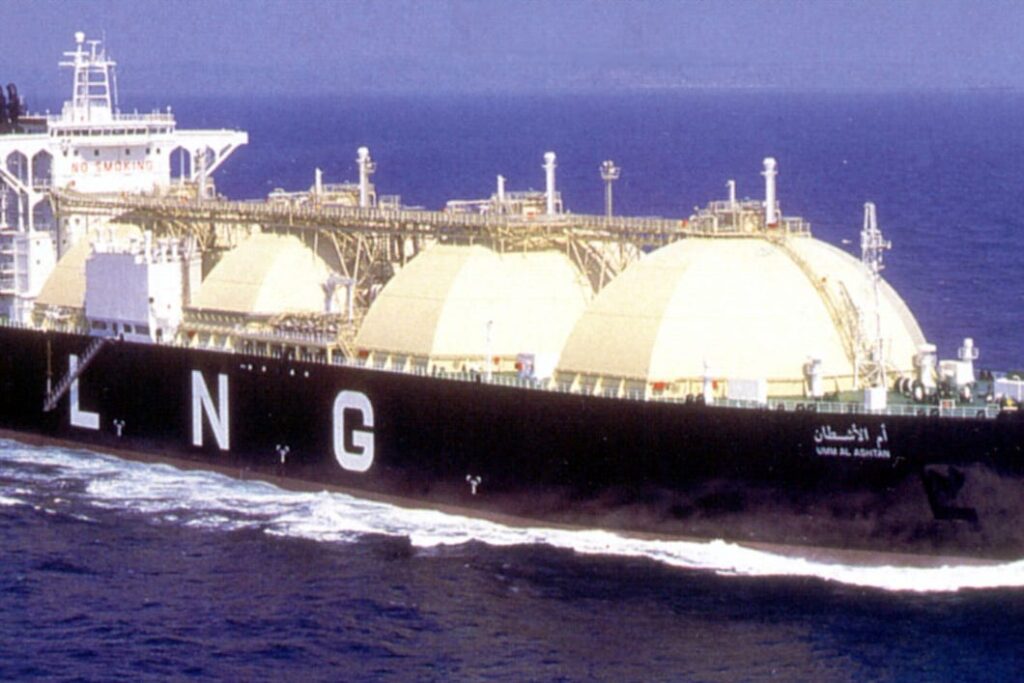
Caption: The product that leaves Ras Laffan leaves as a ship. Until those two trains are rebuilt, every extra U.S. and Pacific cargo is a substitute, not a luxury.
What to watch
- Official repair calendar on the two Ras Laffan LNG trains — three years is a speech, not a Gantt chart.
- Whether any Qatari gas actually moves overland as pipeline gas to a third-country liquefier. Al-Kaabi said no. Watch if that holds.
- Hormuz transit counts for LNG carriers week by week.
- FID dates: LNG Canada Phase 2 (October–year-end) and Papua LNG (Q4).
- How much U.S. Gulf capacity is still unsold for 2028–32.
Bottom line
Qatar just drew a hard line between oil logistics and LNG logistics. A pipe can save a crude barrel. It cannot save a tonne of LNG unless you rebuild the factory on the other side of the strait. Two trains down for three years is why Cameron Parish, Kitimat and Caution Bay are not “other people’s projects.” They are the world’s spare cold boxes.Feature: LNG carrier at a Gulf terminal. Mid: Hormuz map. Close: LNG ship at sea.