Written by Oko
Founder, Offshore Pipeline Insight
May 25, 2026
The North Sea Transition Authority (NSTA) is the key regulator shaping the future of the UK Continental Shelf. Formerly known as the Oil and Gas Authority, it now balances continued oil and gas production with the urgent push toward net-zero through decommissioning, repurposing, carbon capture and storage (CCUS), and hydrogen projects.
For pipeline engineers, integrity specialists, and offshore professionals, understanding the NSTA’s role is essential — it directly influences project approvals, decommissioning plans, and repurposing opportunities.
What Is the North Sea Transition Authority?
The NSTA is a government-backed regulator established to maximize the economic recovery of the UK’s offshore oil and gas resources while supporting the energy transition. Its responsibilities now extend beyond traditional hydrocarbons to:
- Licensing and regulation of offshore carbon storage (CO₂ transport and storage)
- Regulation of offshore hydrogen storage and pipeline transportation
- Oversight of decommissioning programs
- Stewardship of existing assets to ensure safe, efficient, and low-carbon operations

North Sea Transition Authority Official Branding — The regulator leading the UK’s offshore energy transition.
Core Responsibilities in 20261.
Decommissioning & Repurposing
The NSTA plays a critical role in the decommissioning of aging infrastructure while strongly encouraging repurposing where feasible. Operators must now evaluate repurposing options (for CCUS or hydrogen) before full removal is approved.
- Over 7,500 km of pipelines and hundreds of platforms are forecast for decommissioning in the coming decades.
- The NSTA works as a statutory consultee with OPRED (Offshore Petroleum Regulator for Environment and Decommissioning).
- It promotes cost-effective decommissioning while identifying opportunities to reuse pipelines and platforms.

North Sea Offshore Infrastructure — Aerial view of platforms and pipelines facing decommissioning or repurposing decisions.
2. Carbon Capture, Utilization & Storage (CCUS)
The NSTA is the licensing authority for offshore CO₂ storage. It maintains the public carbon storage register and approves storage permits.
- It actively supports the development of CO₂ transport and storage clusters.
- Existing pipelines are being evaluated for repurposing to carry dense-phase CO₂.
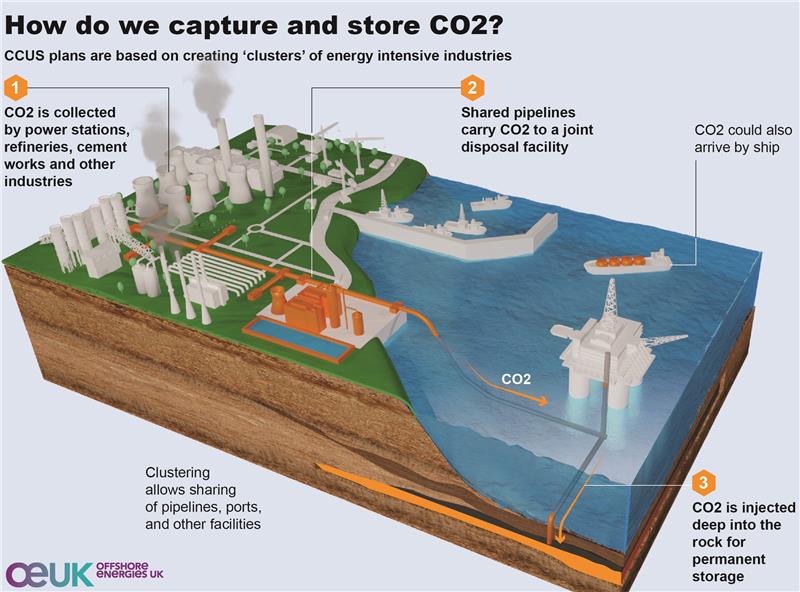
CCUS Transport & Storage Illustration — Showing how existing offshore infrastructure can support carbon capture projects.
3. Hydrogen Projects
Since 2023, the NSTA has regulated offshore hydrogen storage and pipeline transportation. This gives it direct influence over hydrogen blending projects and dedicated hydrogen pipelines.
How the NSTA Influences Pipeline Professionals
The NSTA’s policies create both challenges and opportunities:
Key Impacts:
- Mandatory Repurposing Assessments — Operators must demonstrate they have considered repurposing before proceeding with full decommissioning.
- Higher Integrity Standards — Especially for hydrogen (embrittlement risks) and CO₂ (corrosion risks).
- Digitalization Push — Strong encouragement for digital twins, real-time monitoring, and data-driven integrity management.
- Cost Control — Focus on minimizing taxpayer and industry costs while meeting net-zero targets.
This environment increases demand for specialists in:
- Pipeline integrity and materials engineering
- Hydrogen compatibility assessments
- Flow assurance for new fluids
- Decommissioning planning with repurposing options
Recent Developments (2025–2026)
- Strengthened guidance on Asset Transition Processes to evaluate alternatives to decommissioning earlier.
- Expanded role in offshore hydrogen licensing.
- Continued collaboration with industry on cost reduction and supply chain development for decommissioning and transition projects.
What This Means for the Industry
The NSTA is no longer just an oil and gas regulator — it is a transition authority. Its decisions will determine how quickly the UK North Sea becomes a hub for CCUS and hydrogen while responsibly managing the decline of traditional production.For operators, early engagement with the NSTA on repurposing strategies can save significant costs and accelerate project timelines.
For engineers and service companies, aligning your capabilities with NSTA priorities (integrity, repurposing feasibility, digital solutions) positions you for strong demand in the coming years.
Conclusion
The North Sea Transition Authority sits at the heart of the UK’s offshore energy future. By balancing safe decommissioning, asset repurposing, and new low-carbon industries, the NSTA is helping transform one of the world’s most mature basins into a leader in the energy transition.Pipeline professionals who understand and work within the NSTA’s framework will be best placed to deliver safe, cost-effective, and sustainable solutions for the decades ahead.The North Sea is not shutting down — it is evolving. And the NSTA is steering that evolution.