Hormuz remains dangerous, Saudi Arabia’s East–West line is damaged, and oil is moving by ship-to-ship transfer off Oman. For pipeline and subsea professionals, this week is a live lesson in why export infrastructure still decides the price of a barrel.
By Oko Immanuel, Founder, Offshore Pipeline Insight
18 September 2026
The world’s oil system is not short of crude in the ground. It is short of safe routes. That is the story of this week.Iran’s Revolutionary Guard said it struck the Togo-flagged tanker Trend in the Strait of Hormuz after what Tehran called an “illegal” transit. The United Kingdom Maritime Trade Operations logged a security incident about 16 nautical miles northeast of Khasab, Oman. Crews were reported safe; the strait was not.
At the same time, Saudi Arabia is trying to keep barrels moving after damage to the East–West pipeline that feeds the Red Sea terminal at Yanbu. Trade sources say about 60 million barrels from Ras Tanura are being lined up for September and October loading via ship-to-ship transfers off Sohar, Oman. Asian refiners are taking some of that oil. European buyers have been told they may get no Saudi crude next month.
Brent has eased from this week’s highs but is still near $100 a barrel — roughly 40 percent above the pre-crisis level of about $72 in February. That is a chokepoint premium, not a geology premium.
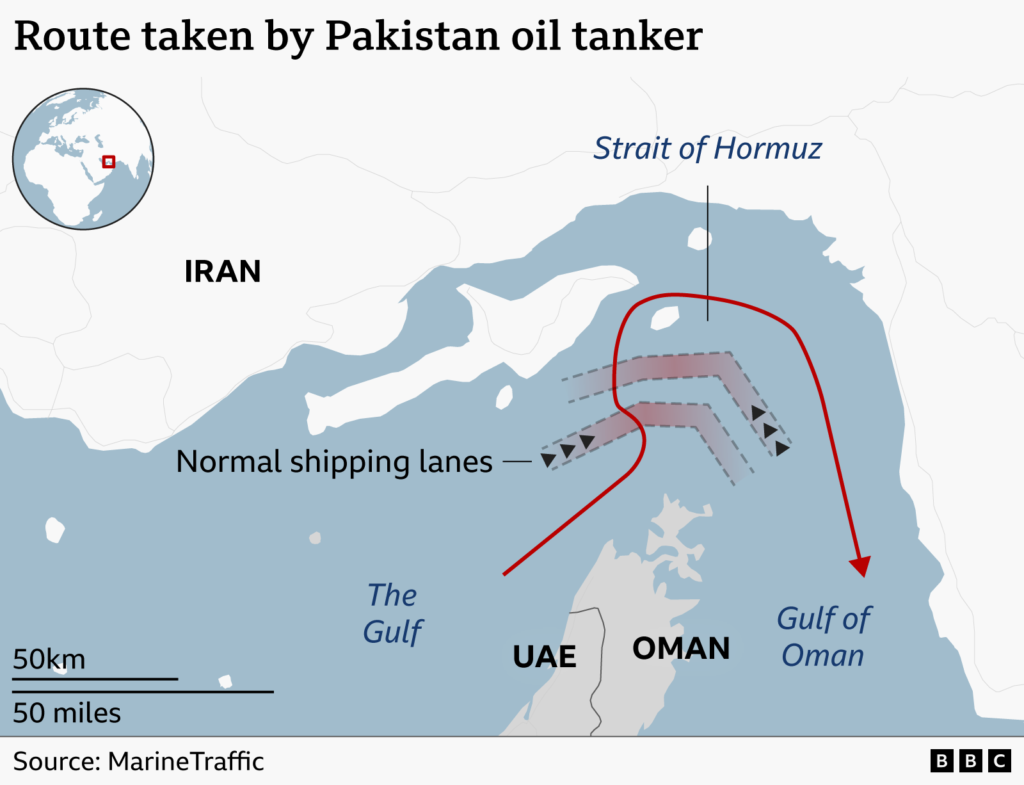
Caption: The Strait of Hormuz is a narrow shipping gate between the Gulf and the Gulf of Oman. When it tightens, every export pipeline on the Arabian Peninsula becomes more valuable.
Two doors, both under pressure
In a normal year, about a fifth of seaborne oil and a large share of LNG pass Hormuz. Since late February the waterway has been treated as a war zone: dark AIS transits, insurance warnings, and repeated hits on tankers. Maritime monitors still show thin visible traffic and a jump in ships running dark. Saudi Arabia’s answer to a Hormuz problem has always been steel on land: the East–West pipeline, about 1,200 km, from the eastern fields to Yanbu. That line is designed to move several million barrels a day to the Red Sea and on toward Europe and the Suez system without threading Hormuz.
Drone attacks last week knocked part of that system offline. Loadings at Yanbu slowed. Markets briefly priced a cut of up to about 4 percent of global supply if the line stayed down. Riyadh has been working to restore roughly half of capacity within days, according to market reports, but the alternative is already in motion.
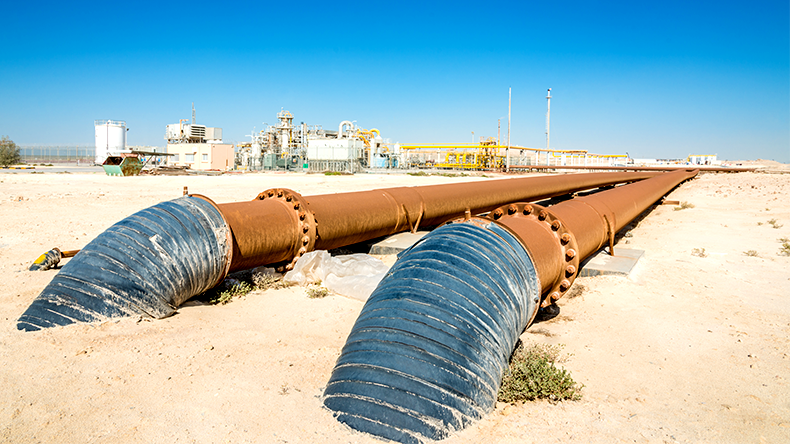
Caption: Onshore export lines exist so crude does not have to gamble on a single strait. When those lines are hit, the market rediscovers how thin the backup really is.
Ras Tanura to Sohar: pipelines by other means
The workaround is not elegant. It is operational.
Crude still loads at Ras Tanura inside the Gulf. Then it is moved toward Oman and transferred ship-to-ship off Sohar — outside the tightest part of the strait — for Asia. Gulf export rates of 1.0–1.5 million barrels a day are being discussed as comparable to August. China and South Korea are named as leading buyers; some cargoes are expected for India and Japan.
That is why prices slipped a little on Thursday and Friday even as Yemen and Saudi forces traded new strikes. Traders saw barrels appearing, not peace breaking out. Physical markets remain tight. Tanker rates and war-risk premia are still elevated. Going around Africa instead of Suez adds weeks and fuel.
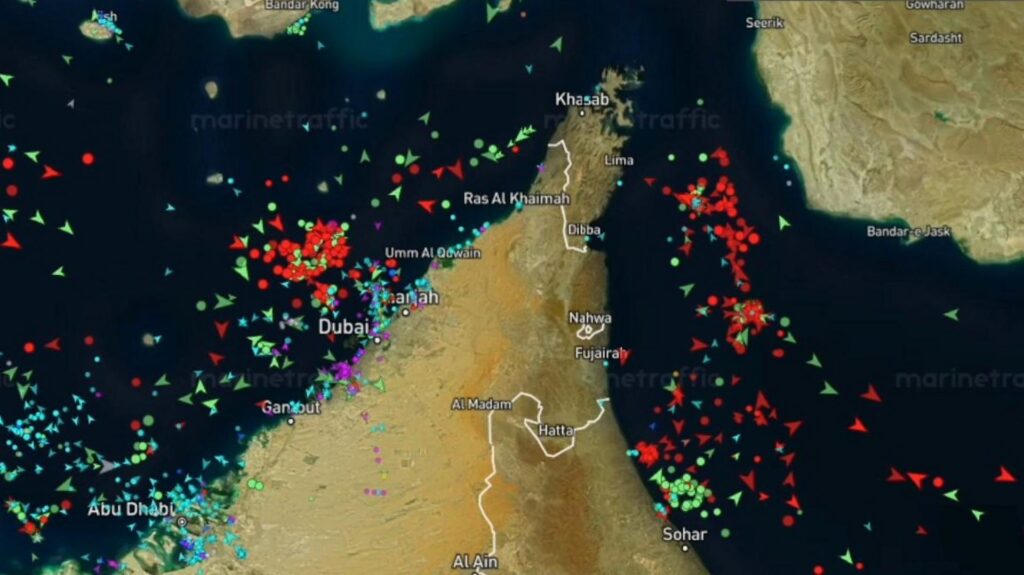
Caption: AIS plots around the Musandam Peninsula and Sohar show where ships now cluster when the official lane is no longer treated as safe.
What this means for pipeline and subsea work
Readers of this site do not need a lecture on geopolitics. They need the engineering implication.
1. Land pipelines are now wartime assets.
The East–West line was built as a Hormuz bypass. Once it is damaged, the kingdom’s option set collapses to Gulf terminals, STS transfers, and whatever capacity can be patched. Integrity, rapid repair, and redundant pump stations are no longer “nice to have.” They are the difference between 5 million bpd and a rumour.
2. Marine spreads still carry the swing volume.
When a buried line is out, tankers and STS operations become the pipeline. That raises demand for tonnage, escort planning, off-Oman lightering, and port congestion management — the same project-controls logic as a pipelay campaign, only with insurance riding at war-risk rates.
3. Subsea and onshore corridors will be sold as energy security.
Expect more political support for lines that avoid a single strait: Red Sea outlets, overland links, and, over a longer horizon, gas and possible CO₂ systems that do not sit on the same risk map as Hormuz. The industry already knows how to lay those systems. The constraint is route, permit, and protection — not welding procedure.
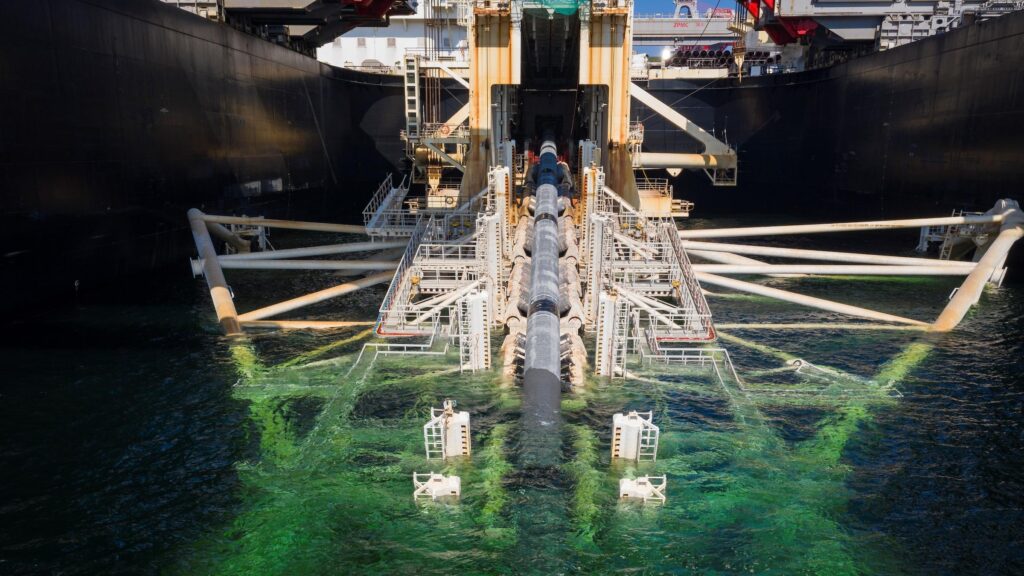
Caption: A pipelay stinger is the civilian version of what markets are asking for: a controlled, inspectable path for hydrocarbons that does not depend on a 20-mile-wide political gate.
Prices: still high, no longer panicking in a straight line
As of 18 September, Brent has been quoted in a band around $100–$104, off the midweek spike above $107 after Yanbu loadings paused. WTI has held near $97–$101. Goldman and others still talk about upside if the strait stays constrained and products (diesel, bunker) stay tighter than crude. The Bank of Japan’s rate rise to 1.25 percent — the highest since 1995 — was explicitly tied to energy costs and a weak yen. That is the same shock, felt in Tokyo.
Do not read a one-day drop as “Hormuz is open.” Read it as Saudi logistics buying time.
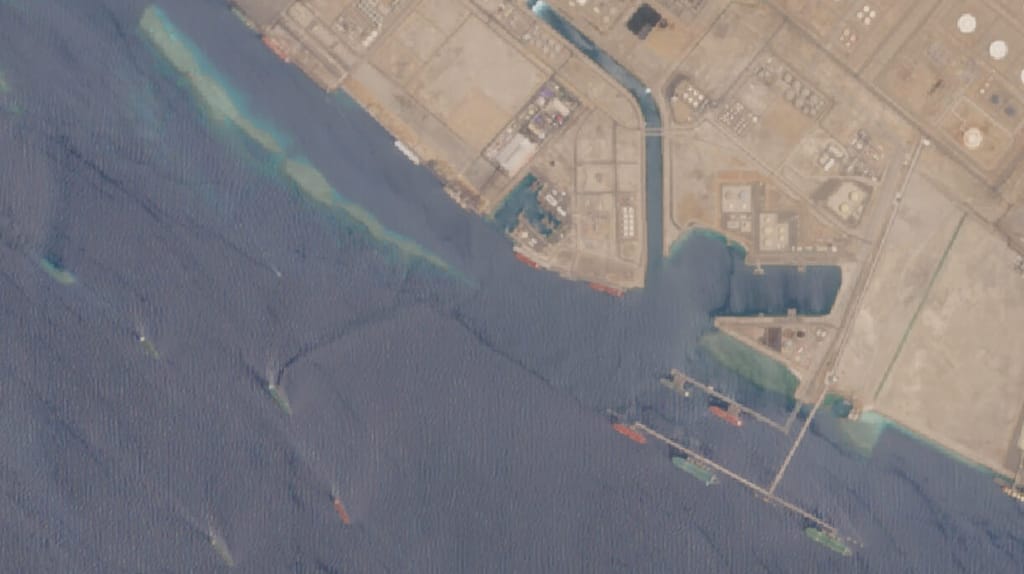
Caption: Satellite view of a Red Sea export complex. When Yanbu slows, the world’s refiners look first at the calendar, then at Oman.
What to watch next week
- Whether UKMTO and insurers treat Hormuz as passable or still a no-go for covered hulls
- How much East–West capacity actually returns, and at what pressure
- Whether European refiners secure non-Saudi barrels or simply run stocks down
- STS volume off Sohar — the real-time gauge of the workaround
- Any further hits on tankers, pump stations, or Yanbu itself
For engineers, the professional takeaway is simple. Production is only as good as the export path. This week the path is a damaged onshore line, a hostile strait, and a string of tankers passing crude to each other in the dark off Oman.