Slug: hydrates-meg-methanol-subsea-tiebacks
Tags: flow assurance, hydrates, MEG, methanol, pipelines, technical
By Oko Immanuel, Founder, Offshore Pipeline Insight Sept 22 2026
Think of antifreeze in a car. Offshore, the “antifreeze” is MEG or methanol. Without it, a long cold pipeline can block with ice-like crystals called hydrates.
You do not need a degree to follow this. Engineers can still use the numbers. Everyone else can follow the story.
The picture in one minute
A well on the seabed is hot. The pipe that carries the oil and gas to a ship or platform can be 20–40 km long and sit in water that is only about 4 °C.Inside that pipe you have:
- gas (methane and friends)
- water
- high pressure
That mix, in the cold, can turn into hydrates — not normal ice, but cages of water locked around gas. A hydrate plug can shut a multi-million-dollar line. The well is fine. The pipe is not.
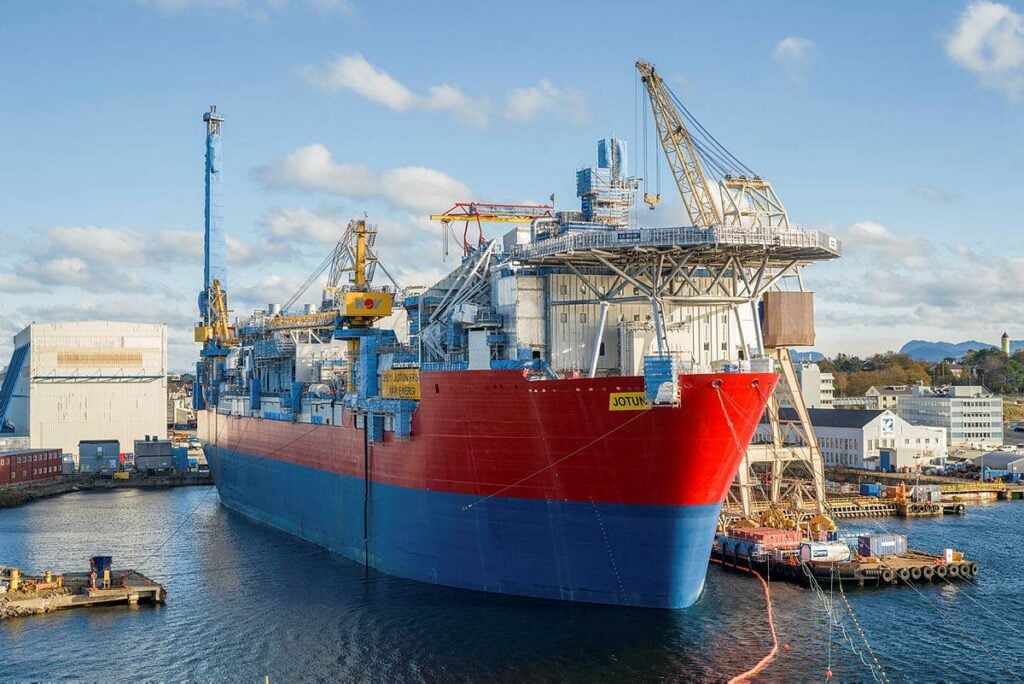
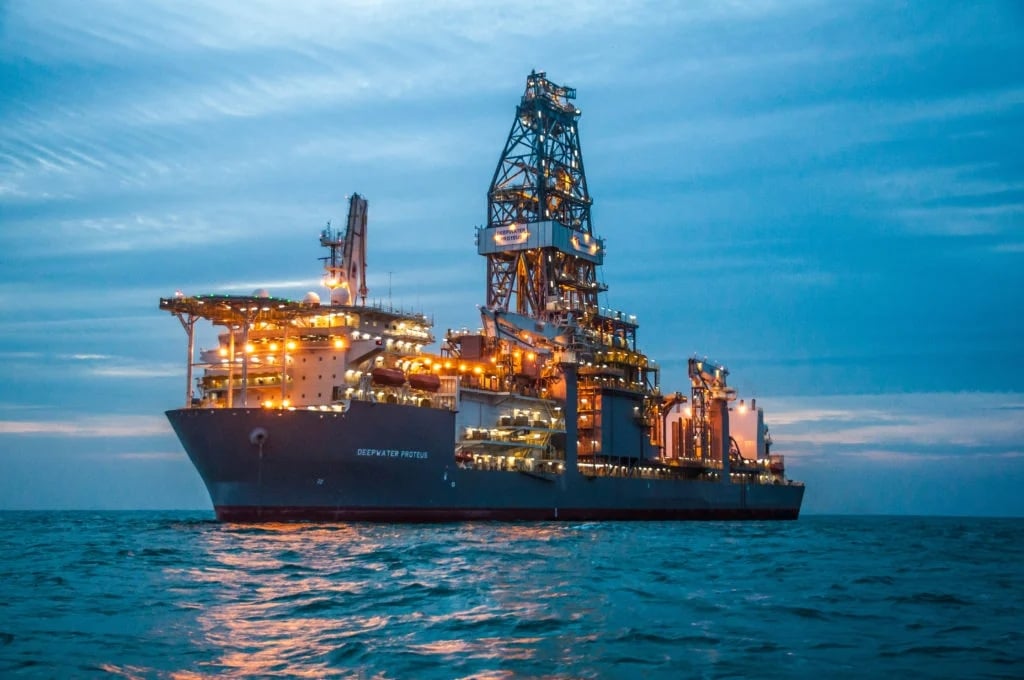
Caption: The host — here the Jotun FPSO — is warm and busy. The problem is the long, cold pipe on the way there.
Four things must line up before a plug forms
- Water in the pipe
- Gas that likes to form hydrates
- High pressure
- Low temperature
Take any one away and you are safer. You cannot take pressure away on a producing well. You cannot always take water away. So industry fights temperature (insulation, heating) and chemistry (MEG and methanol).
Simple analogy: winter fuel in a diesel truck. Let it get cold with water in the tank and you get wax and ice. Same idea. Different chemistry.
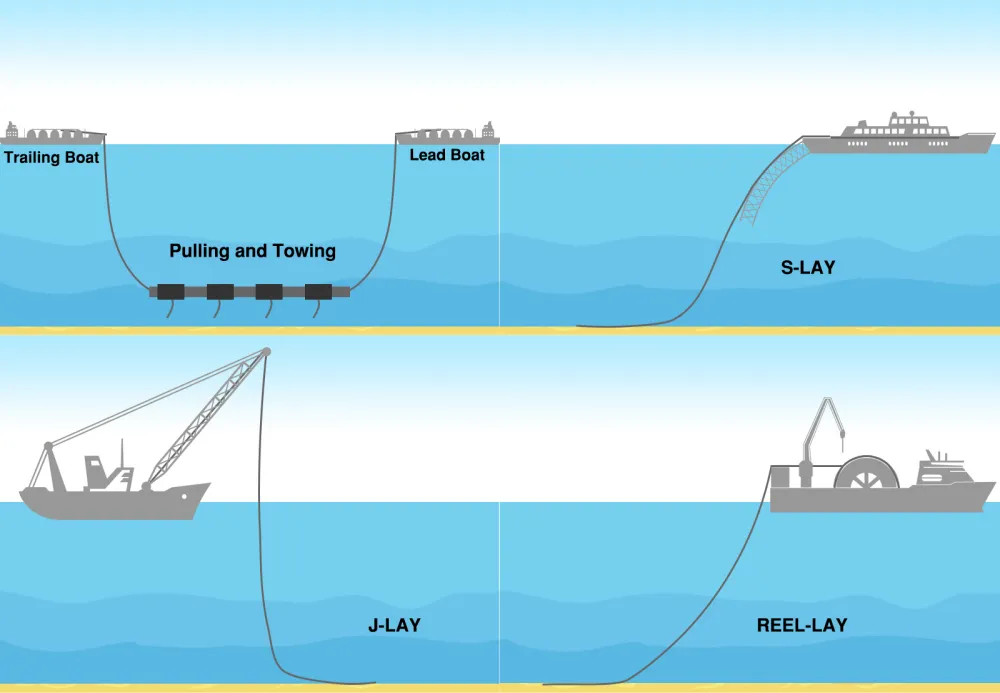
Caption: The flowline is laid on the seabed and stays there for decades. Once it is down, the only tools left are insulation, heat and chemicals.
Meet the two “antifreezes”Methanol
- Works fast
- Good for start-up, shut-in and short lines
- Part of it boils into the gas, so you lose some
- Can spoil export oil or NGL spec
- Usually not recycled — you inject it and it leaves with the fluids
MEG (monoethylene glycol)
- Heavier dose, but it stays in the liquid
- Can be cleaned and reused on the ship or platform
- The standard choice for long subsea tiebacks that run every day
- Needs tanks, pumps, a spare tube in the umbilical, and a regeneration plant
There is a third family, LDHIs (low-dose inhibitors). They use much less volume. They only work in the window they were tested for. They are not a magic swap for MEG on every gas line.Kitchen version: methanol is windshield washer in a storm. MEG is the coolant you keep in a closed loop and top up.
How much is “enough”?Designers ask: how many degrees below the hydrate temperature are we? That gap is called subcooling. On a long bare line it is often 10–20 °C.A rough field rule
(Hammerschmidt) is:
\Delta T = \frac{K \cdot W}{M \cdot (100 - W)}
You do not need to solve that to read this site.
The takeaway is: for a 10 °C safety margin you may need about one-fifth methanol or about one-third MEG in the water inside the pipe. Harsh deepwater cases can need 30–60% chemical in that water. That is why the tanks on deck are huge.
Your project will run software on the real well. This is only to show why a “splash of chemical” is not a plan.
Where the chemical has to go
Injecting at the ship is too late. The cold stretch is the whole flowline.
The dose must arrive at the tree — the yellow valve block on the well — through a small tube inside the umbilical (the control hose bundle). If that tube is blocked, crushed or never installed, you have no antifreeze at the place that matters.
Year one may make almost no water. Year eight may make a lot. If pumps and tubes were sized for year one, year eight is when the plug forms.
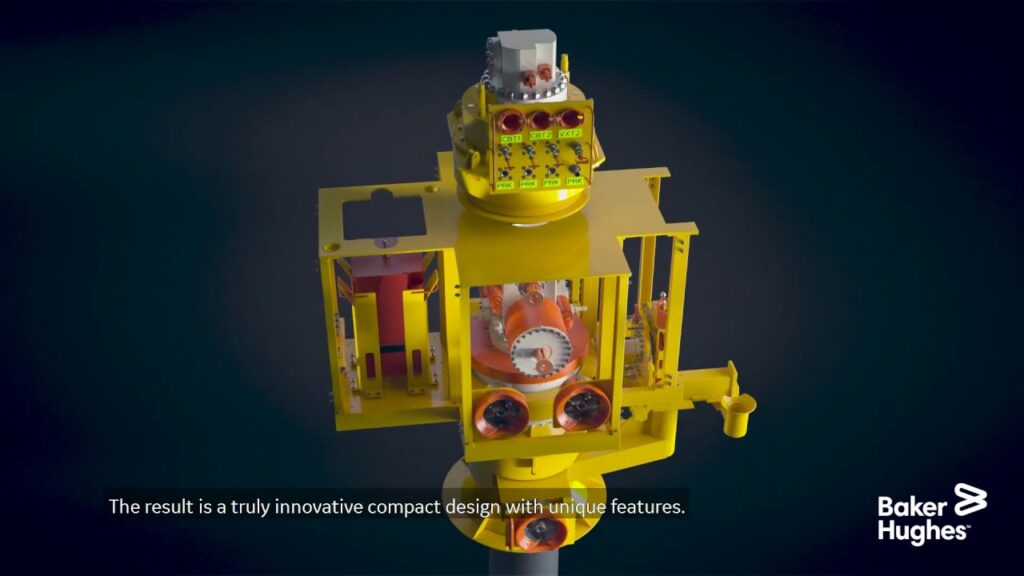
Caption: The tree is where oil and gas leave the well. MEG or methanol should arrive here, not only at the FPSO.
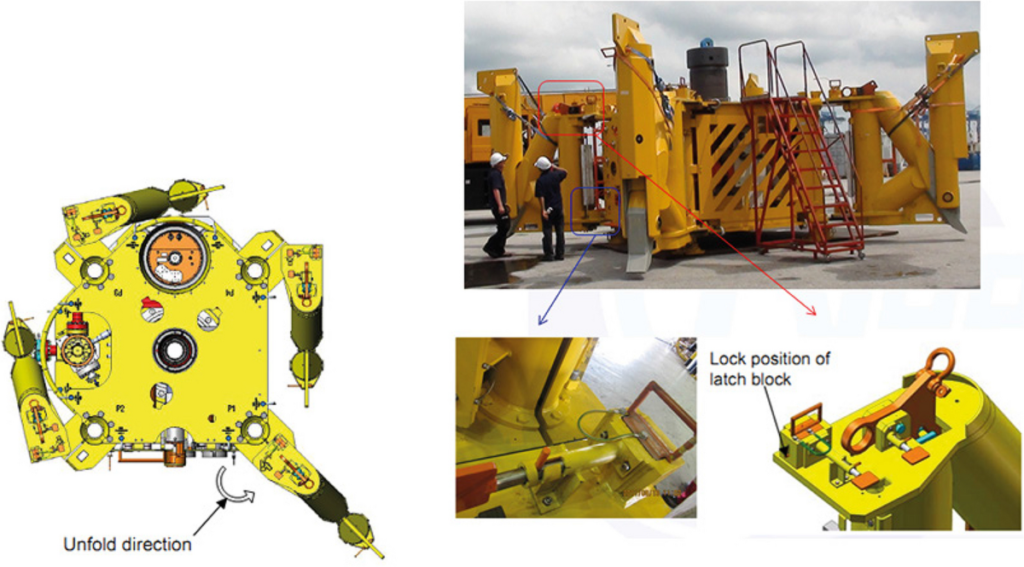
Caption: On the quay the tree looks like a yellow truck. On the seabed it is the first customer for the chemical line.
When lines actually freeze
Most plugs are not at full, steady flow. They show up when people are tired:
- the plant trips at night and nobody bullheads methanol into the line
- restart is too fast after the pipe has gone stone cold
- the water meter is wrong, so the dose is low
- a spare branch of pipe sits dead and cold
- the MEG recycler is down and salt builds up
- methanol in the export oil forces the team to cut the dose
Field rule: treat start-up and shut-down as their own jobs. That is when hydrates win.
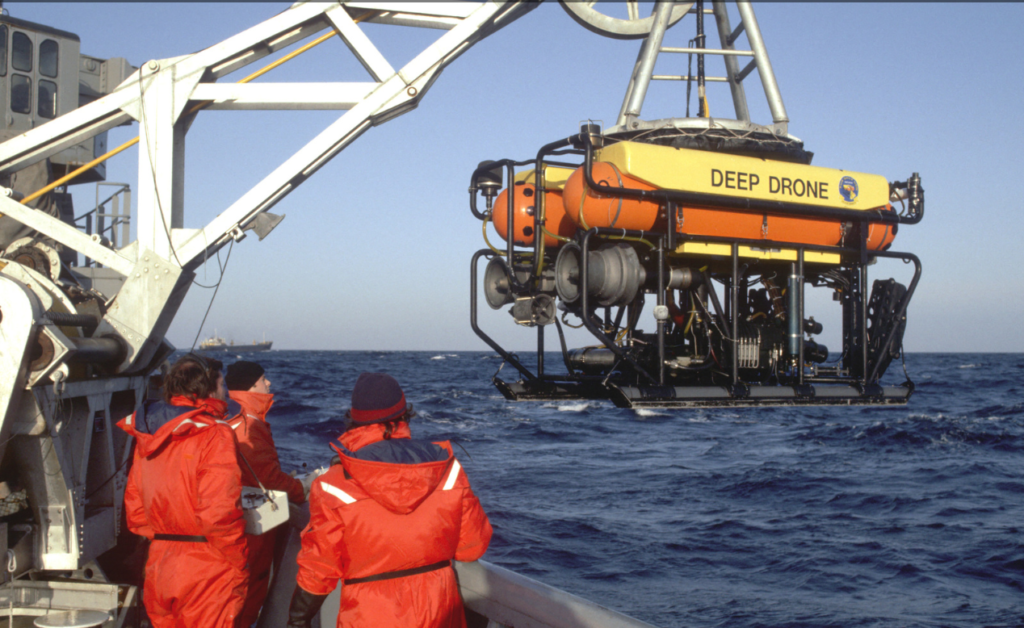
Caption: When a line is suspected blocked, an ROV is often the first set of eyes. Prevention is cheaper than this picture.
MEG vs methanol at a glance
| Methanol | MEG | |
|---|---|---|
| Best for | Emergencies, short lines, low water | Long tiebacks, everyday injection |
| Recycled? | Rarely | Yes, if the host has a unit |
| Pain point | Lost to gas; export spec; toxicity | Big kit; salt and scale |
| Think of it as | One-shot antifreeze | Reusable coolant |
If you track work on Excel Log these, not a single “percent complete”:
- how much lean MEG you inject vs how much water you actually make
- whether the spare umbilical tube is still good
- MEG recycler running, and how salty the return is
- methanol stock for an unplanned stop
- a signed cold-restart procedure
Same habit as a hydro-test pack: if it is not written, it will fail at 2 a.m.
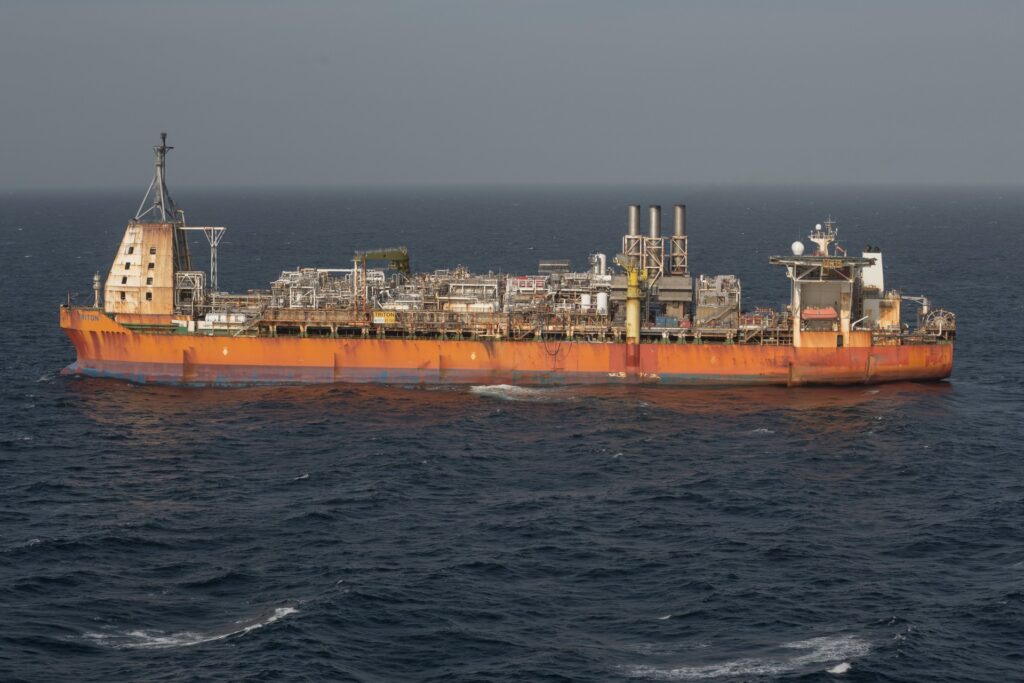
Caption: The FPSO is where MEG is stored, cleaned and pumped back down. If that package is late, first oil still carries hydrate risk
Bottom line
A modern tieback is two projects in one.SURF builds the pipe, the umbilical and the riser.
Flow assurance keeps what is inside that pipe from turning into a plug.Methanol is fast. MEG is the workhorse on long lines. Neither works if it never reaches the tree, or if the night-shift restart is a shrug.Read with: SURF explained — flowlines, umbilicals and risers.